-
Hair
Hair LossHair Treatments
-
Skin
Acne & ScarsPigmentationSkin ConcernsSkin Diseases & Growths
-
Anti-Ageing
Facial Rejuvenation
-
Laser
Laser Hair RemovalLaser Skin Rejuvenation
- Hair Transplant
- Result Gallery
- About Us
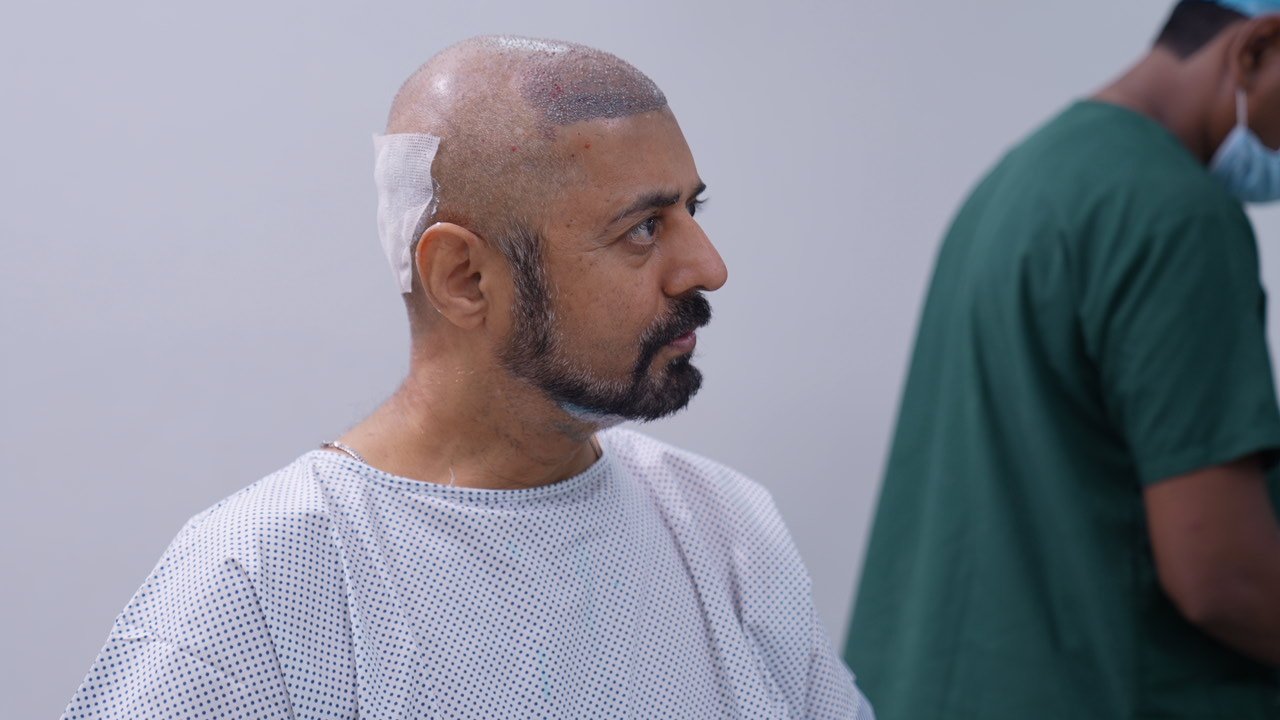
Scarring Hair Transplant In Delhi
Scarring hair loss can leave areas of permanent follicular loss after inflammatory scalp disorders, trauma, burns, surgery, or other forms of scalp injury. A Scarring Hair Transplant in Delhi may be considered for carefully selected patients when the underlying condition is inactive or stable, the recipient tissue is suitable, and sufficient donor follicles are available.
Get Your Scarring Hair Restoration Plan
Share your scalp-scar or hair-loss concerns. Dr. Vijay Soyal will assess the cause of hair loss, scar characteristics, donor supply, and suitability for hair transplantation.
Scarring Hair Transplant & Scalp Scar Restoration In Delhi
Hair transplantation for scarred scalp tissue requires different considerations from routine androgenetic hair loss. The underlying cause must be identified and, where relevant, stabilized before surgery. Once the scar is considered suitable for transplantation, graft placement is planned according to scar characteristics, tissue quality, surrounding hair, and available donor follicles.
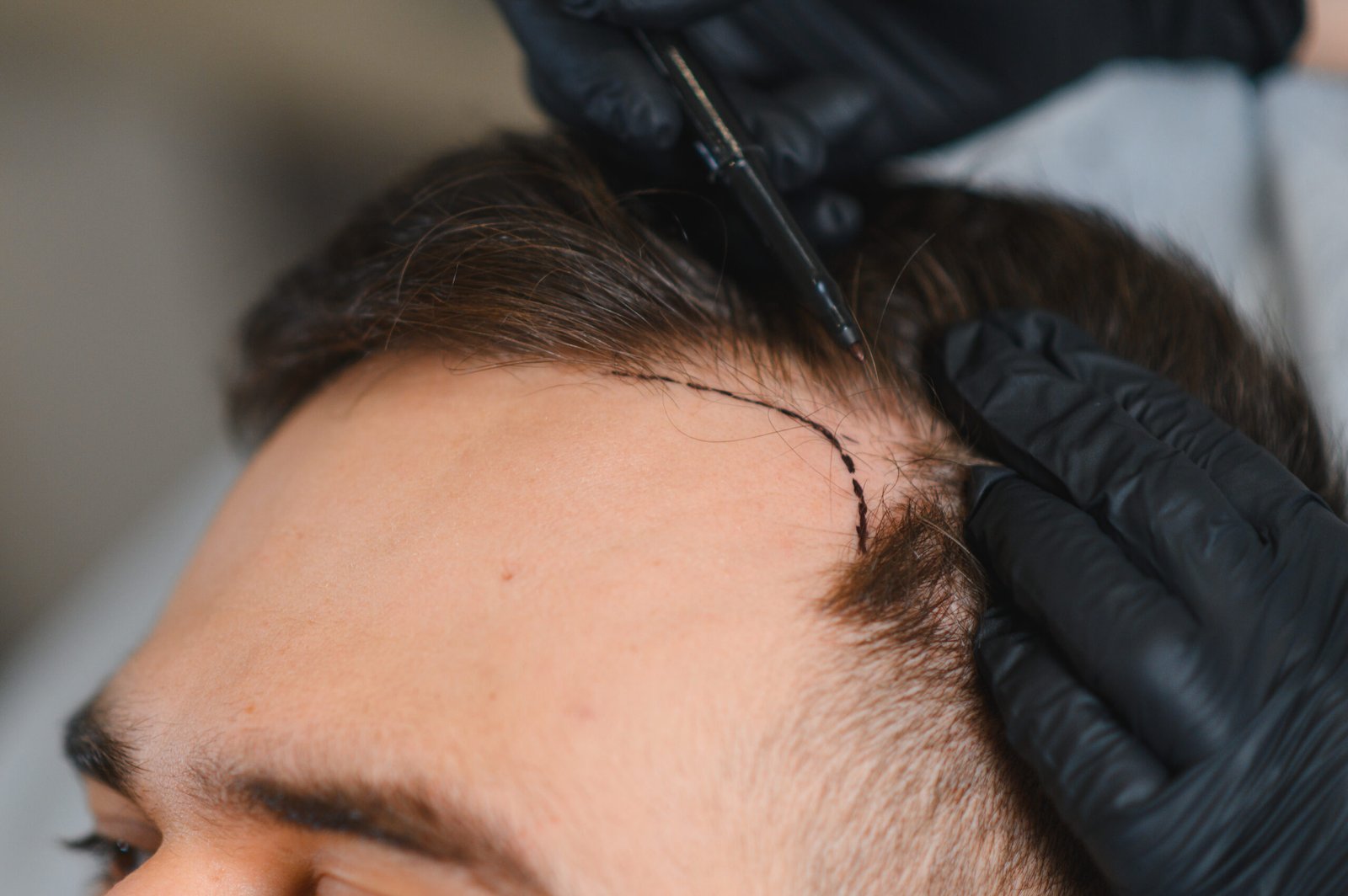
Scarring Alopecia Hair Transplant
Selected patients with stable scarring alopecia may be evaluated for follicular transplantation into areas where permanent follicular loss has occurred.
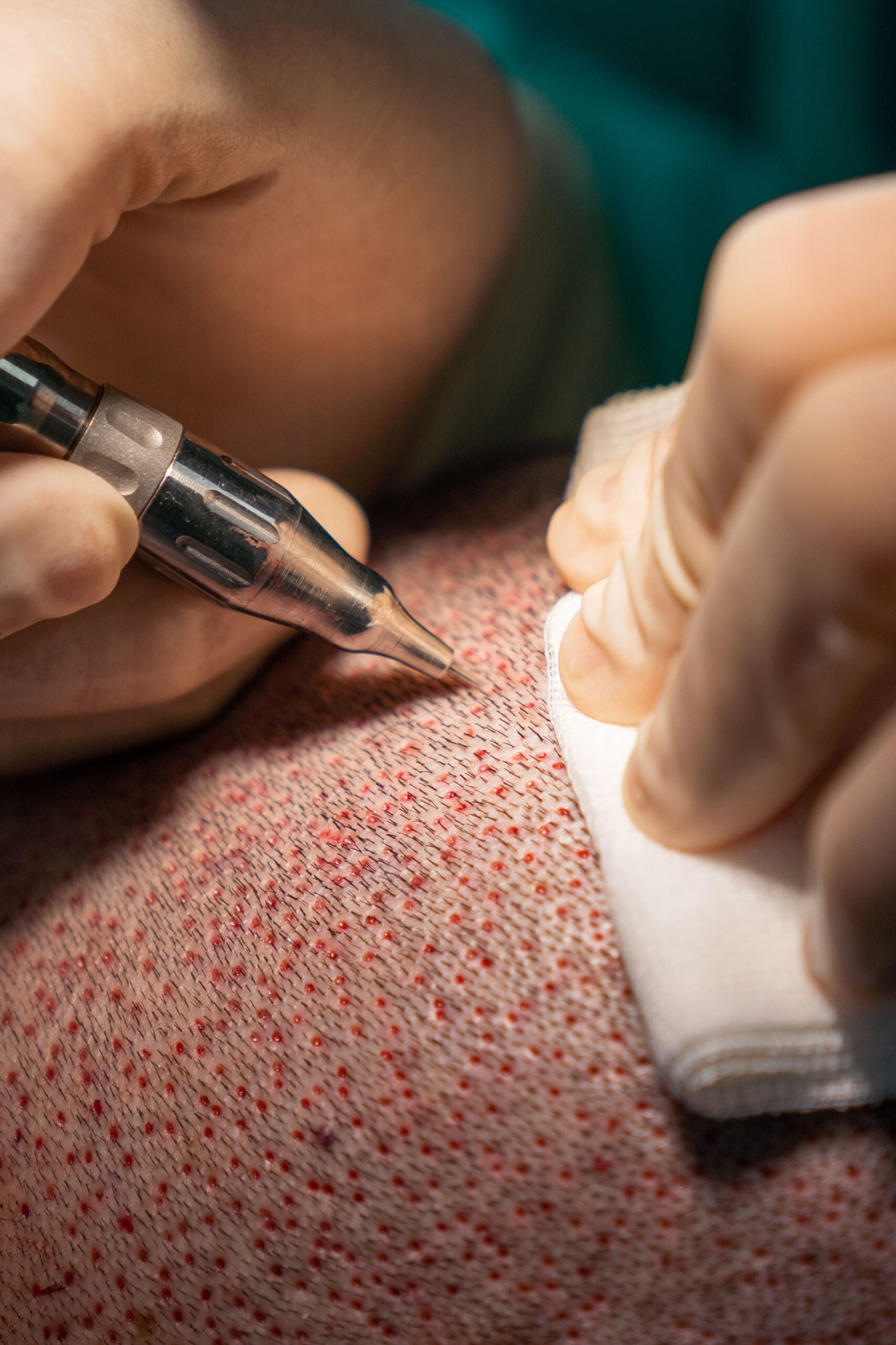
Surgical Scar Hair Transplant
Hair transplantation may be considered for selected scars following scalp surgery when the scar tissue has suitable characteristics and adequate donor follicles are available.
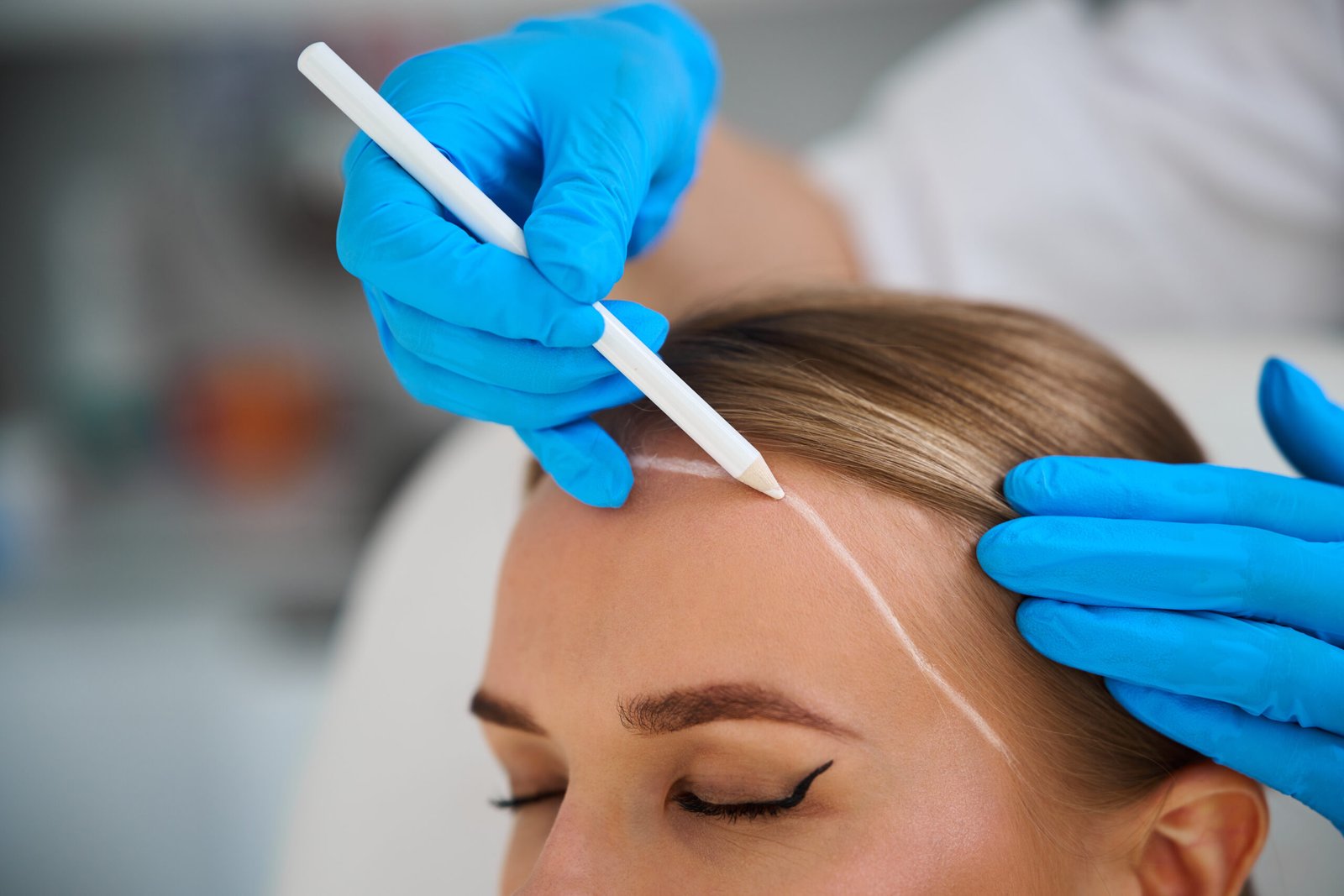
Burn Scar Hair Restoration
Certain stable burn scars may be evaluated for grafting when the tissue has sufficient vascularity and can support transplanted follicles.
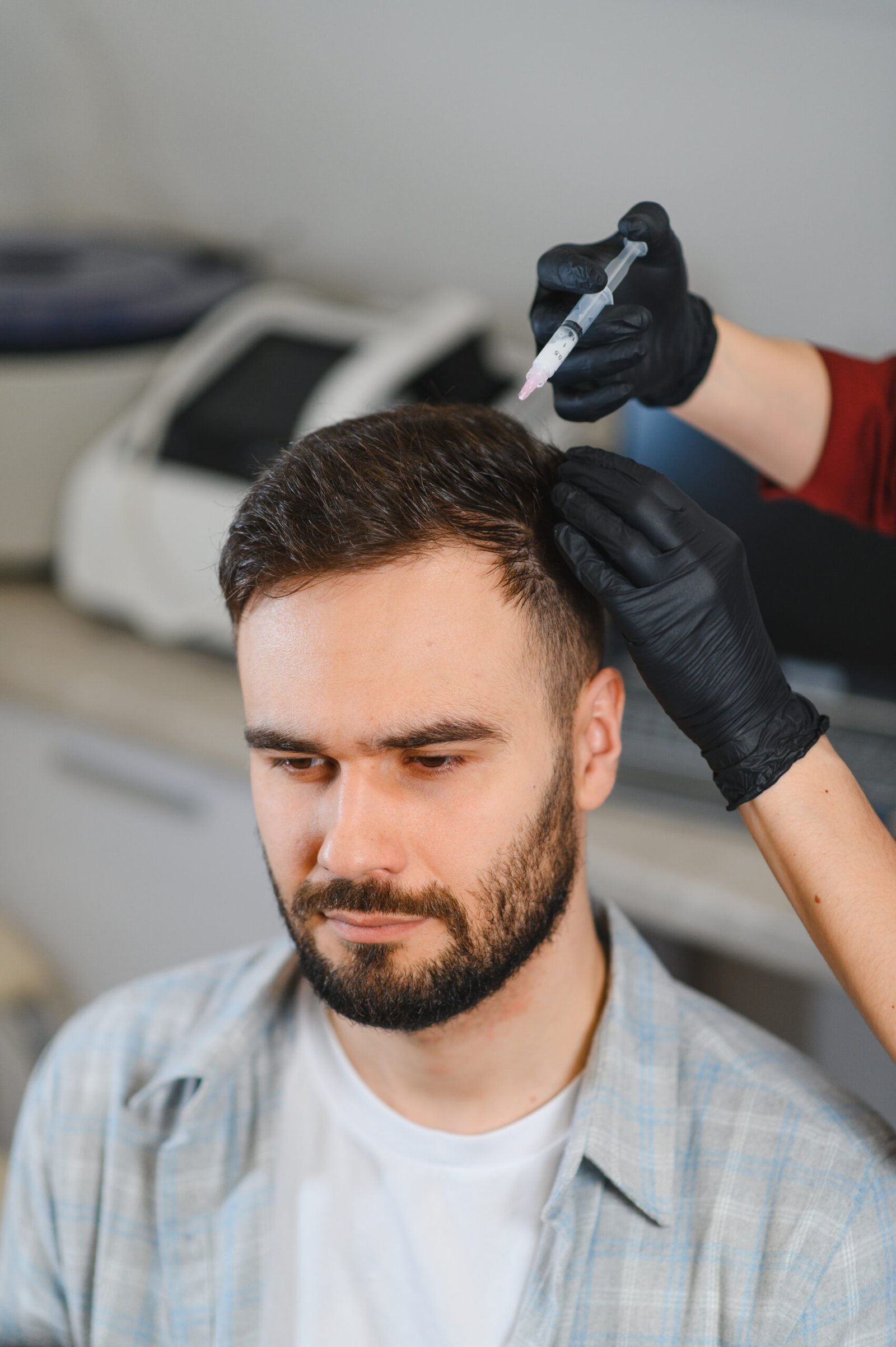
Traumatic Scalp Scar Restoration
Hair loss following accidents or other scalp trauma may sometimes be addressed with follicular grafting after the injured tissue has appropriately healed and stabilized.
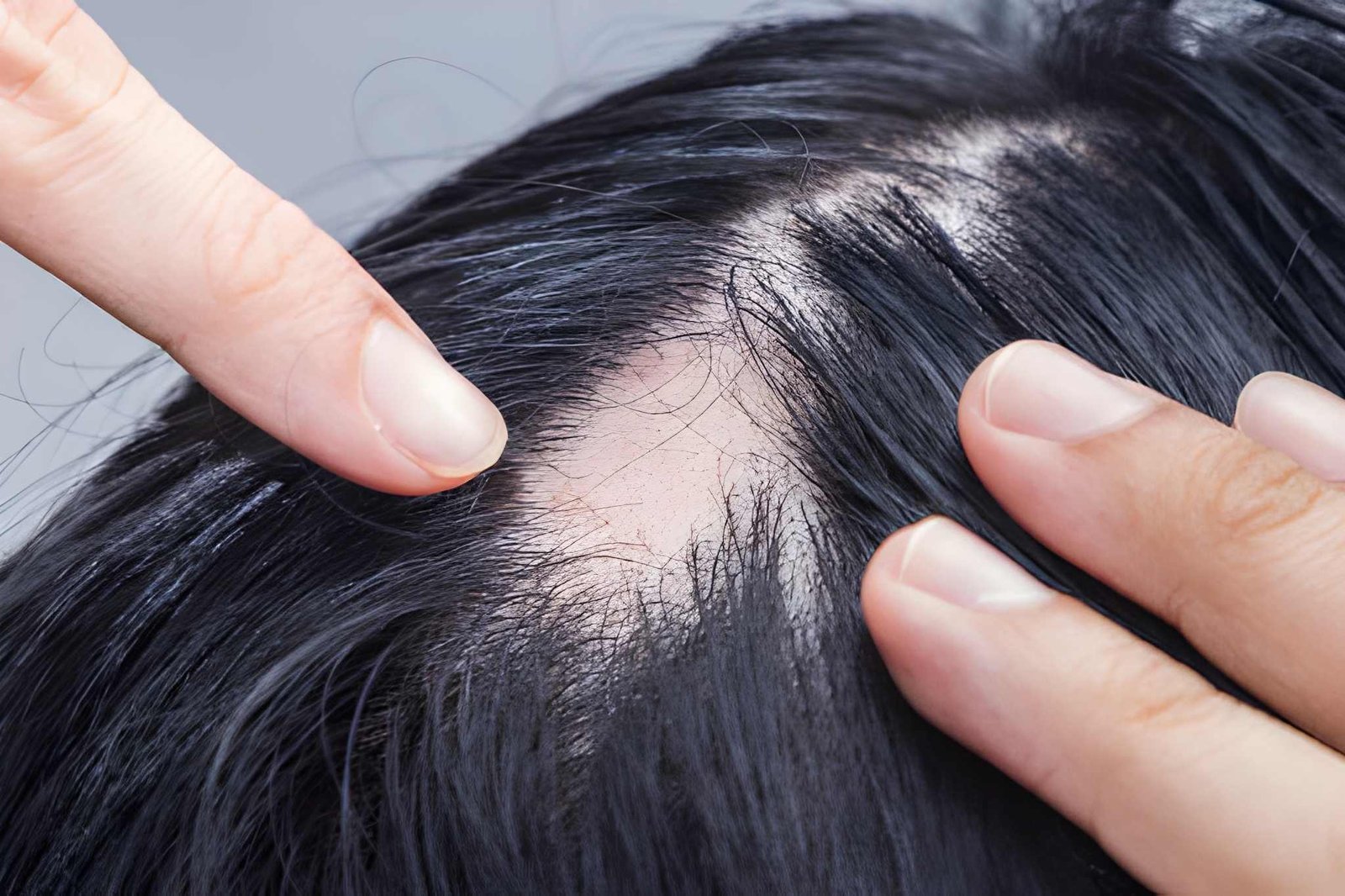
Localized Scar Camouflage
Small, well-defined areas of permanent hair loss caused by suitable scars may be treated with targeted graft placement to improve visual coverage.
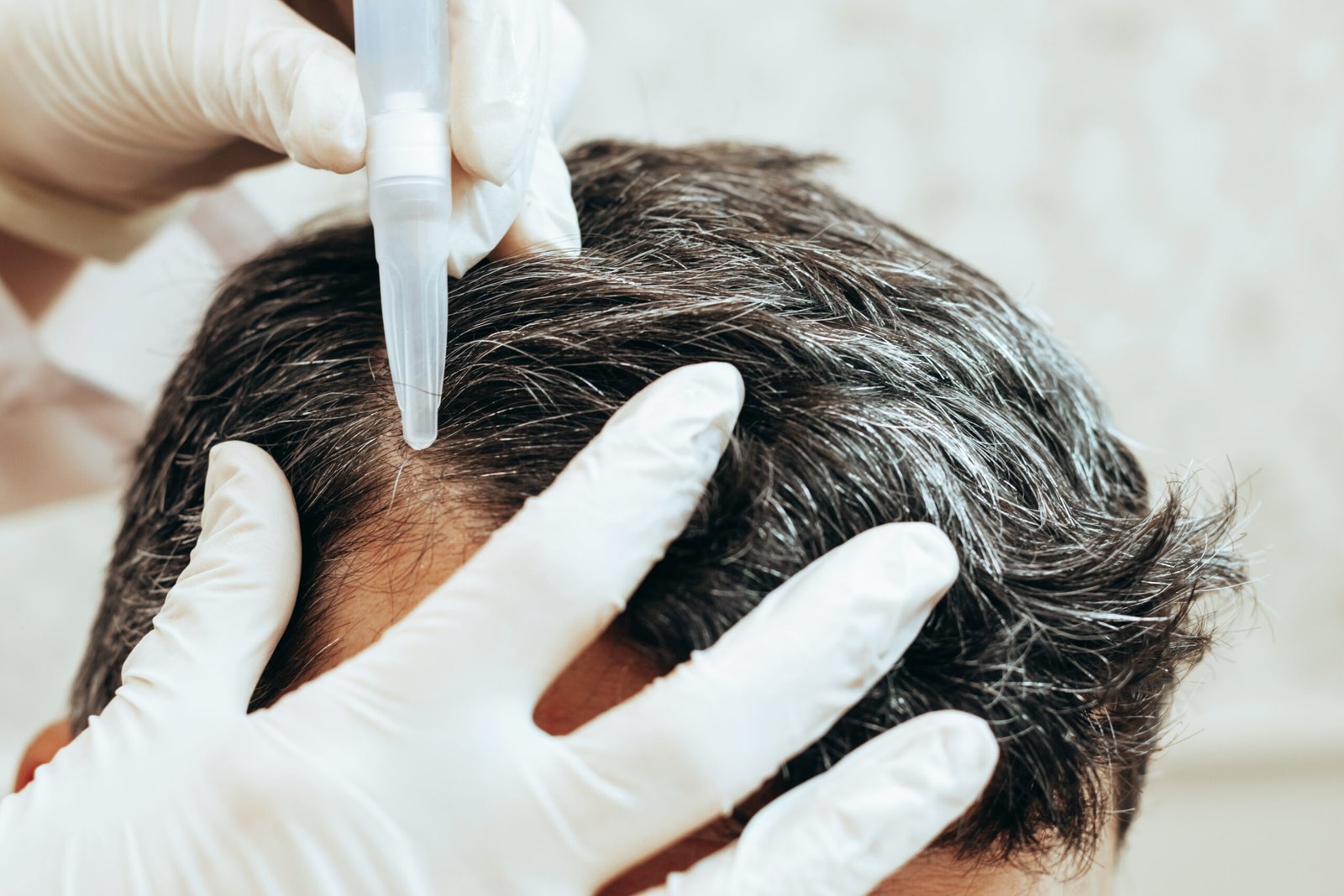
Corrective Hair Restoration
Patients with persistent hair loss around a previous surgical or traumatic area can be assessed for reconstructive transplantation where donor supply and recipient tissue permit.
Who Is An Ideal Candidate For A Scarring Hair Transplant?
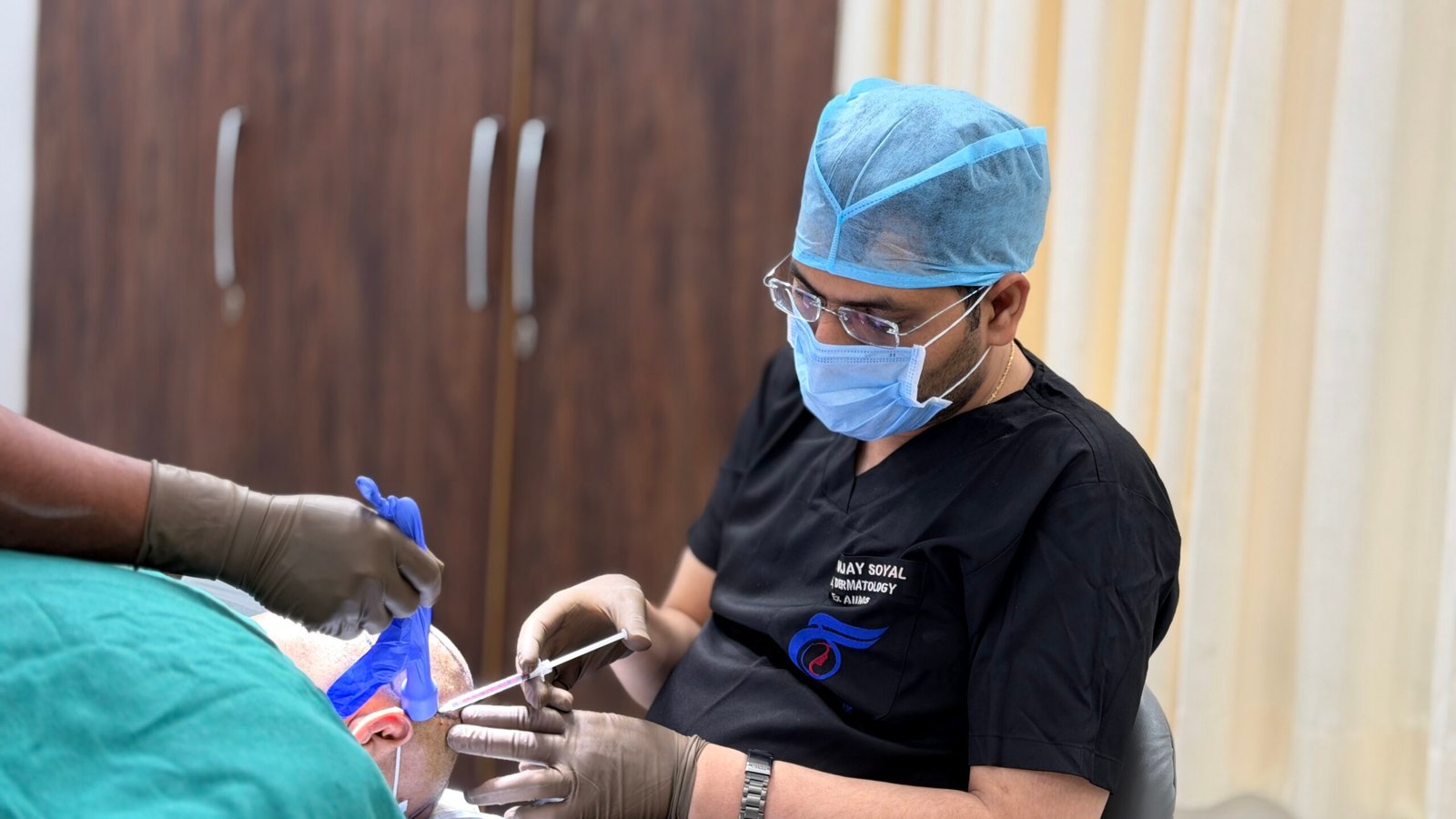
The ideal candidate for a Scarring Alopecia Hair Transplant in Delhi has a stable area of permanent hair loss, an adequately assessed underlying condition, suitable recipient tissue, sufficient donor follicles, and realistic expectations regarding achievable coverage. Stability is particularly important in scarring alopecia because active inflammation can continue to damage both native and transplanted follicles.
Scarring Hair Transplant Cost In Delhi
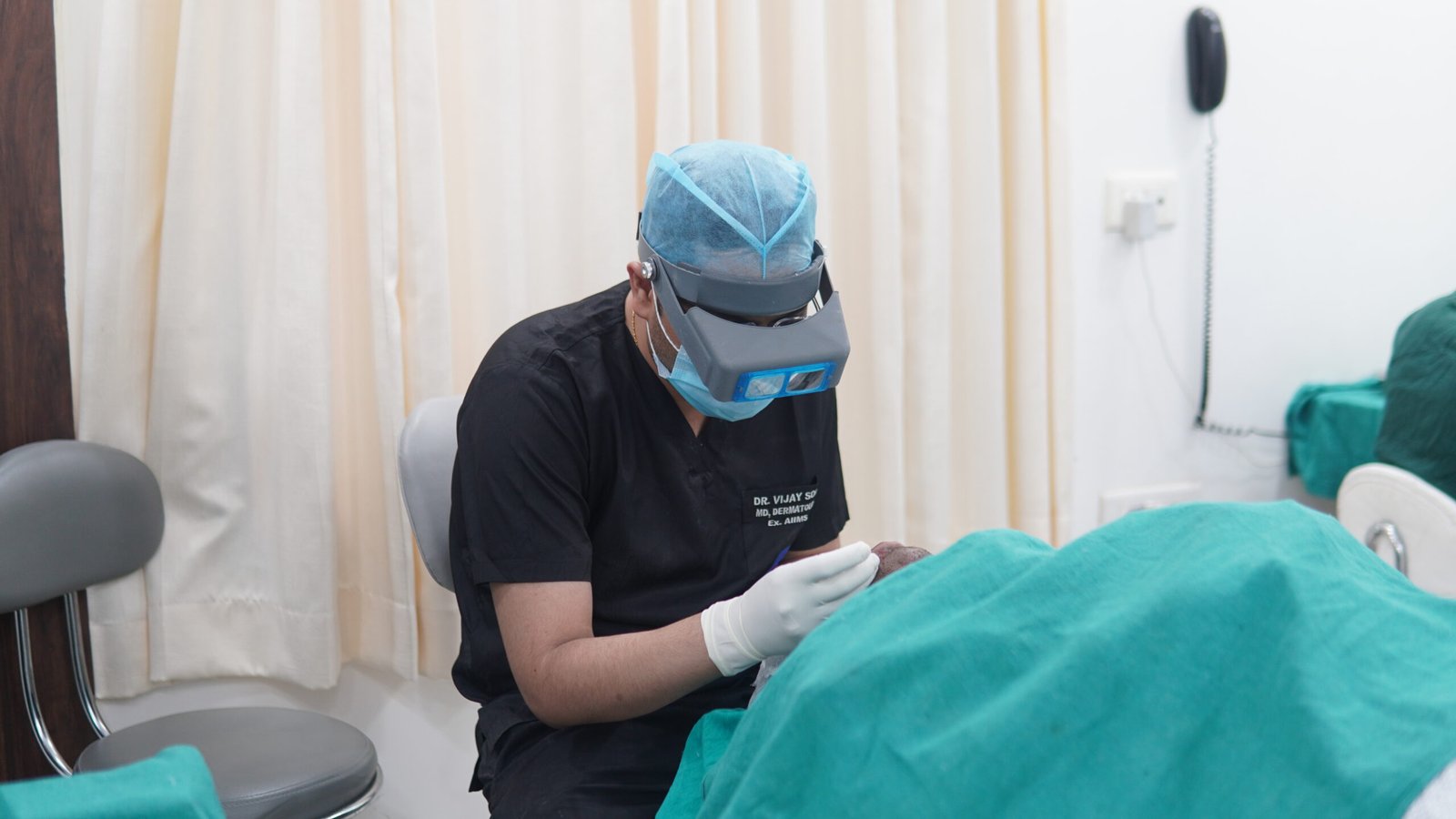
The Scarring Hair Transplant Cost in Delhi varies according to the size and location of the scar, number of grafts required, donor-area characteristics, scar quality, underlying condition, and complexity of recipient-site preparation. A small localized scar may require a very different treatment plan from extensive scarring alopecia or multiple areas of traumatic hair loss.
At Skinfollix, treatment cost is determined after assessing the underlying cause, stability of the condition, donor supply, scar characteristics, and realistic graft requirement. This assessment is important because transplantation may not be appropriate for every scar, and treating an active scarring condition without adequate stabilization may not provide a suitable outcome.
Scalp Scar Types & Restoration Suitability
Scarring Characteristics & Tissue Quality dictate how a reconstructive hair transplant is planned. Whether addressing surgical scars, burn trauma, or stable scarring alopecia, assessing your pattern helps Dr. Vijay Soyal determine appropriate graft survival expectations, recipient vascularity, and strategic donor allocation.
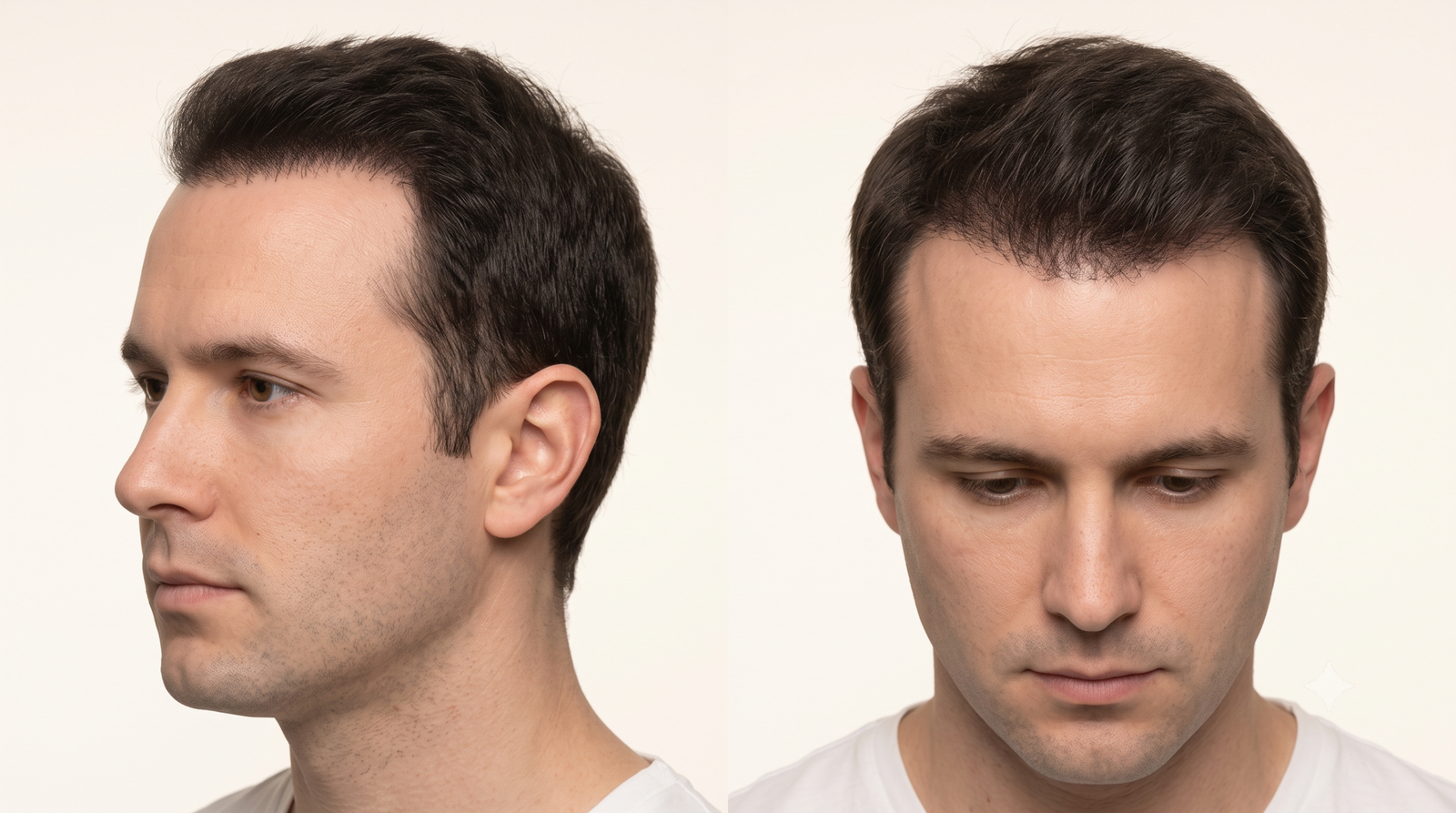
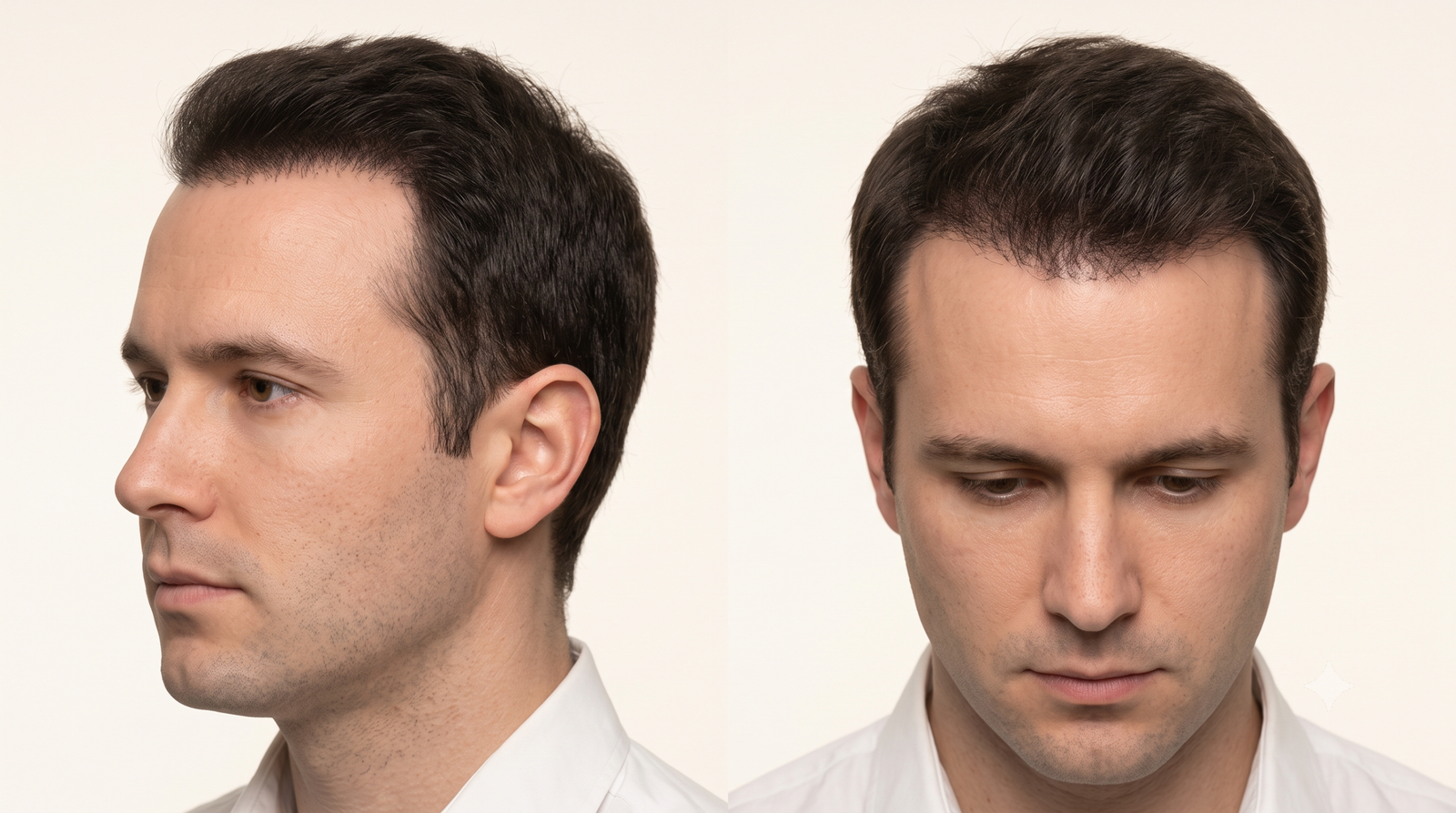
Linear Surgical Scars
Post-FUT linear donor scars. Ideal for targeted camouflage and localized follicular grafting.
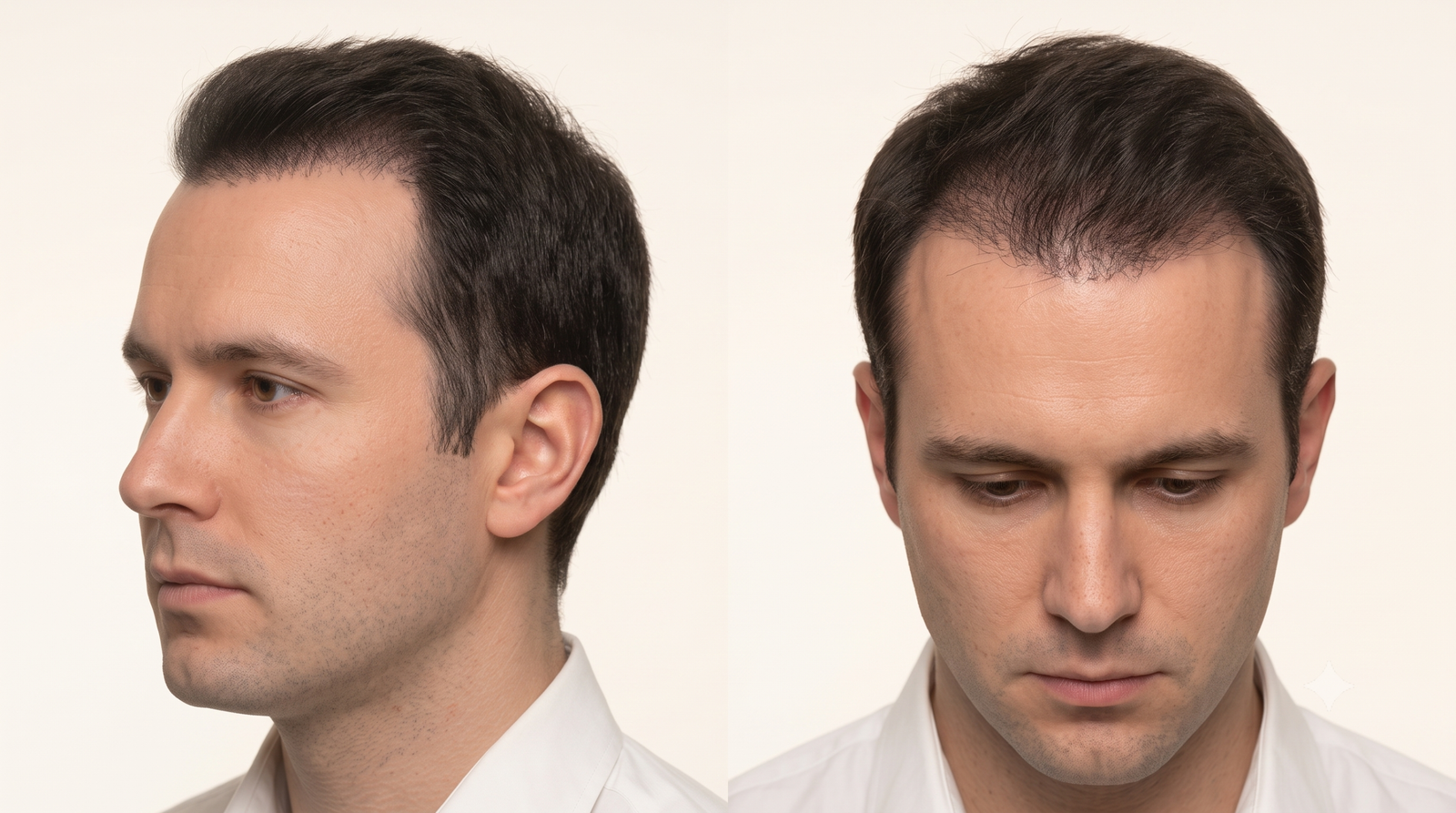
Traumatic Scars
Scalp injury or accident scars. Evaluated once tissue has fully healed and stabilized.
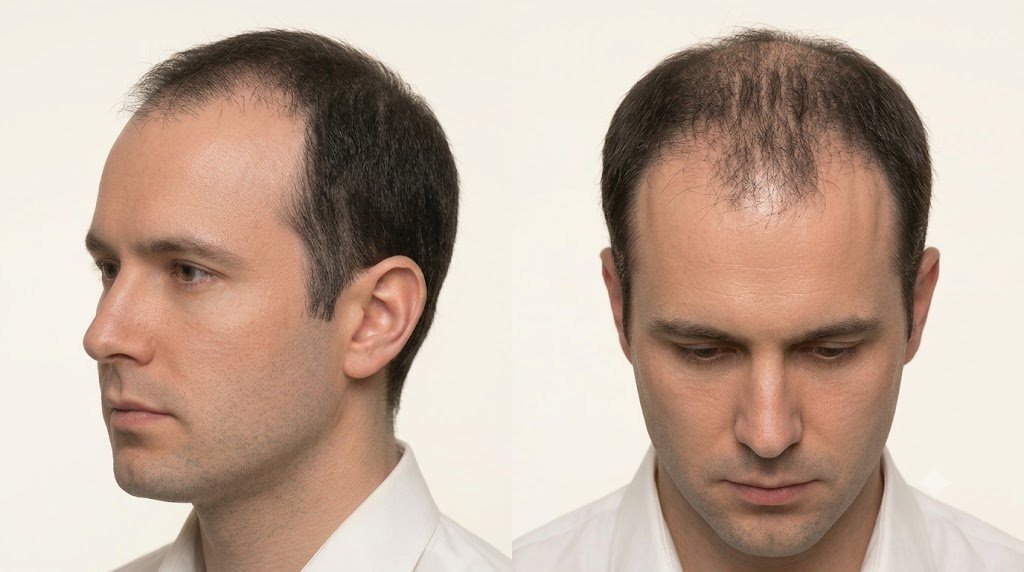
Burn Scars
Thermal injury scars requiring detailed assessment of vascularity and recipient tissue health.
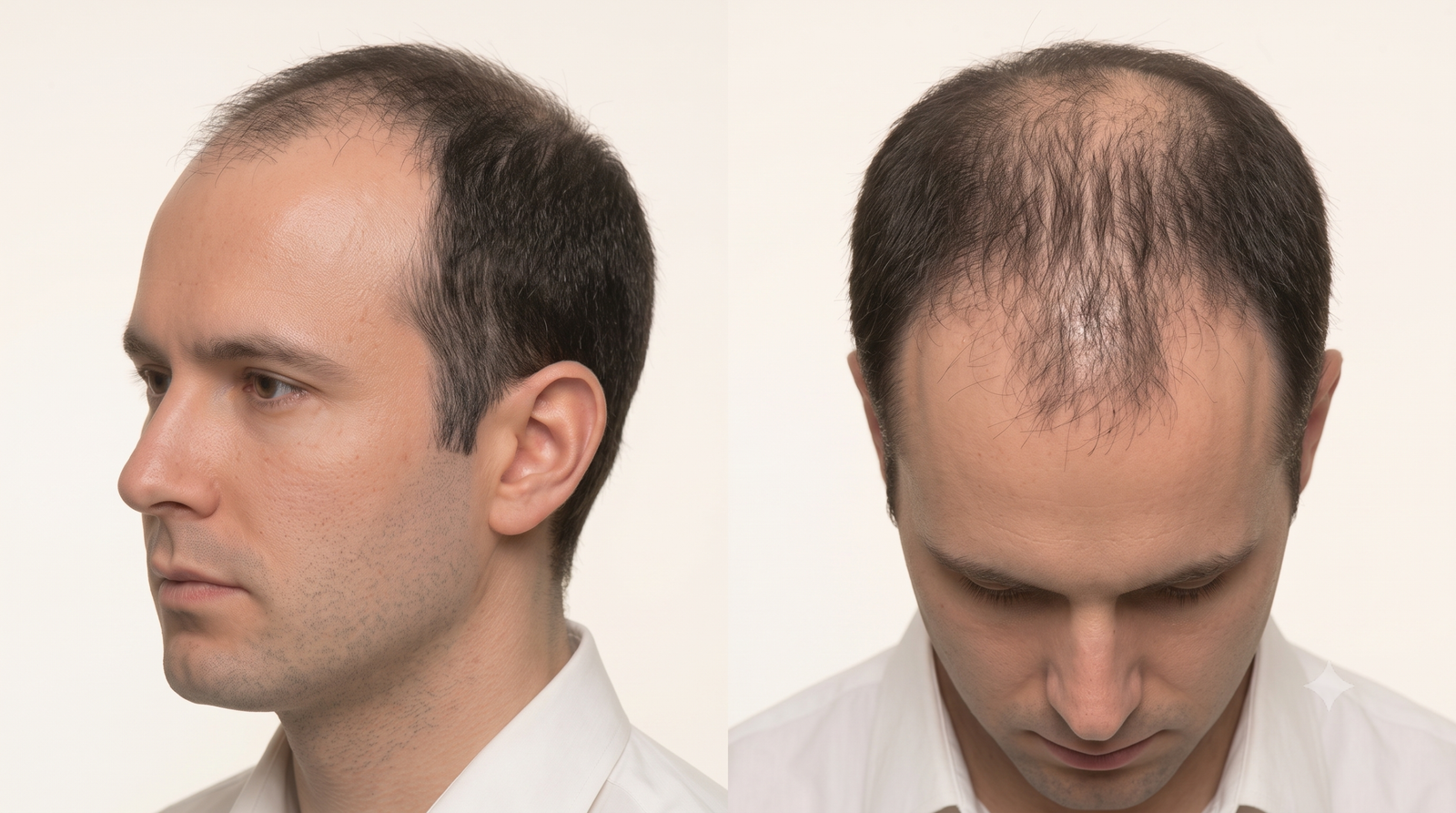
Focal Alopecia Scars
Well-defined circular or irregular patches of permanent hair loss from localized trauma or infection.
Stable Scarring Alopecia
Inactive inflammatory alopecia conditions where disease progression has completely halted.
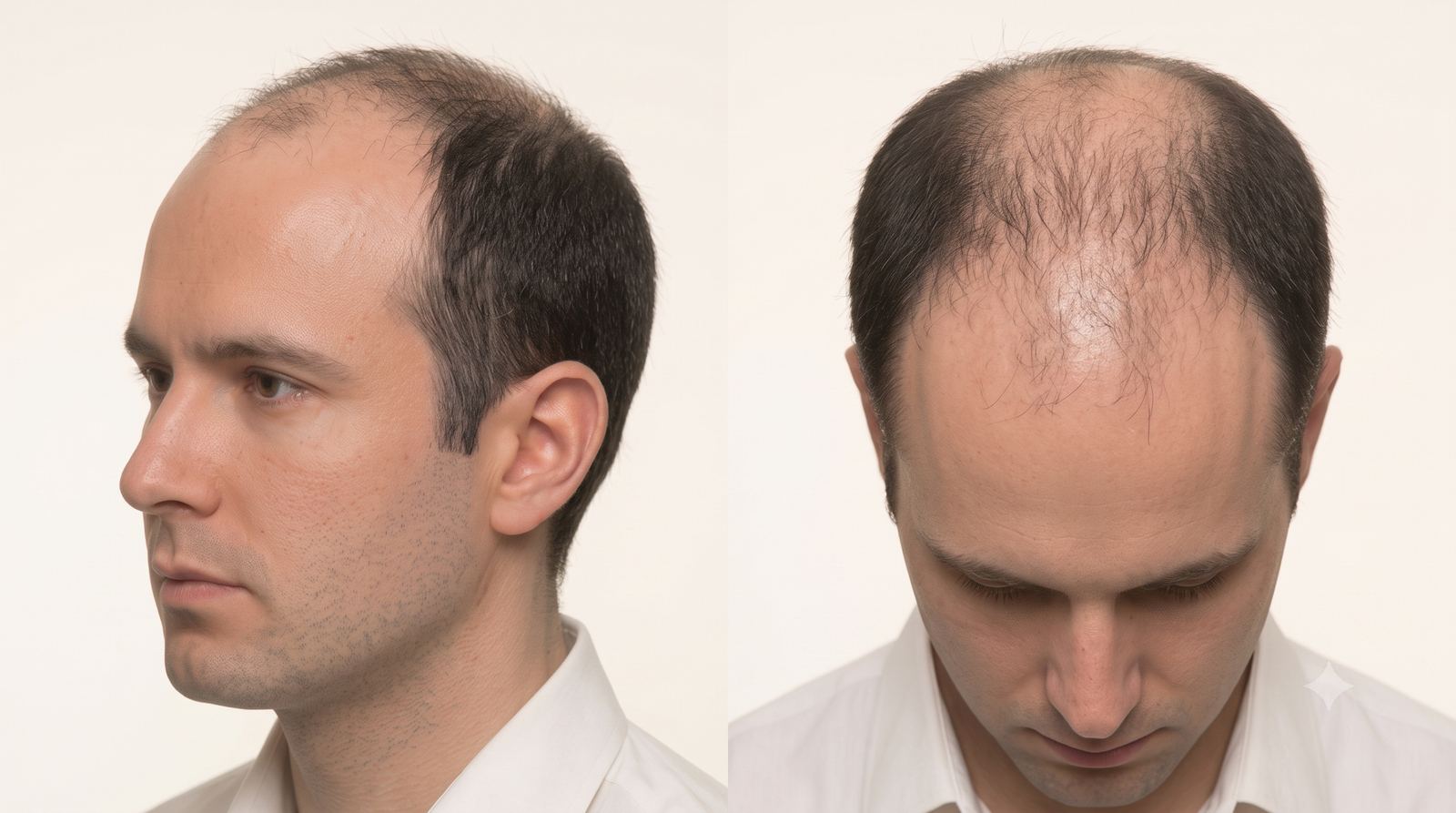
Extensive Scarring
Large-scale scarring patterns requiring staged graft planning and conservative donor preservation.
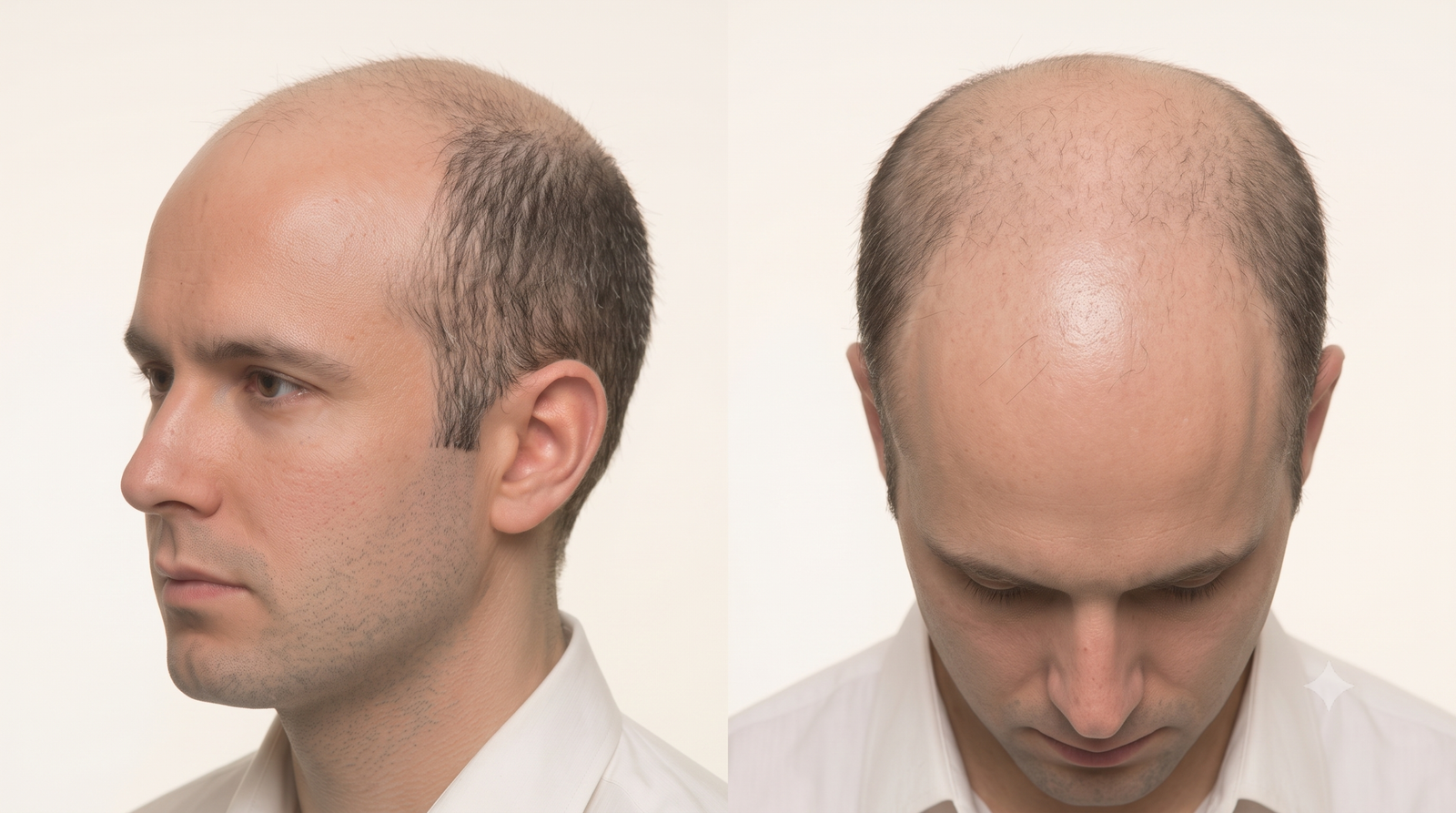
Corrective Scars
Complex or dense scar tissue from previous surgical procedures requiring specialized revision planning.
Benefits Of Scarring Hair Transplant In Delhi
For appropriately selected patients, hair transplantation can provide follicular coverage in areas where scarring has permanently destroyed native hair follicles. The approach is individualized according to the cause of the scar, tissue characteristics, surrounding hair, and available donor follicles.
Restores Follicular Growth To Scarred Areas
Healthy donor follicles can be introduced into selected areas where permanent hair loss has occurred.

Meet Your Scarring Hair Transplant Surgeon In Delhi
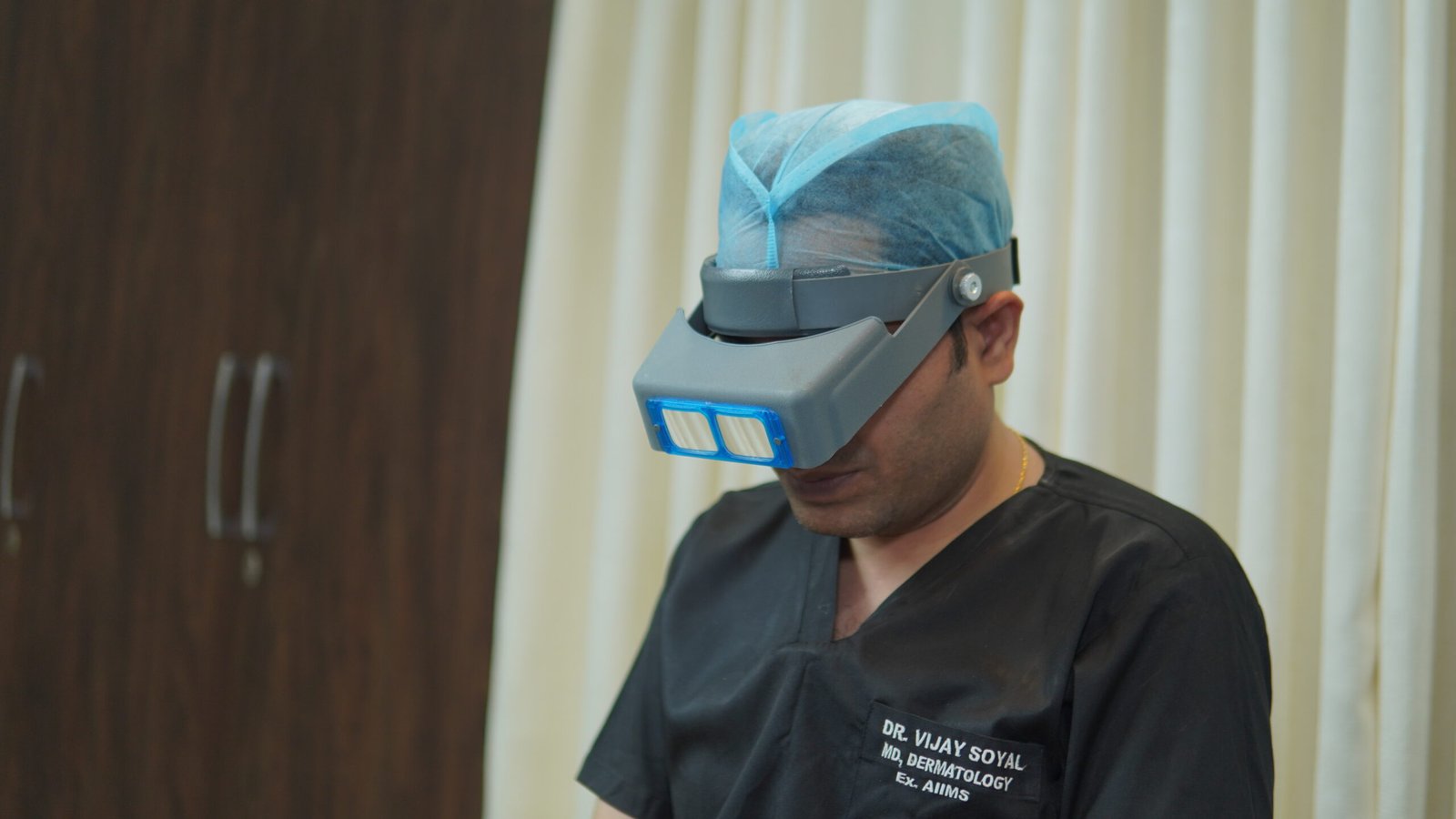
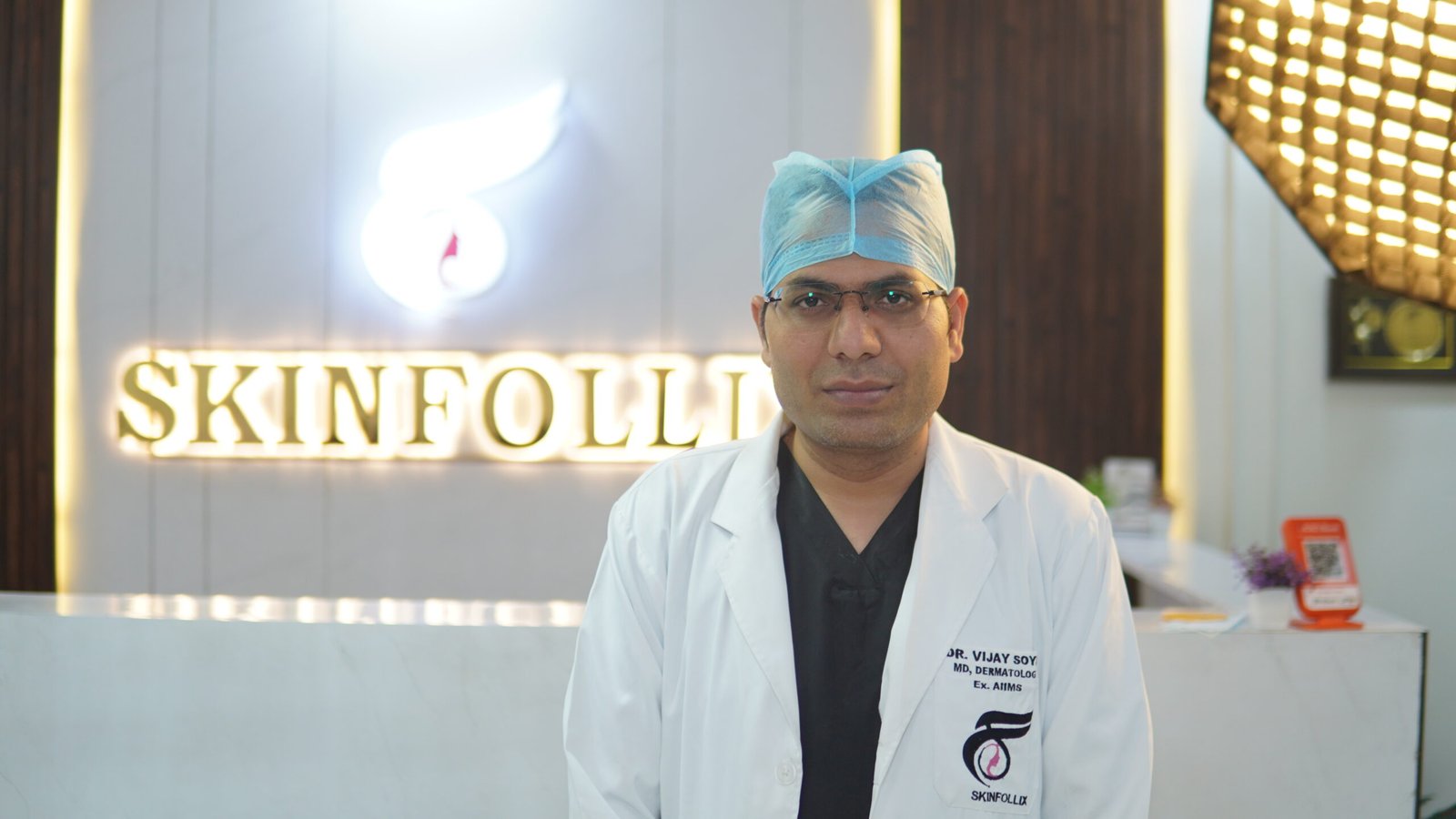
MD Dermatology, AIIMS · Hair Restoration Specialist · Scalp & Scar Hair Restoration
Every Scarring Hair Transplant in Delhi at Skinfollix begins with assessment of the underlying cause of hair loss and the condition of the scarred scalp. Dr. Vijay Soyal, MD (Ex-Senior Dermatologist, AIIMS Delhi), evaluates disease activity, scalp health, scar characteristics, donor density, hair caliber, and the patient's restoration goals before determining whether transplantation is appropriate.
Scar tissue presents a different recipient environment from normal scalp. Graft placement therefore requires consideration of tissue quality, vascularity, scar thickness, existing hair direction, and the amount of coverage that can realistically be achieved. The surgical plan is designed to improve coverage without assuming that scarred tissue will respond in the same way as unaffected scalp.
Scarring Hair Transplant Before And After Results
Scar restoration outcomes reflect careful case selection, tissue assessment, and precise graft placement within scarred scalp tissue. Drag the slider on each result below to compare the before and after outcome across different scar restoration protocols at Skinfollix. Individual results vary based on hair loss type, stage, treatment selected and adherence to the plan.
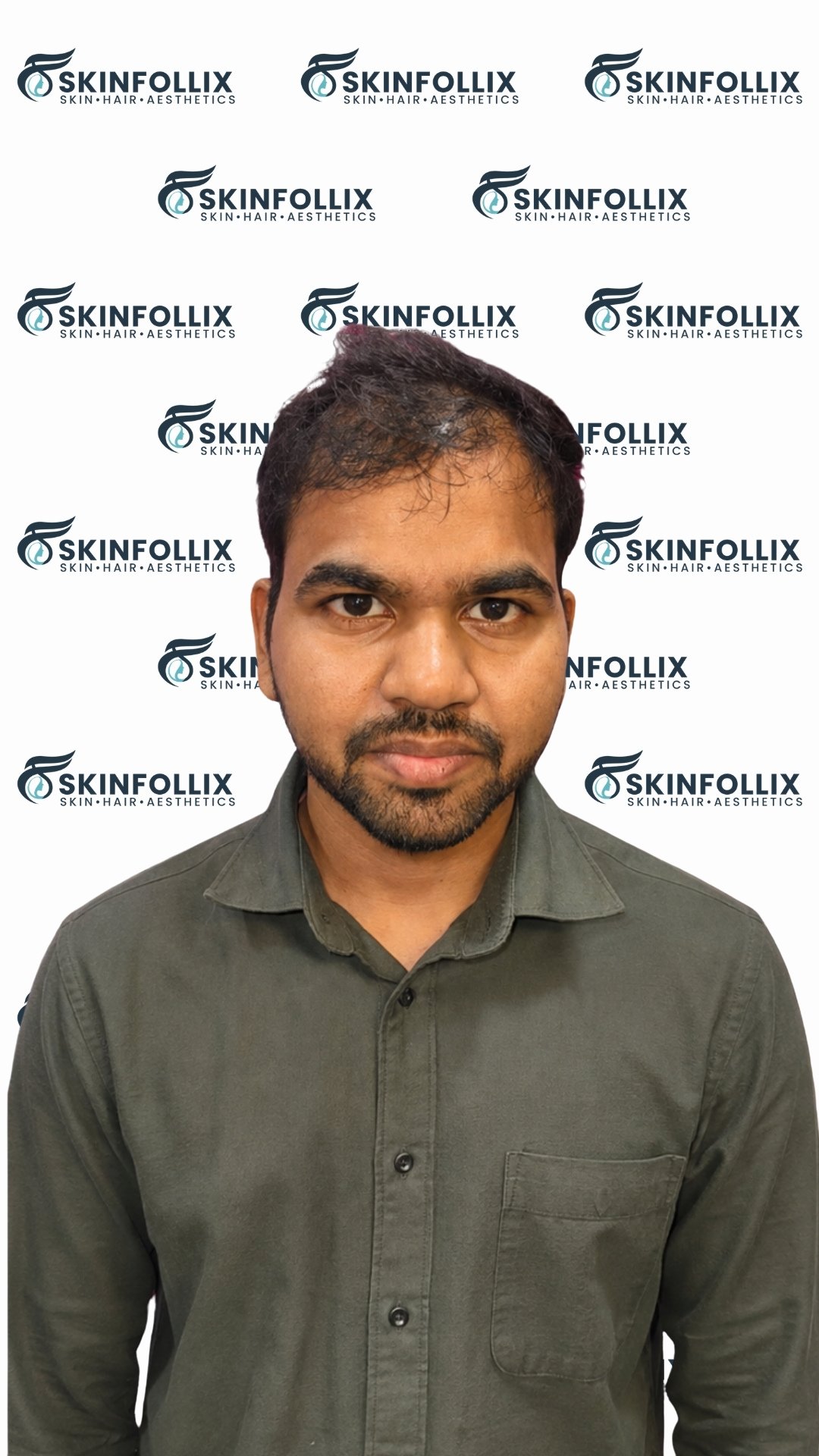
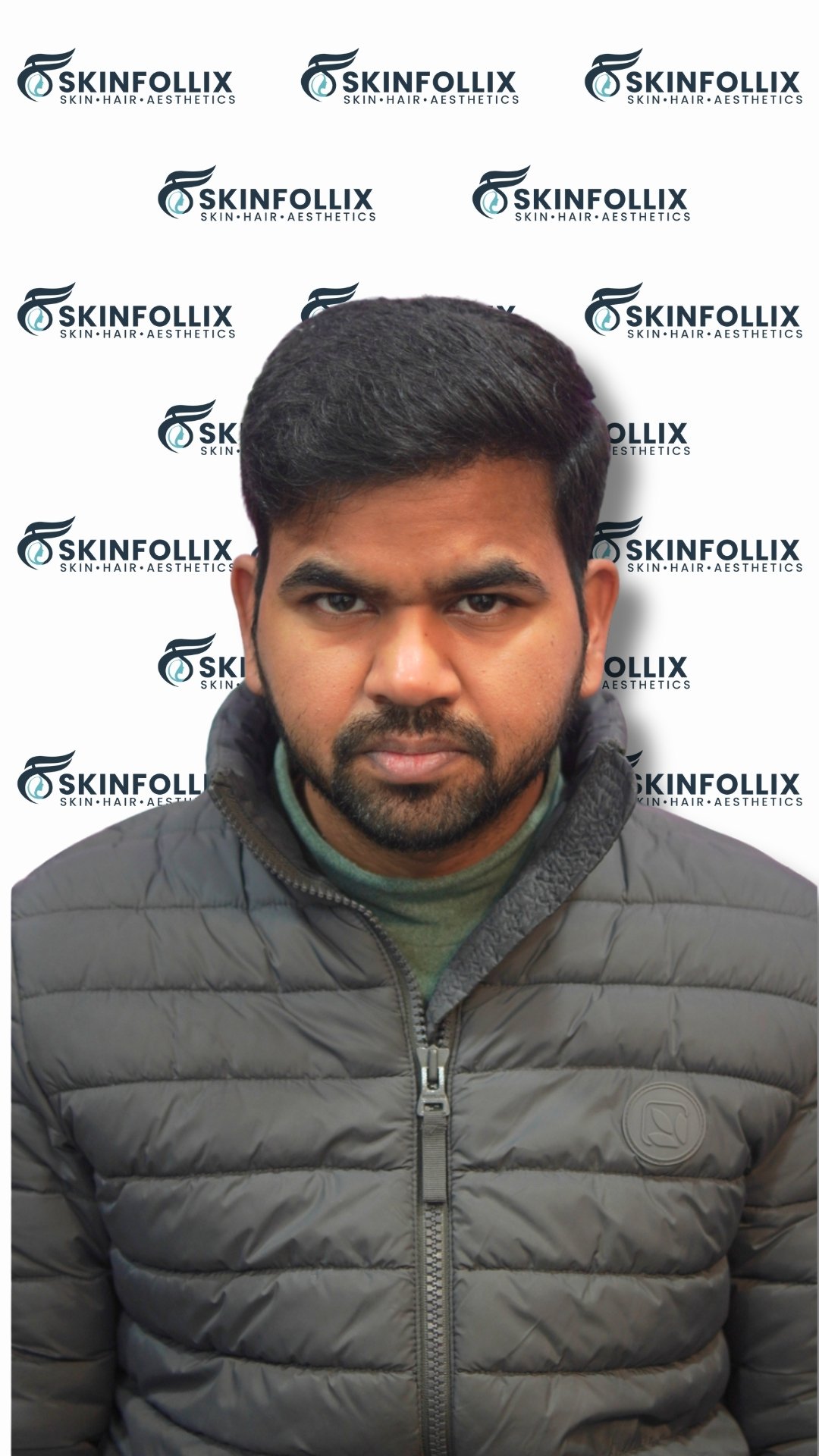
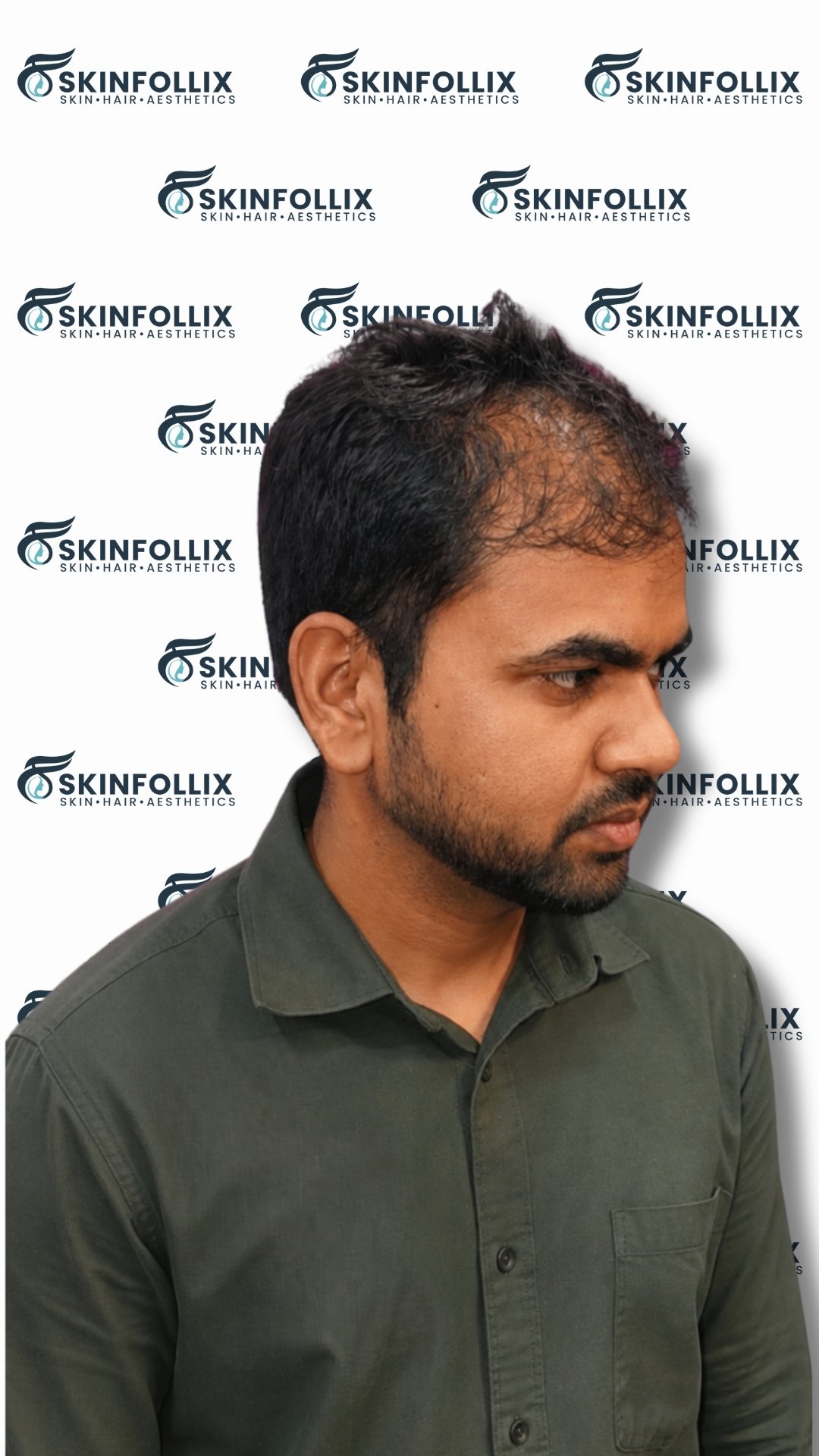
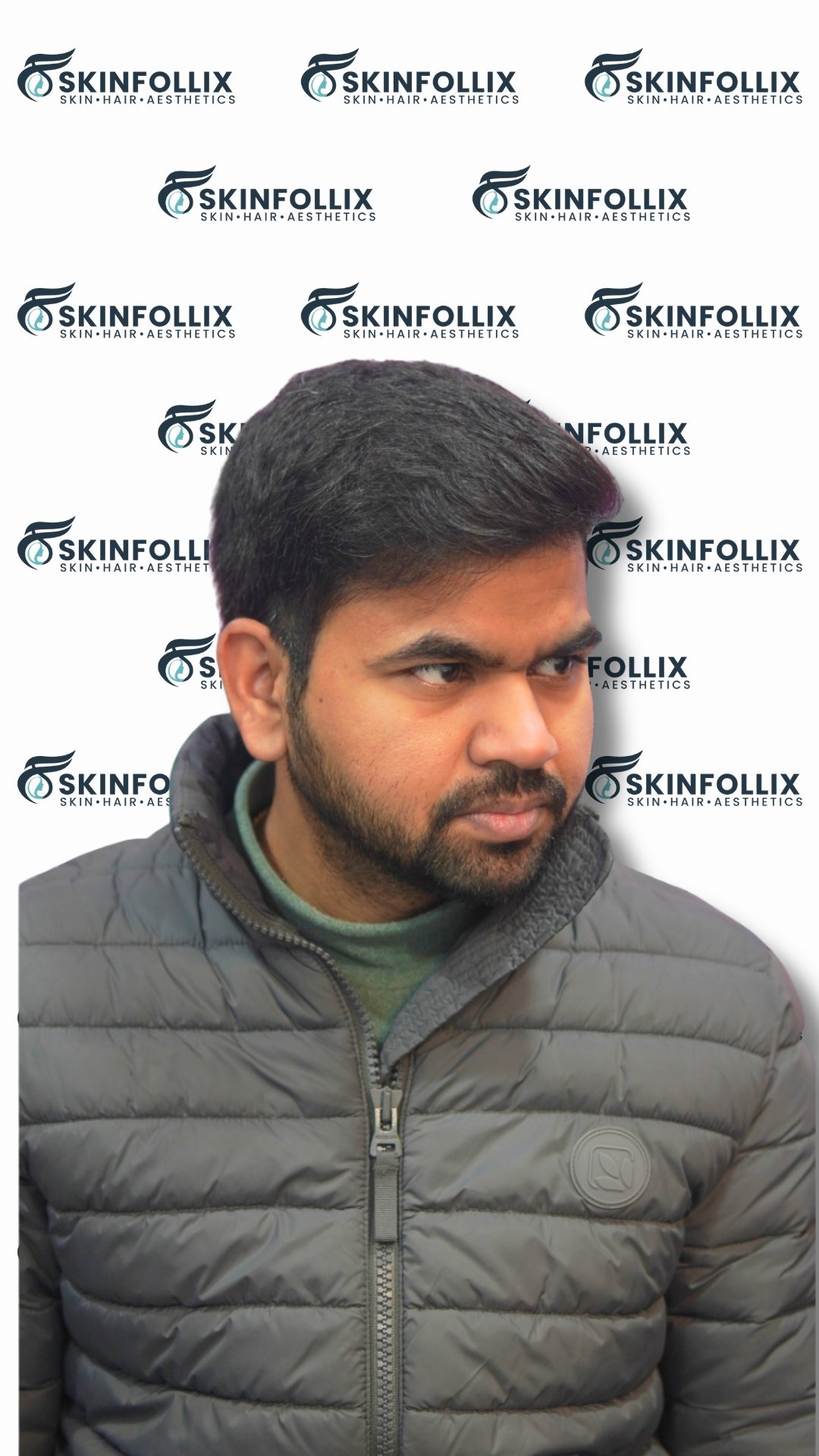
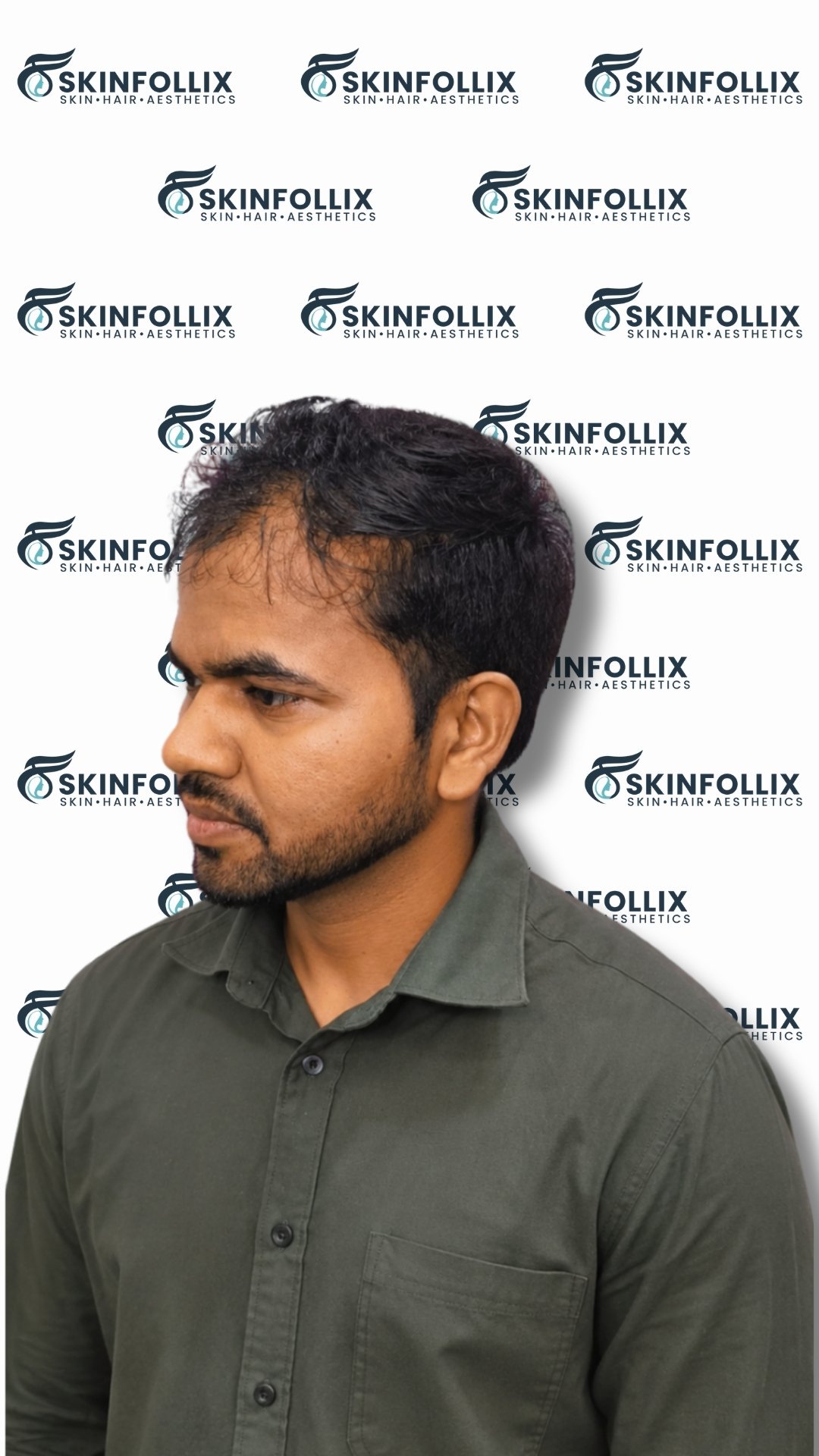
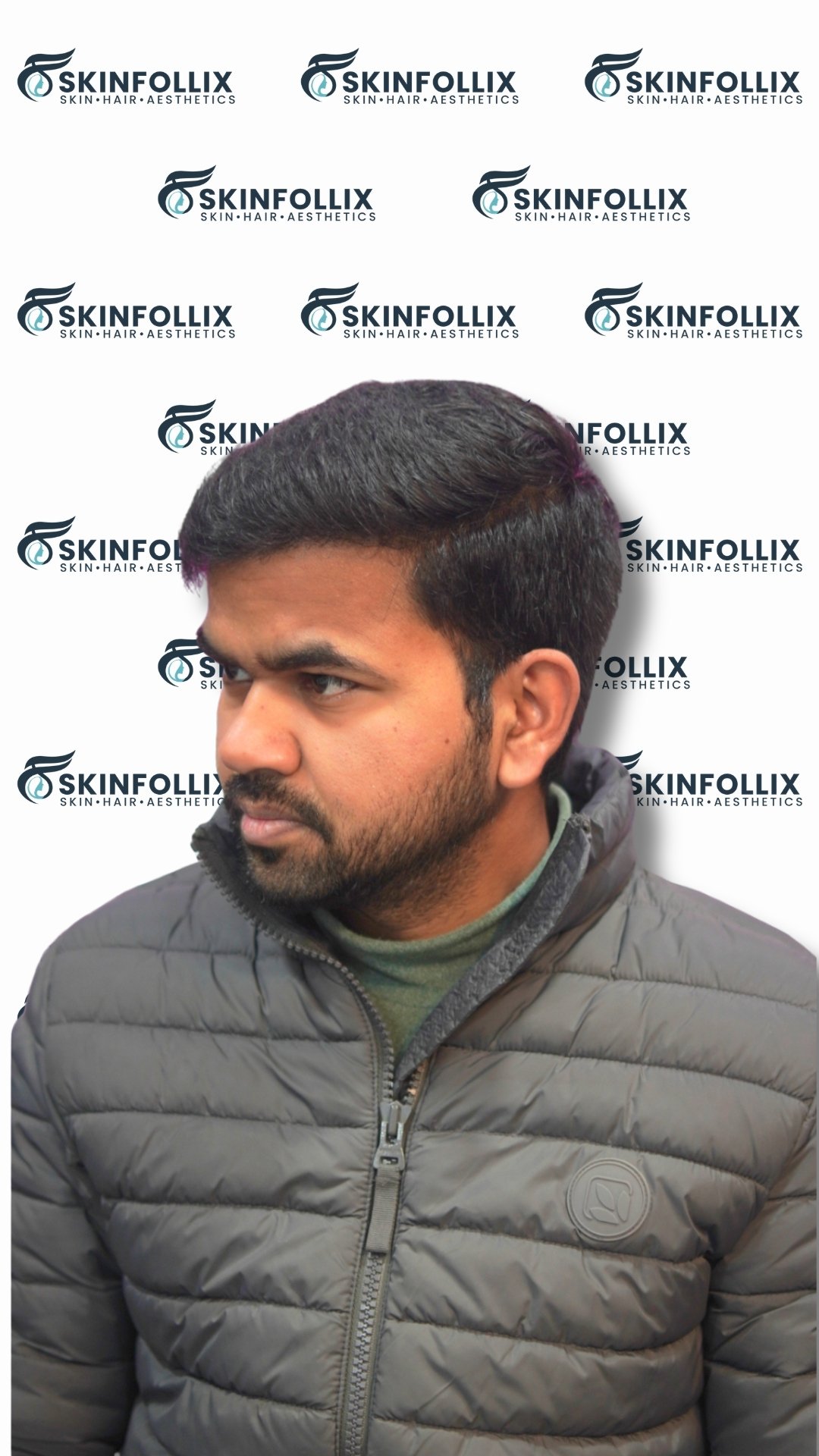
Results shown are actual patient outcomes. Individual results may vary based on hair loss type, stage, treatment combination and adherence to the recommended plan.
Our Scarring Hair Transplant Process
Scarring hair restoration requires a diagnostic and surgical workflow that begins with determining why the follicles were lost and whether the scar is suitable for transplantation. At Skinfollix, treatment planning considers disease stability, recipient tissue, donor availability, graft characteristics, and the degree of restoration that can realistically be achieved.
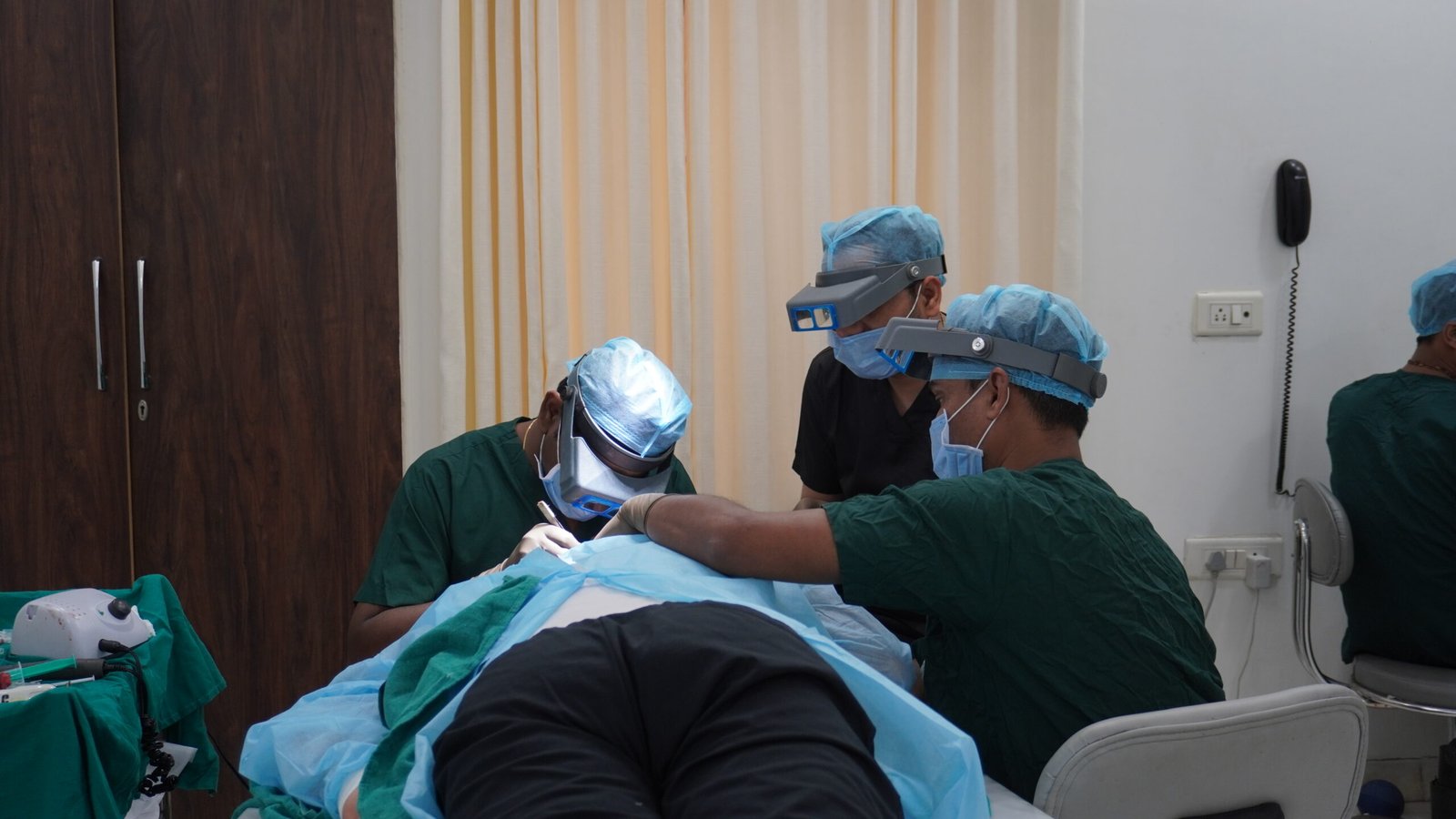
Diagnosis & Scalp Assessment
The cause and stability of the scarring process are evaluated along with scalp condition, scar characteristics, surrounding hair, donor density, hair caliber, previous procedures, and restoration goals.
Scar & Graft Suitability Planning
The recipient tissue is assessed for characteristics that may influence graft placement and survival. The number and distribution of grafts are planned conservatively according to donor availability and the area requiring coverage.
FUE Graft Extraction & Precision Implantation
Suitable follicular units are carefully harvested from the donor area and prepared for transplantation. Recipient sites are then created within appropriate areas of scar tissue with attention to direction, angle, spacing, and tissue condition.
Post-Operative Care & Growth Monitoring
Healing is monitored carefully following surgery. Follow-up focuses on recipient-site recovery, temporary shedding, emerging growth, and progressive maturation while assessing the response of the scarred tissue.
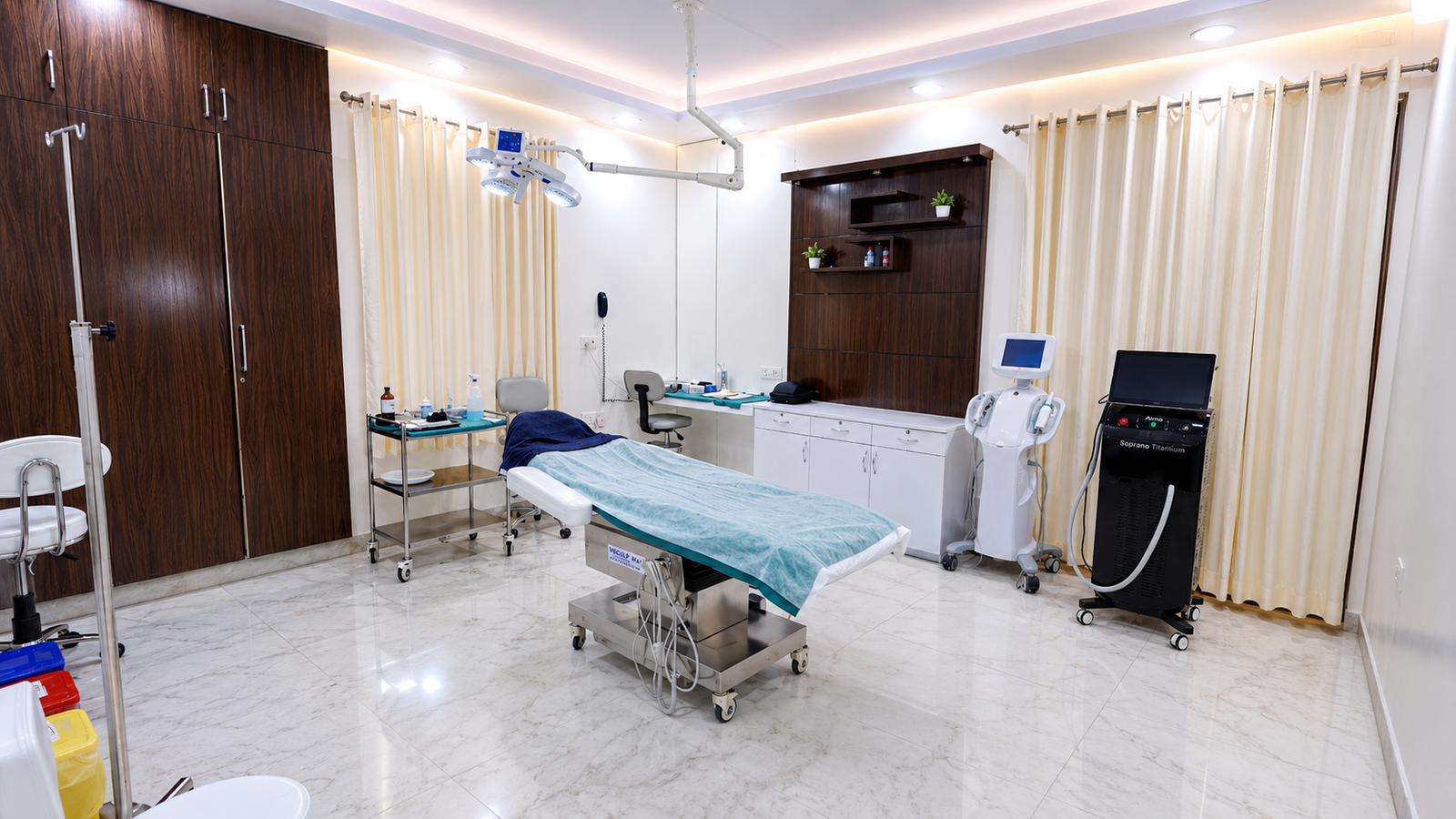
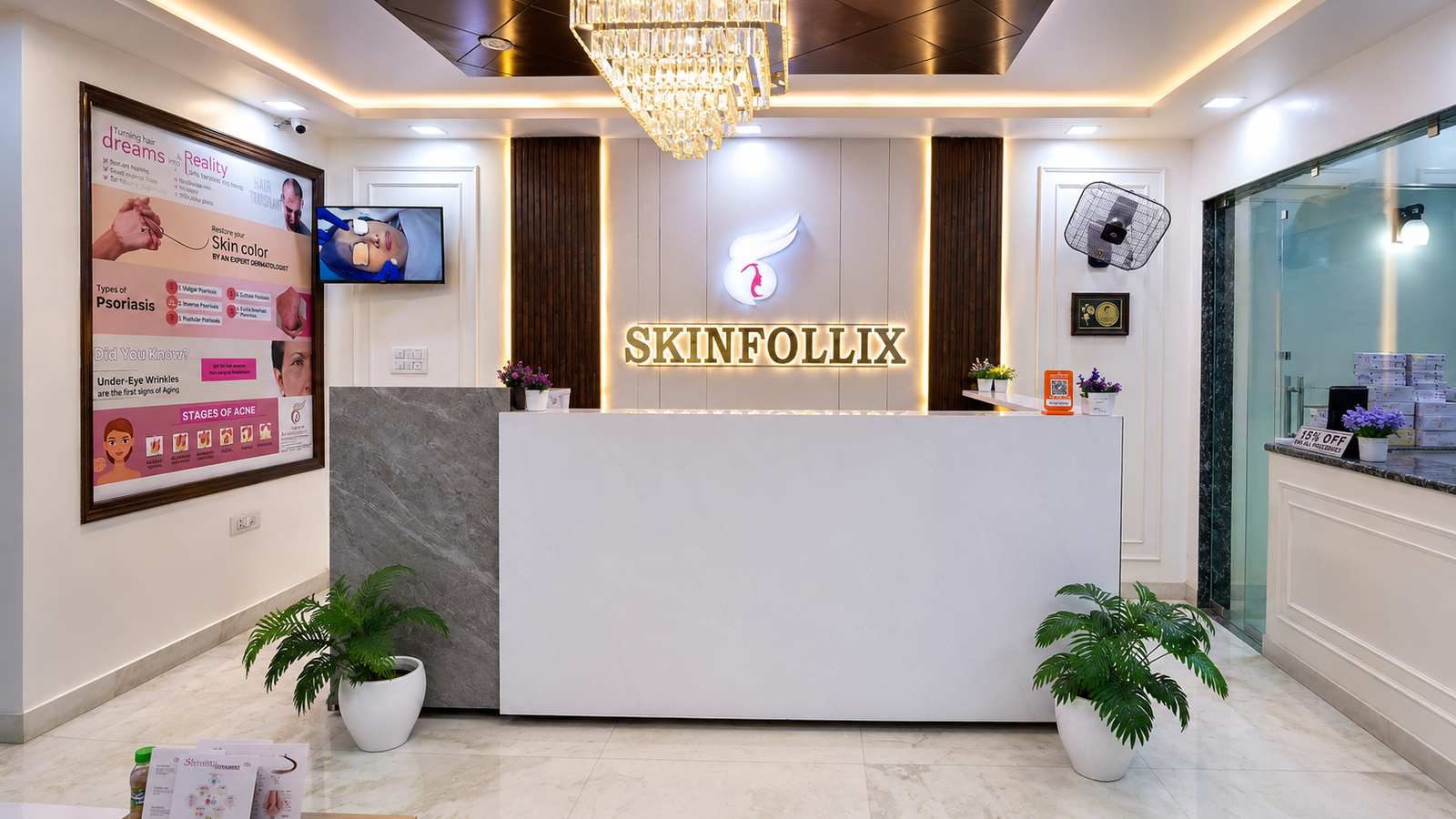
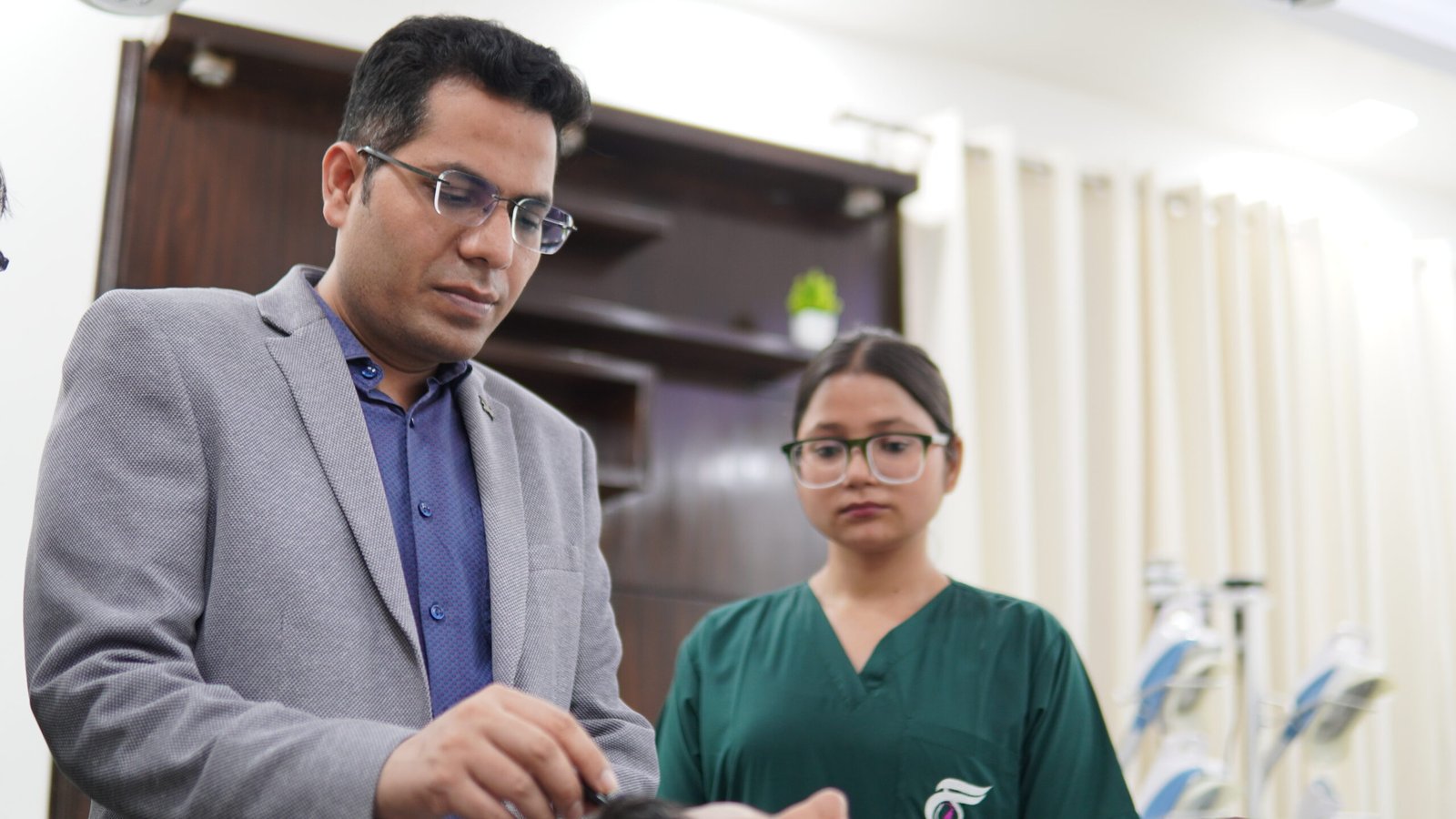
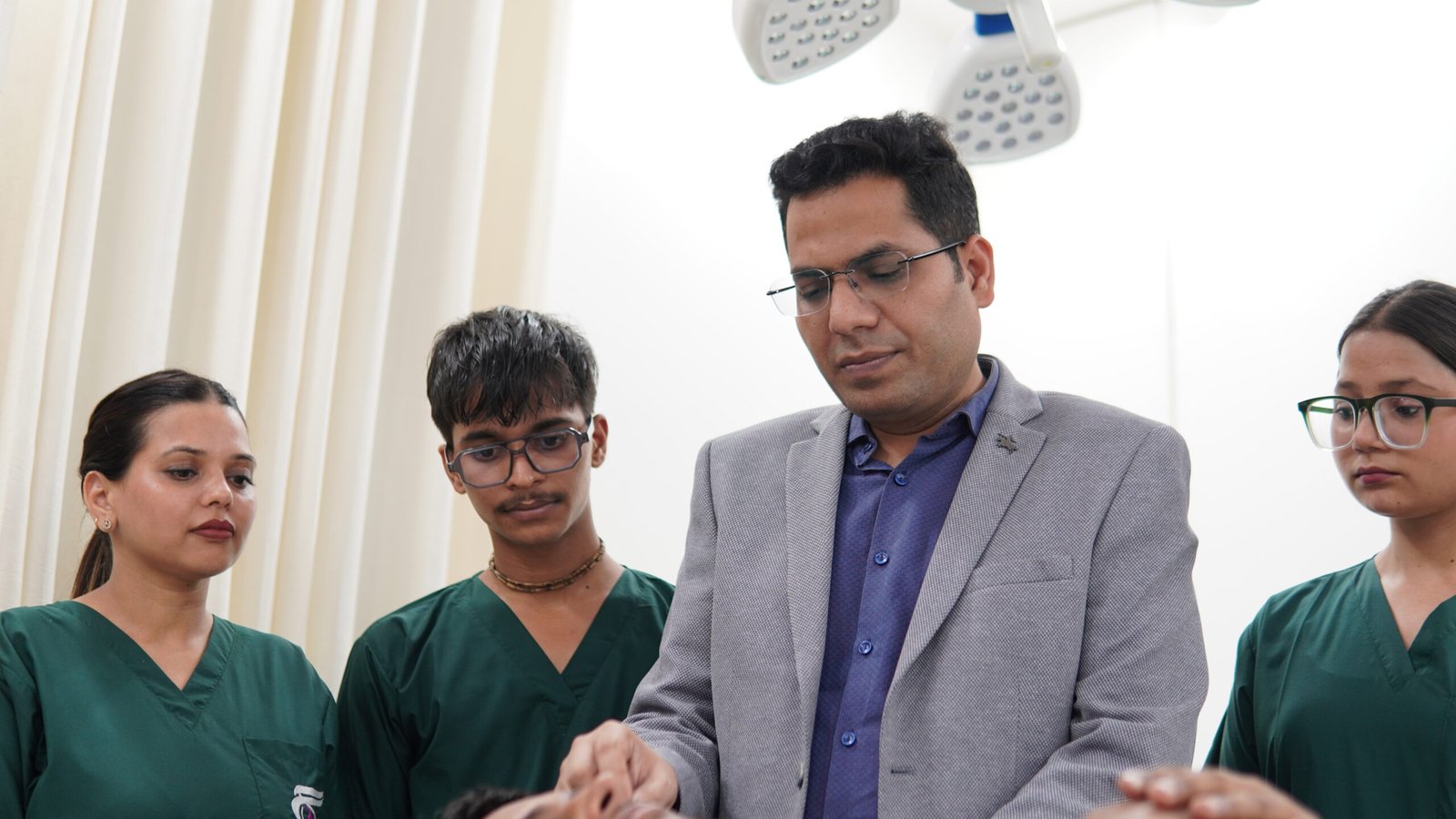
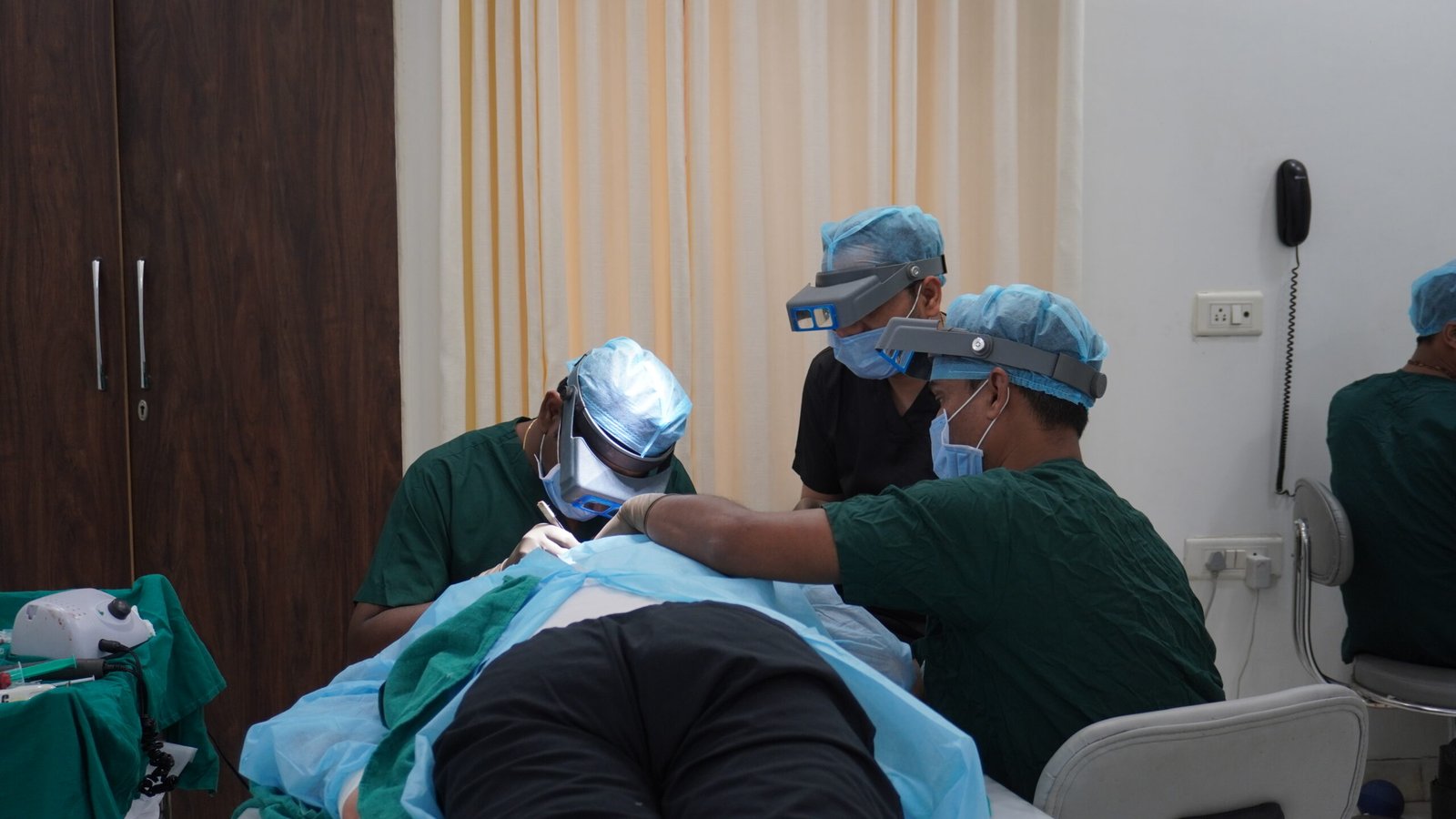
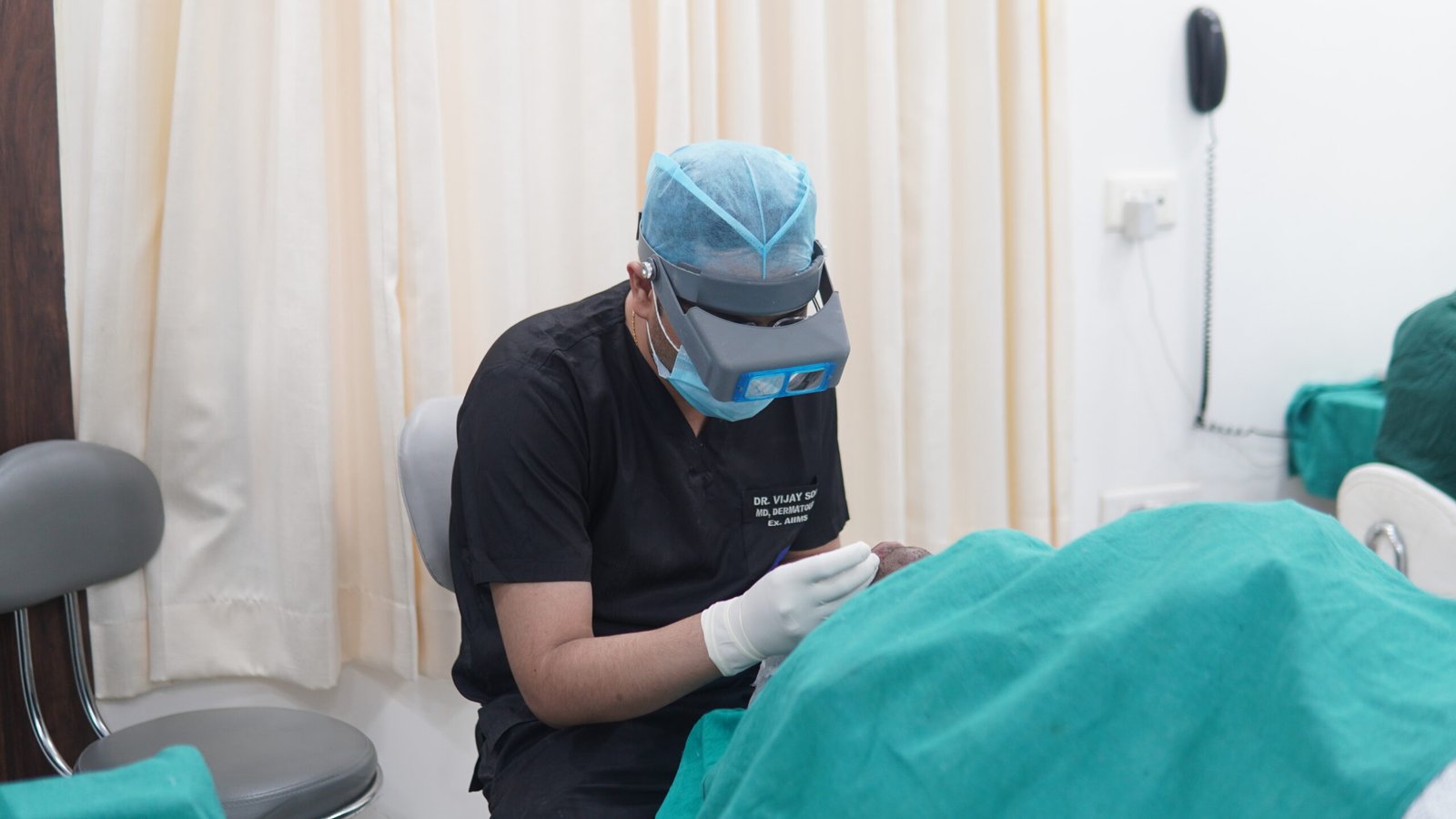
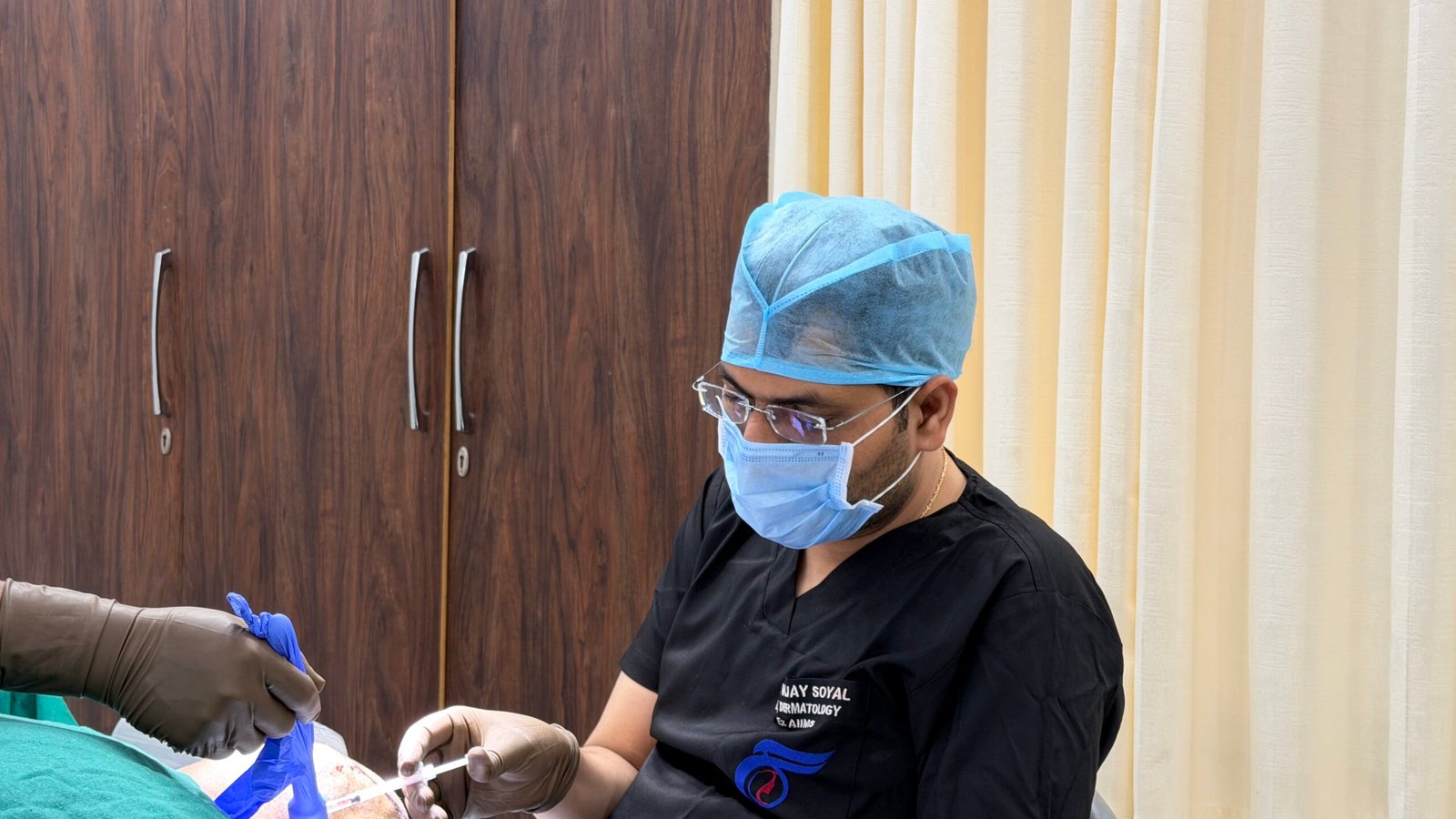
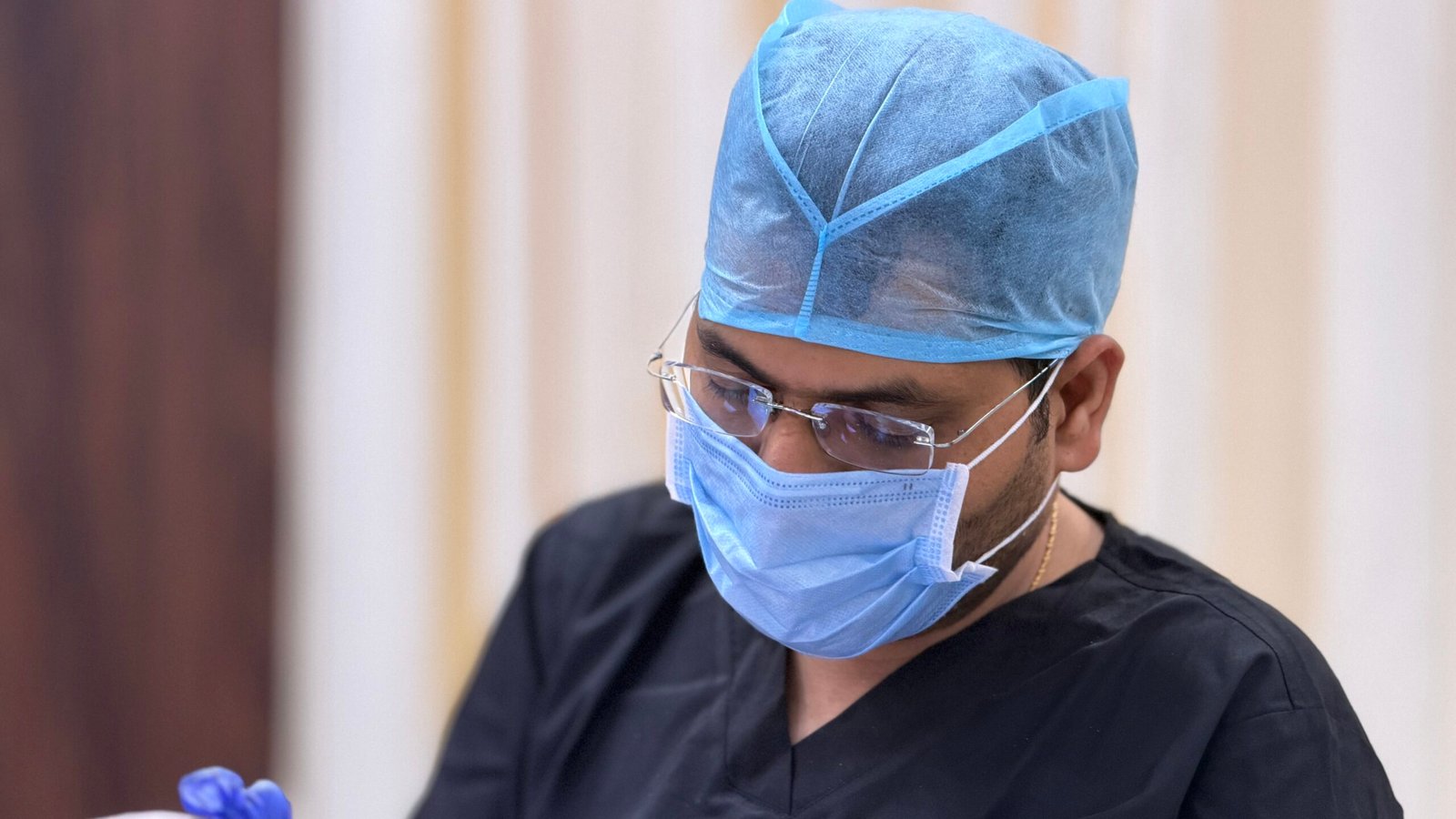
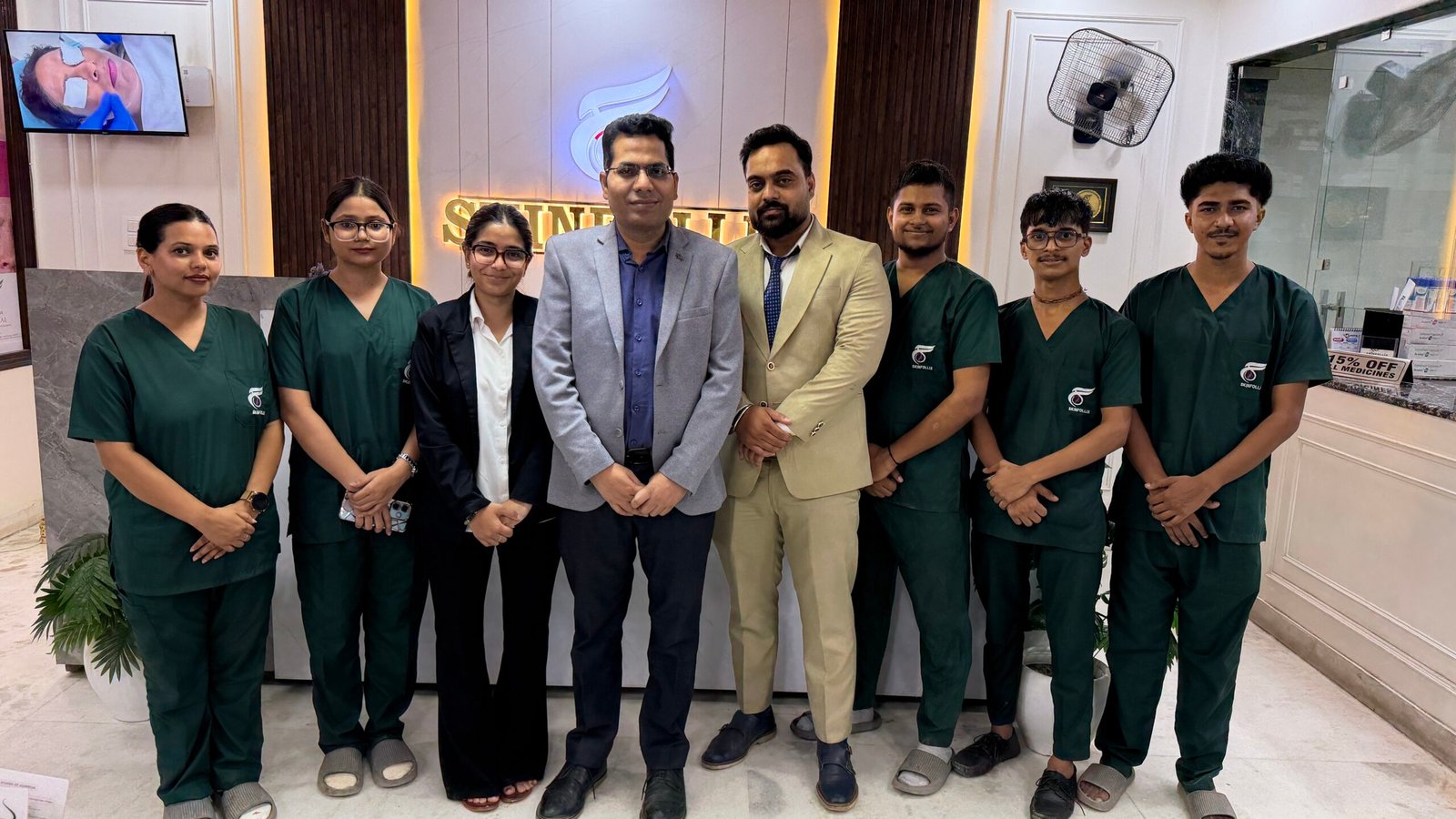
Inside Our Scarring Hair Transplant Clinic In Delhi
A closer look at the facility where Dr. Vijay Soyal and the Skinfollix team perform precision scarring hair restoration and FUE procedures every day.


Awards & Clinical Recognition
Skinfollix is recognized as a premier destination for hair restoration and hairline reconstruction in Delhi. Our surgical outcomes, led by AIIMS-trained specialist Dr. Vijay Soyal, are trusted and accredited by the world’s leading dermatological and hair restoration societies.
- Skinfollix hairline reconstruction clinical award badge 1
- Skinfollix hairline reconstruction clinical award badge 2
- Skinfollix hairline reconstruction clinical award badge 3
- Skinfollix hairline reconstruction clinical award badge 4
- Skinfollix hairline reconstruction clinical award badge 5
- Skinfollix hairline reconstruction clinical award badge 6
- Skinfollix hairline reconstruction clinical award badge 7
- Skinfollix hairline reconstruction clinical award badge 8
- Skinfollix hairline reconstruction clinical award badge 9
- International Society of Dermatology accreditation for Skinfollix Delhi
- Indian Association of Dermatologists certification for Dr. Vijay Soyal
- Fellow of the American Academy of Dermatology recognition
- Member of the International Society of Hair Restoration Surgeons (ISHRS) badge