-
Hair
Hair LossHair Treatments
-
Skin
Acne & ScarsPigmentationSkin ConcernsSkin Diseases & Growths
-
Anti-Ageing
Facial Rejuvenation
-
Laser
Laser Hair RemovalLaser Skin Rejuvenation
- Hair Transplant
- Result Gallery
- About Us
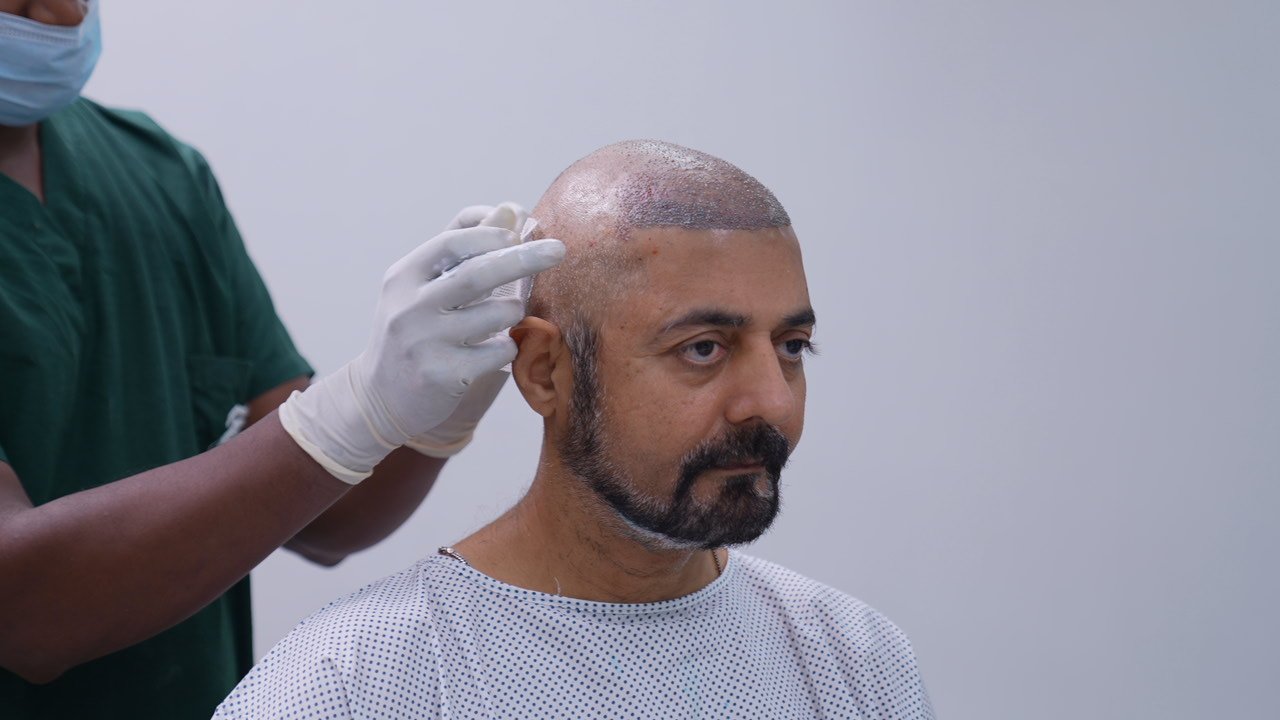
Non Shaven Hair Transplant In Delhi
A non shaven hair transplant is a specialized approach to FUE hair restoration in which selected donor and recipient areas can be treated without completely shaving the head. This can be particularly useful for patients who want to maintain their existing hairstyle and reduce the obvious visual changes associated with conventional hair transplantation. At Skinfollix Clinic, Delhi, Dr. Vijay Soyal, MD (Ex-Senior Dermatologist, AIIMS Delhi), assesses the pattern and stability of hair loss, donor density, hair caliber, existing hair length, and the areas requiring restoration before determining whether an unshaven approach is appropriate.
Get Your Custom Non Shaven Hair Restoration Plan
Share your hair-loss concerns and preferred hair length. Dr. Vijay Soyal will assess your donor area, existing hair pattern, and suitability for a non shaven FUE approach.
Non Shaven Hair Transplant & FUE Restoration In Delhi
Non shaven restoration is not a single technique suitable for every patient. The approach is selected according to hair-loss pattern, donor characteristics, existing hair length, recipient area, graft requirement, and the amount of access needed during surgery. At Skinfollix, treatment planning focuses on achieving appropriate restoration while limiting unnecessary shaving and protecting the surrounding native hair.
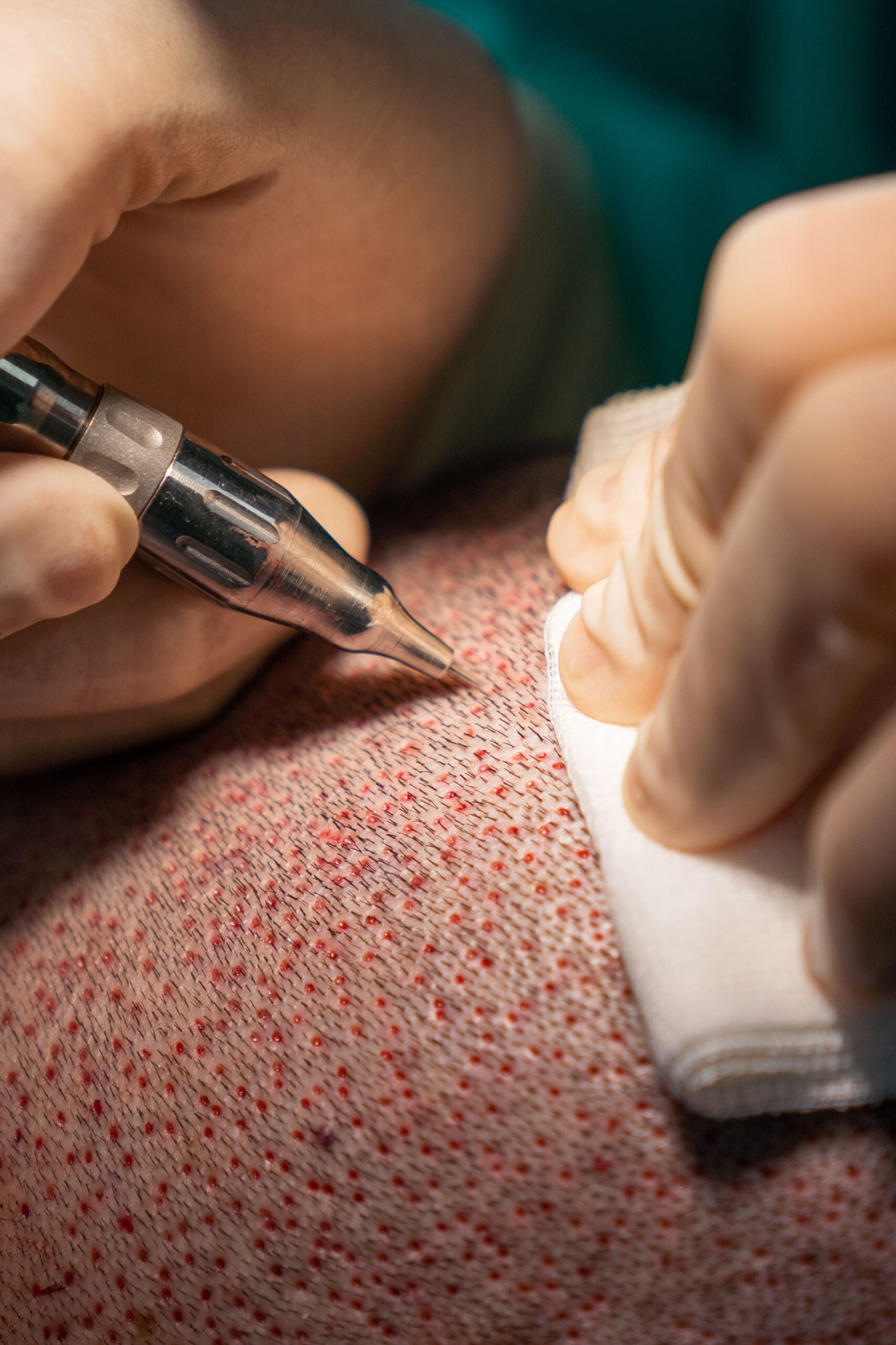
Non Shaven FUE
Selected follicular units are extracted and implanted while preserving much of the patient's existing hair length. The approach can be considered when the donor and recipient areas allow adequate surgical access.
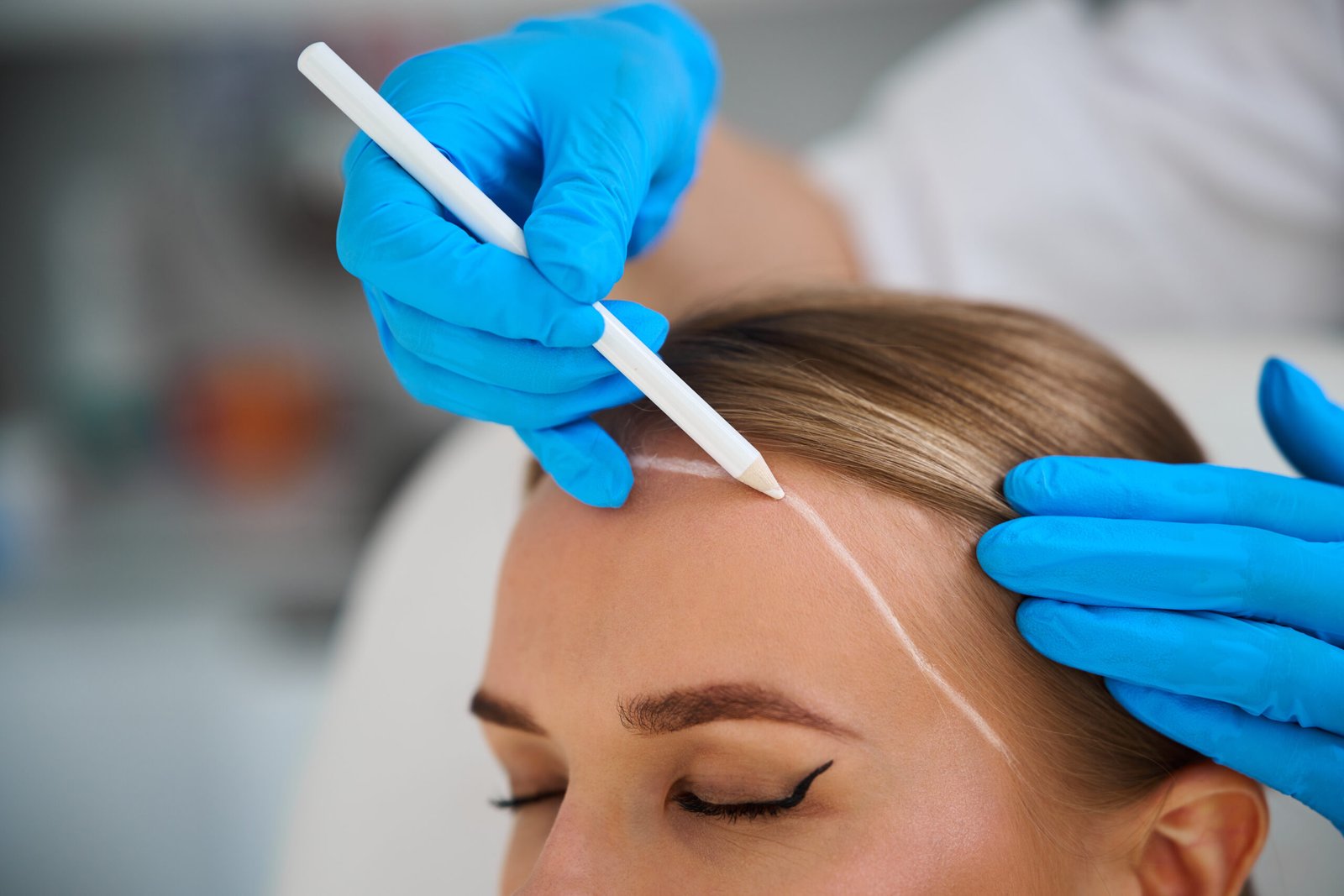
Unshaven Hair Transplant
An unshaven approach can allow selected patients to undergo hair restoration without completely shaving the scalp. Candidacy depends on hair characteristics, density, restoration area, and the number of grafts required.
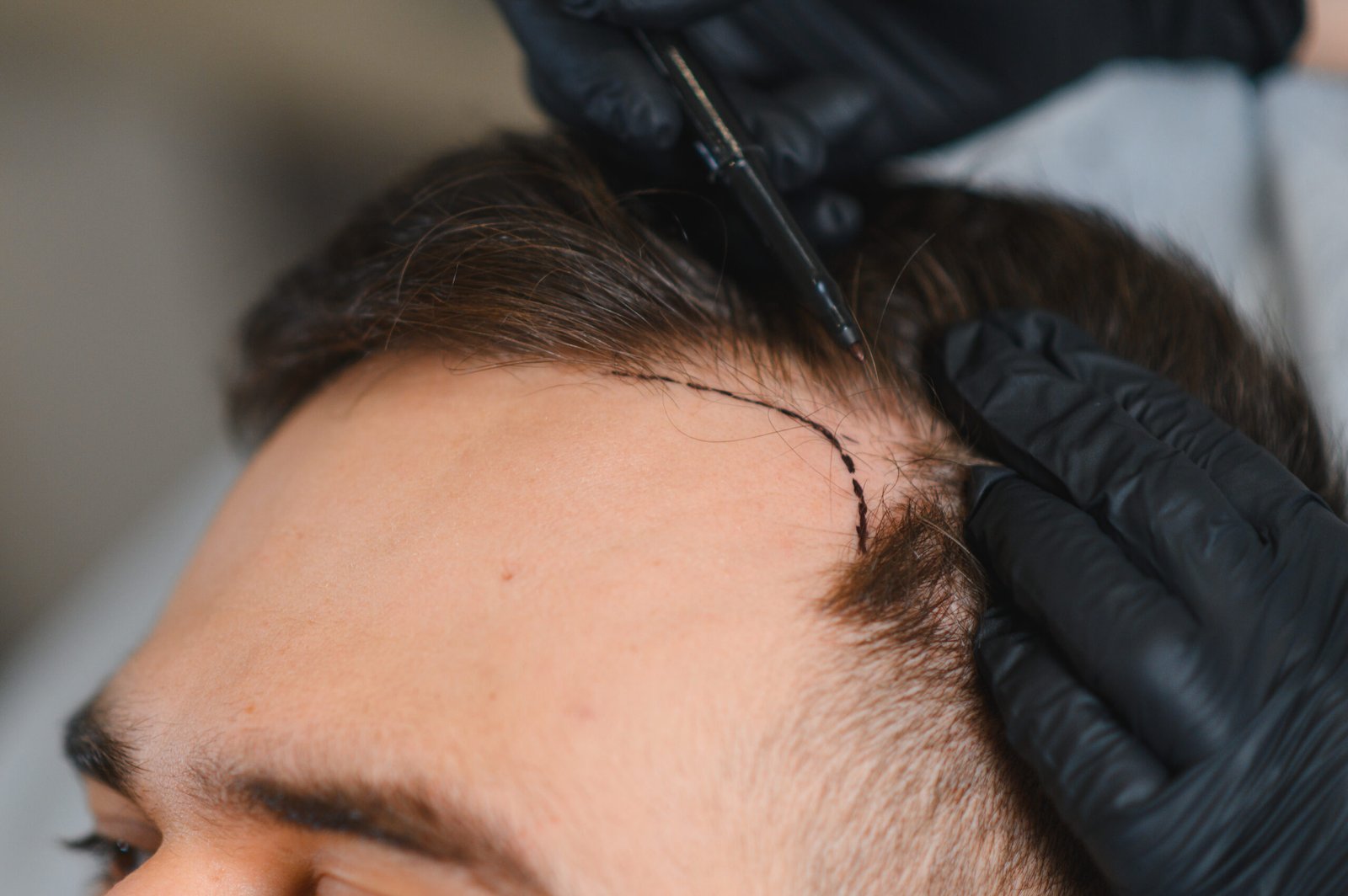
Hairline Restoration Without Shaving
Carefully planned graft placement can restore a receding or irregular hairline while working between existing hairs. Natural direction, spacing, and transition are important for avoiding an abrupt or artificial appearance.
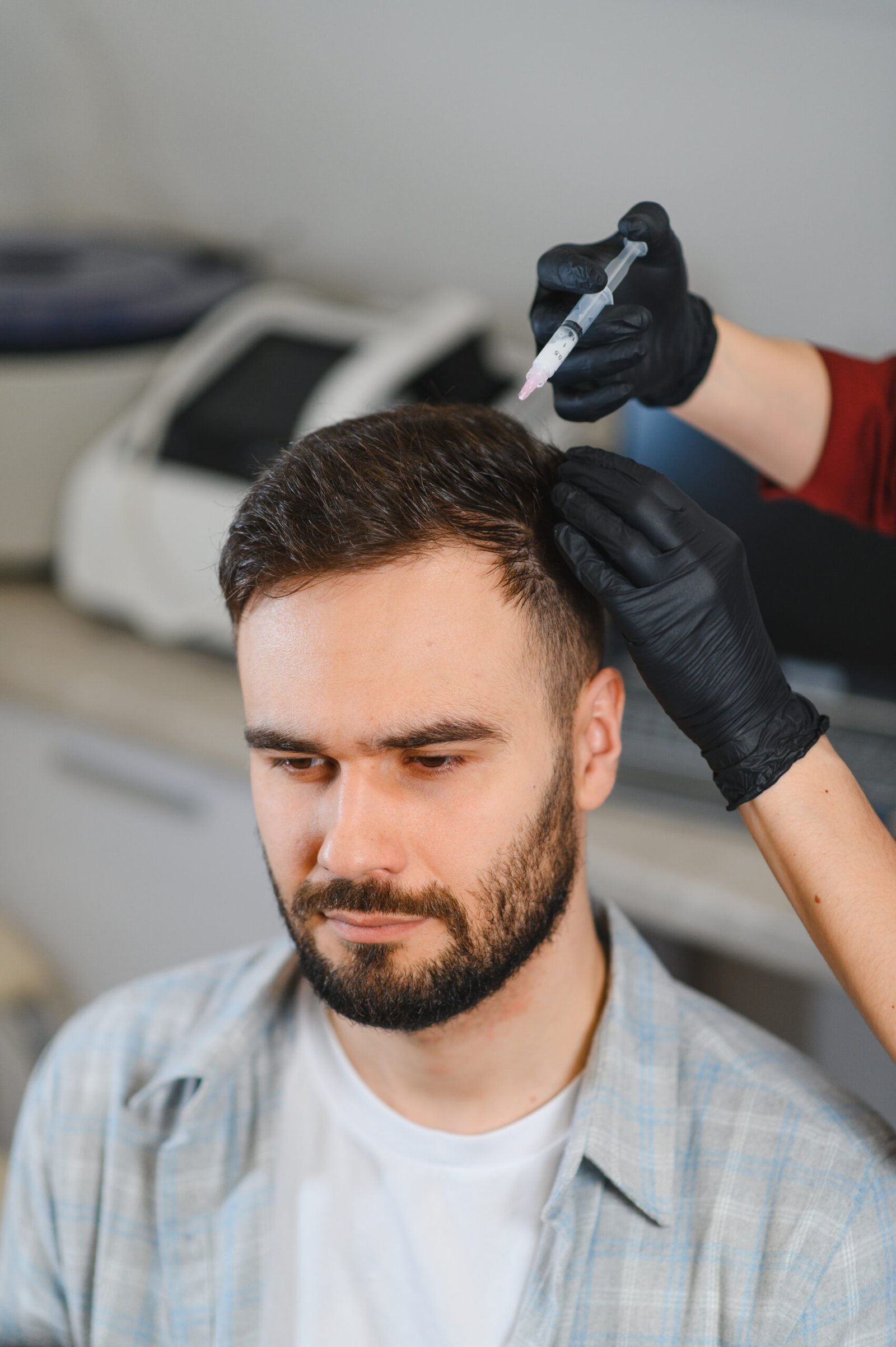
Crown Restoration Without Shaving
Selected crown-thinning cases may be suitable for a non shaven approach when sufficient access and donor supply are available. Graft placement is planned around existing native hairs rather than treating the area as an empty recipient zone.
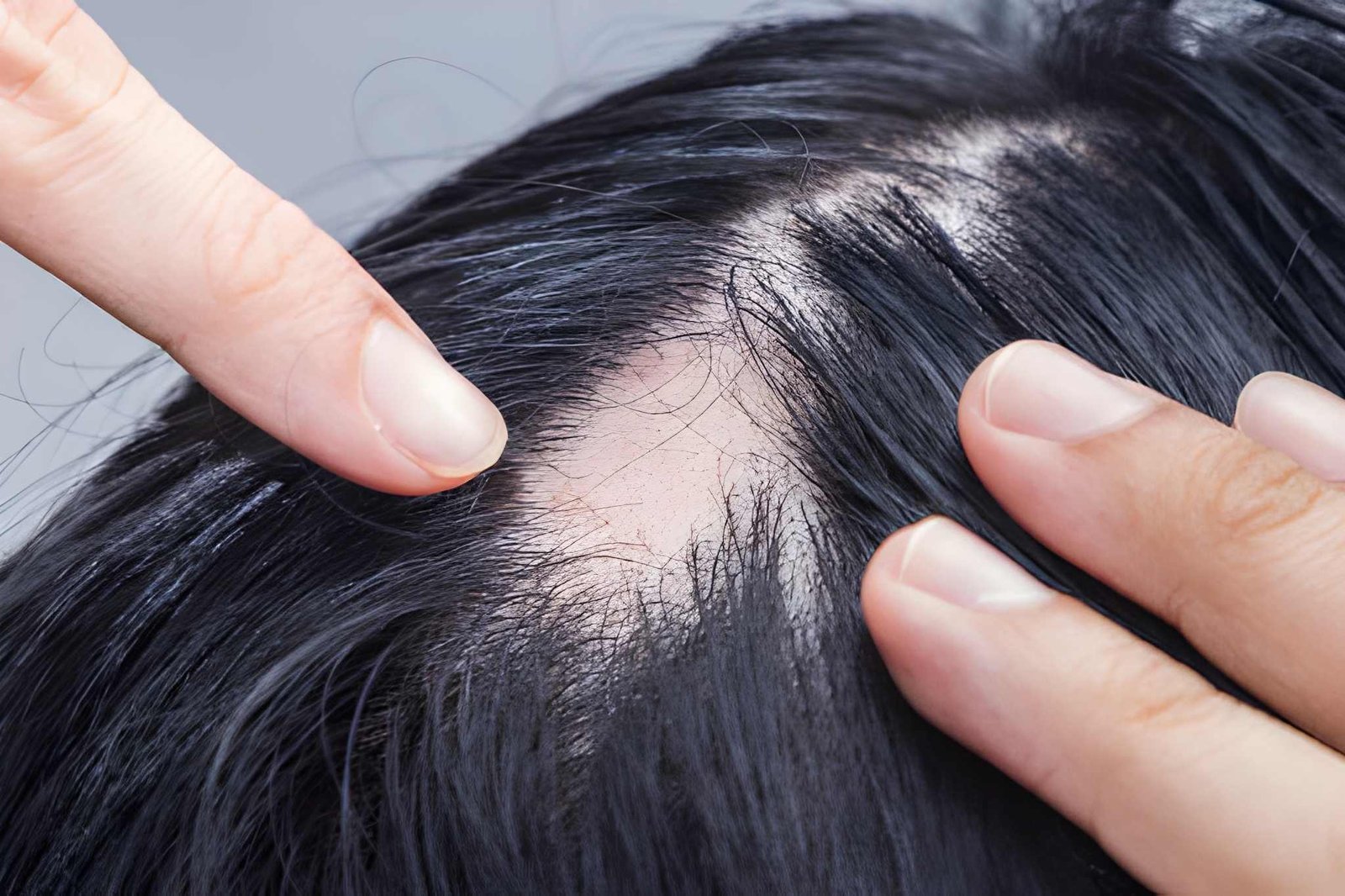
Diffuse Hair Restoration
Patients with suitable areas of diffuse thinning may be evaluated for transplantation between existing hairs. Careful patient selection is essential because native follicles may be vulnerable to temporary shedding during surgery.
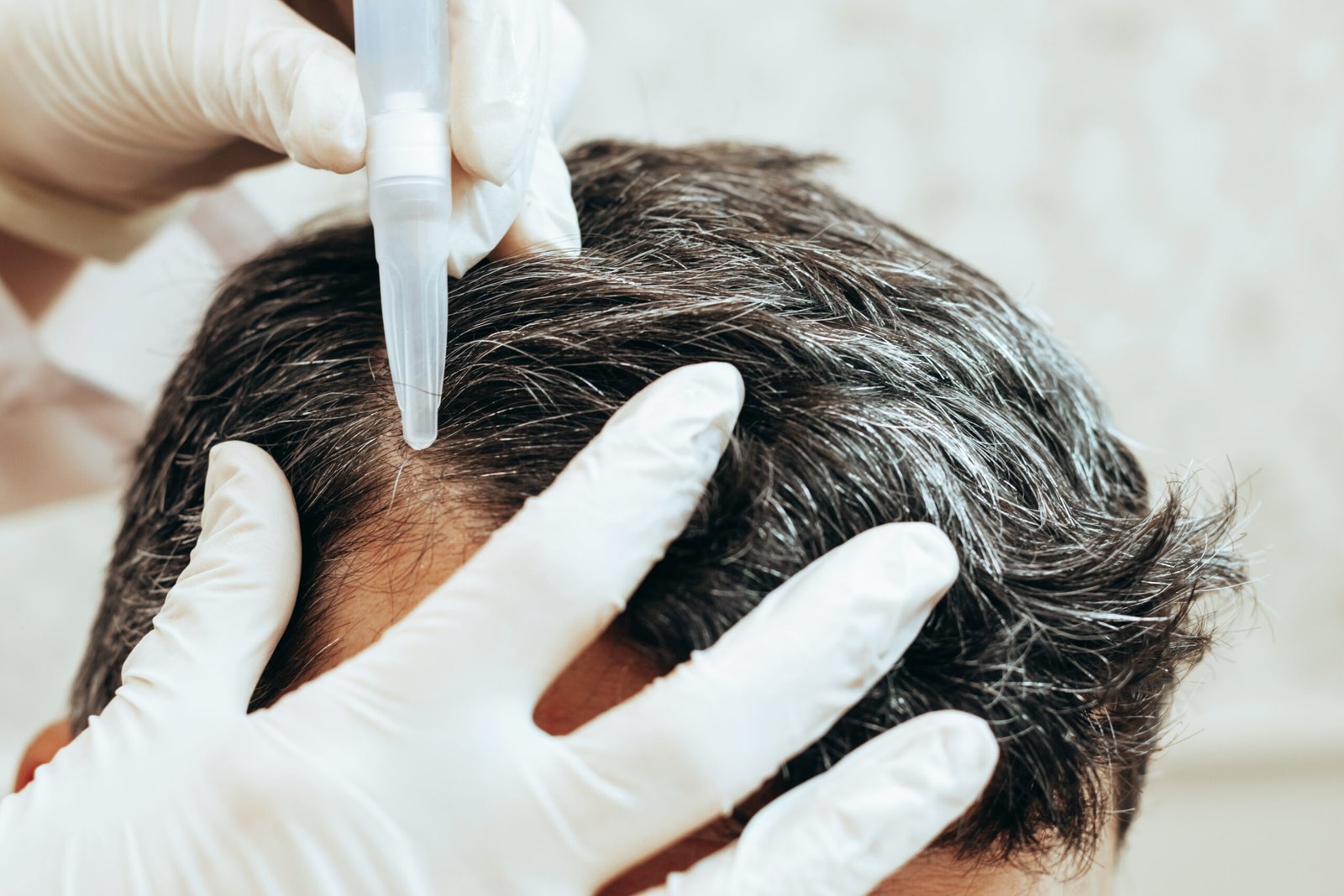
Discreet Hair Restoration
For patients concerned about the visible appearance of a shaved donor area, a non shaven approach may provide a more discreet surgical option when clinically appropriate.
Who Is An Ideal Candidate For A Non Shaven Hair Transplant?
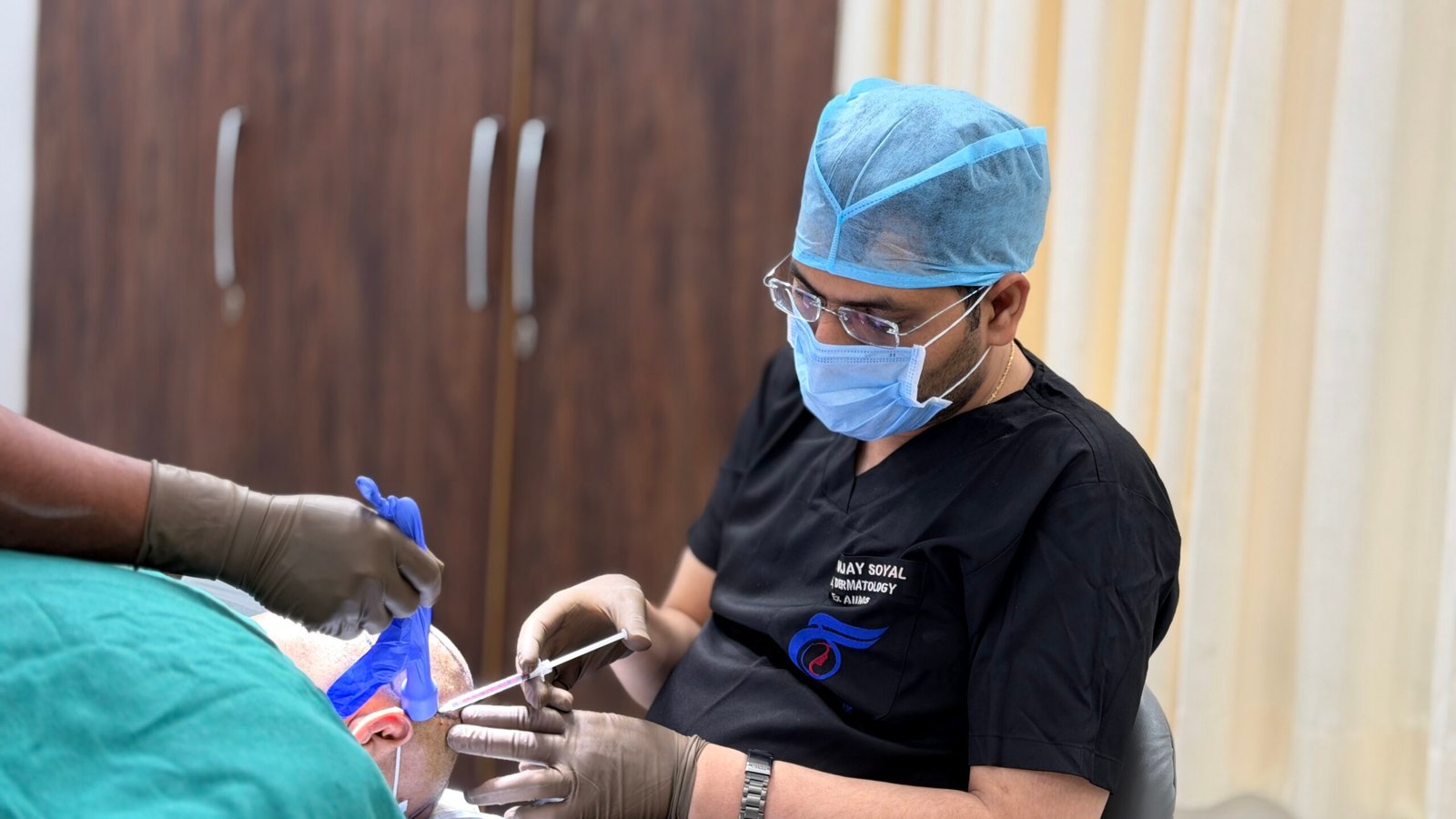
The ideal candidate for a non shaven hair transplant in Delhi is someone who requires follicular restoration but wishes to preserve much of their existing hair length during the procedure. Suitability depends on more than the desire to avoid shaving. Dr. Vijay Soyal evaluates the cause and stability of hair loss, donor density, hair caliber, recipient-site characteristics, existing hairstyle, and the number and distribution of grafts required before recommending an unshaven approach.
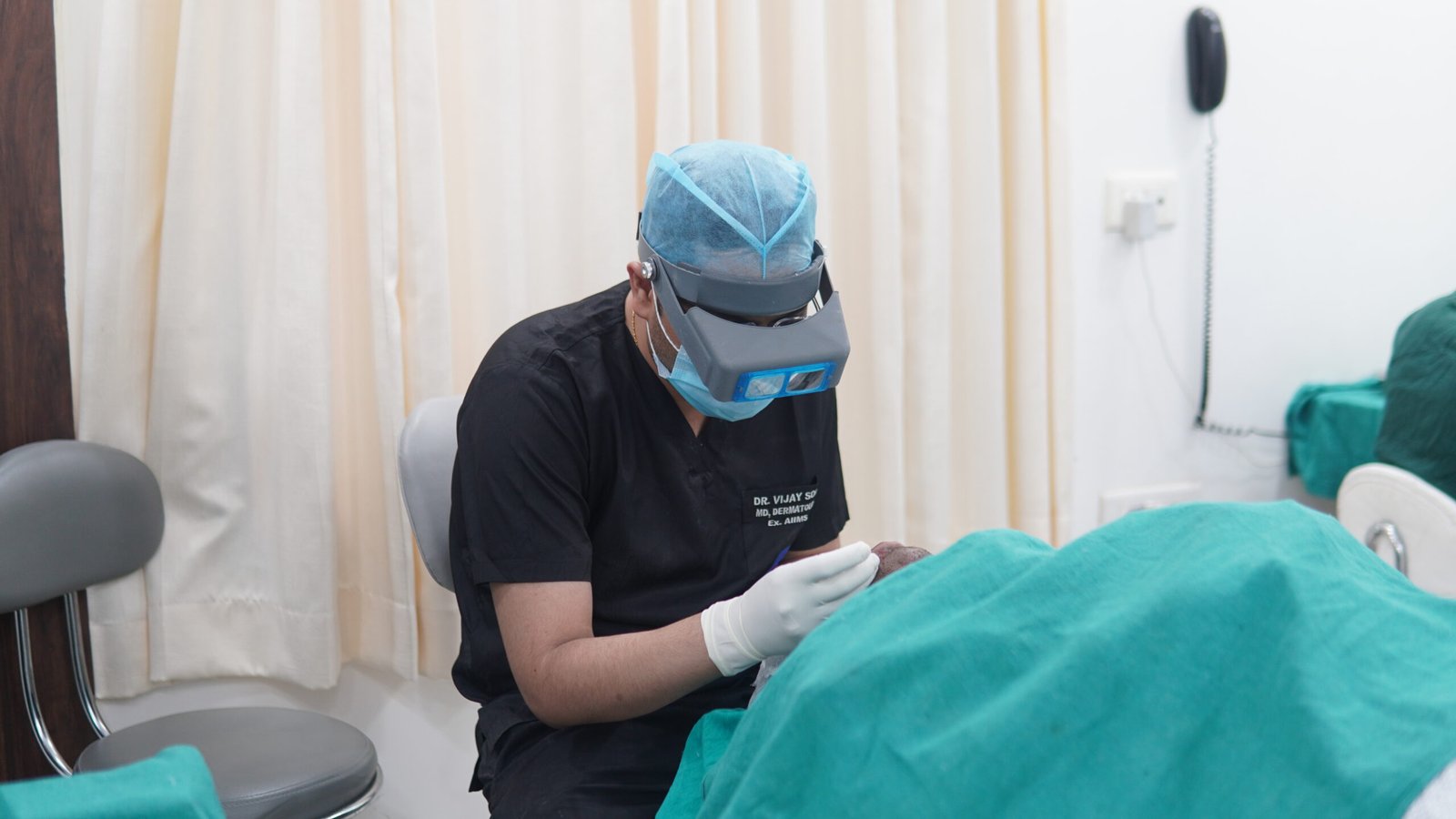
Non Shaven Hair Transplant Cost In Delhi
The Non Shaven Hair Transplant Cost in Delhi varies from patient to patient because the procedure is planned according to the extent of hair loss, number of grafts required, donor-area density, hair characteristics, and the complexity of working around existing hair. Unlike a standard transplant where the scalp may be shaved to provide unrestricted access, a non shaven approach can require more careful extraction and implantation planning.
At Skinfollix, the cost is determined after a clinical assessment rather than using a fixed graft package for every patient. Dr. Vijay Soyal evaluates the donor area, recipient zone, hair-loss pattern, existing hair length, and restoration objectives before recommending whether a Non Shaven Hair Transplant in Delhi is appropriate and how many grafts may be required.
Hair Loss Stages & Non Shaven Suitability
Hair Loss Progression influences how an unshaven approach can be planned. Whether dealing with early hairline recession or advanced diffuse thinning, assessing your pattern helps Dr. Vijay Soyal determine if a non shaven FUE procedure can be safely executed while maintaining proper donor and recipient balance.
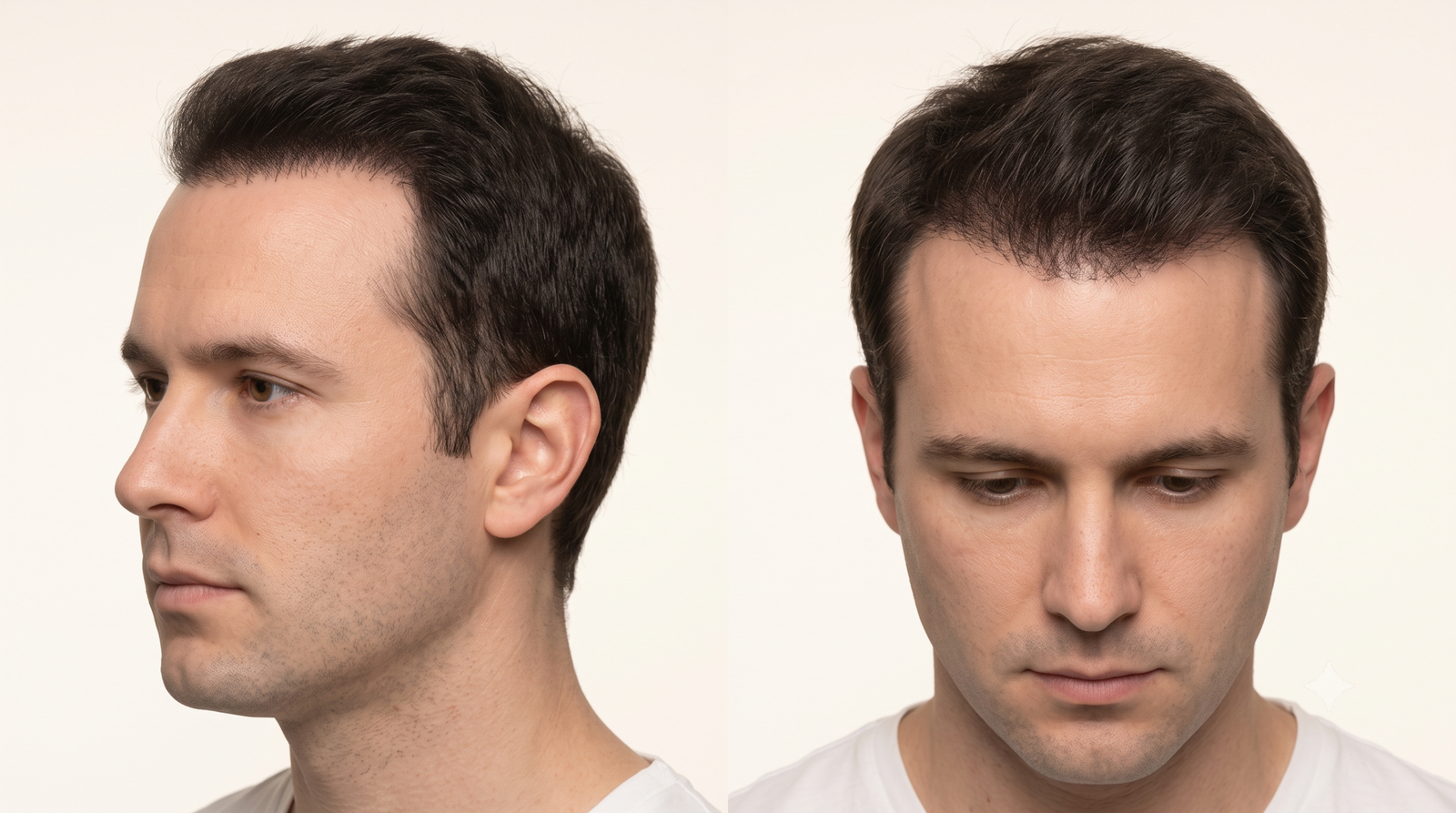
Stage 1
Normal hairline density with no active recession requiring intervention.
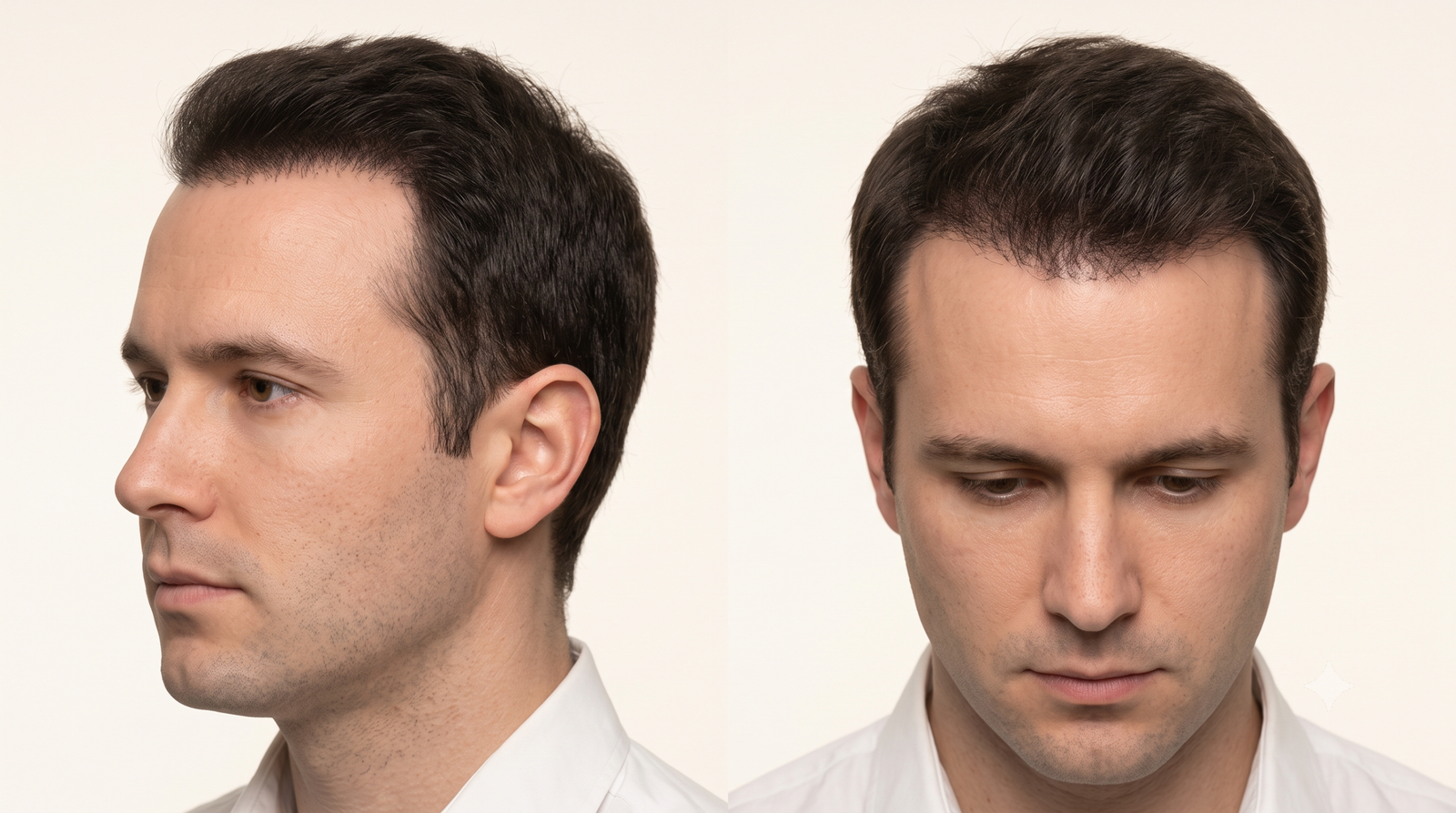
Stage 2
Slight temporal recession. Excellent candidate for minor non shaven hairline restoration.
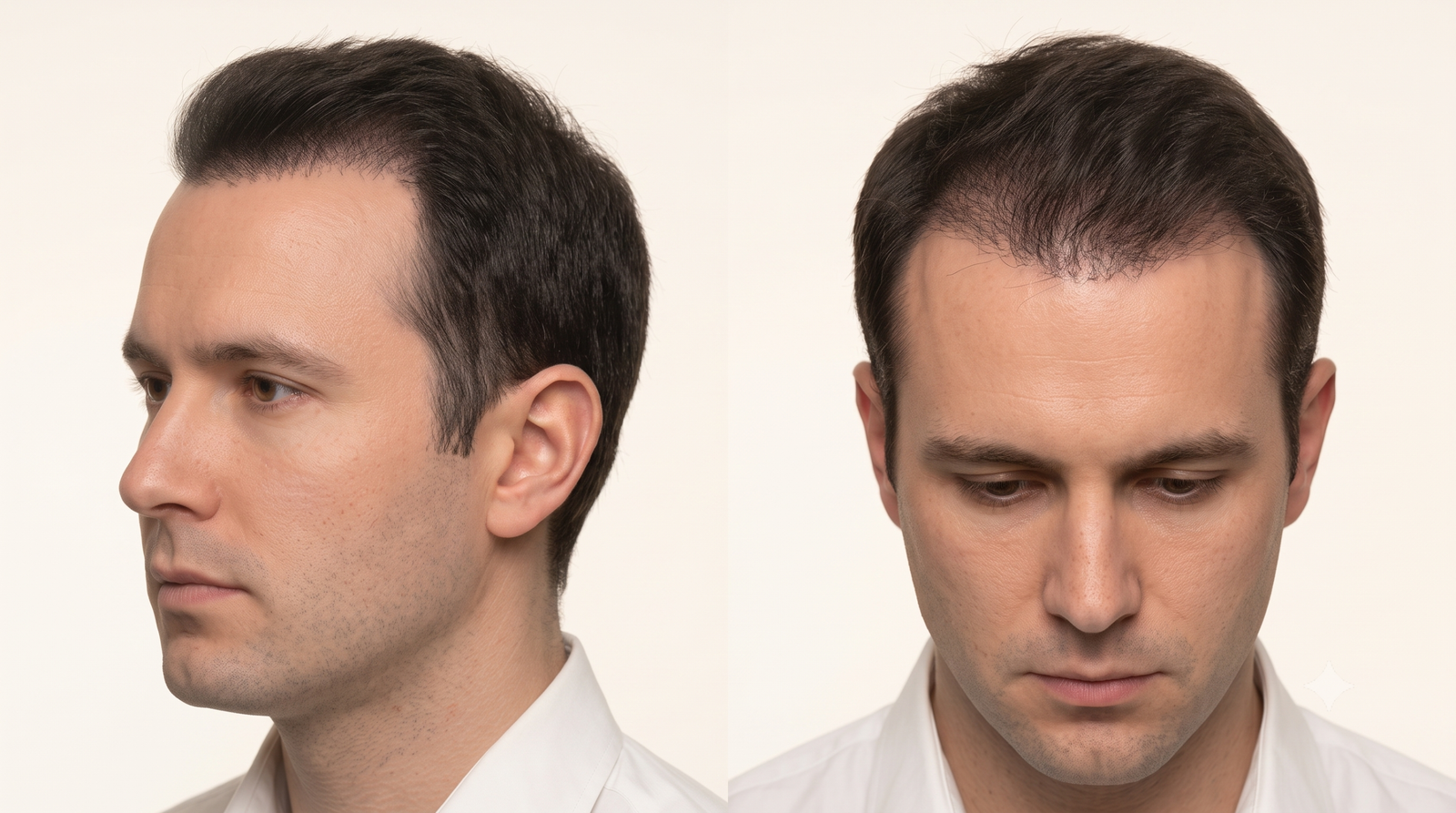
Stage 3
Deep M or U shaped hairline recession, highly treatable with precise unshaven graft placement.
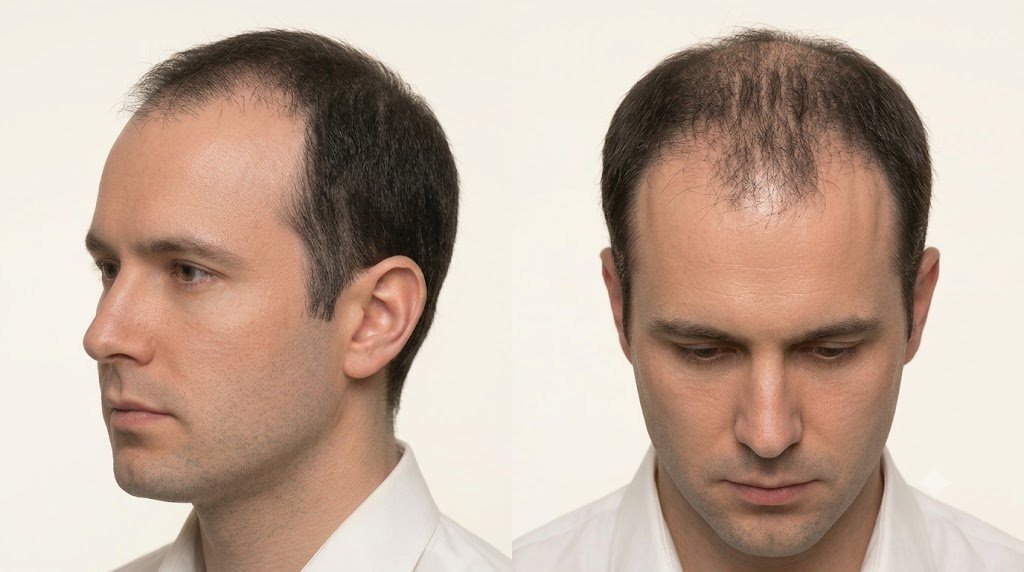
Stage 4
Temple recession combined with early crown thinning. Requires strategic session planning.
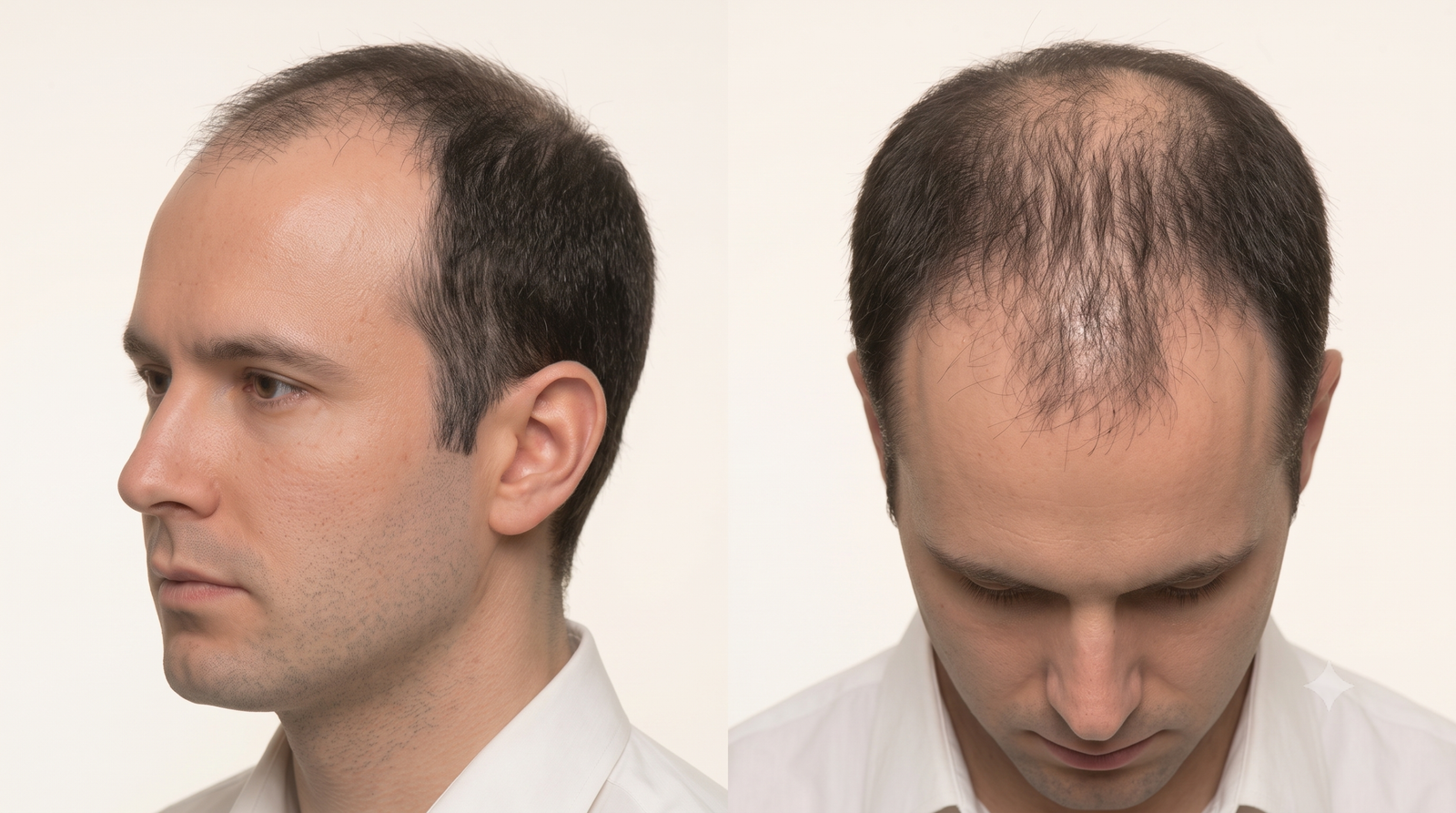
Stage 5
Front and crown thinning areas expand, evaluated carefully for donor-to-recipient ratios.
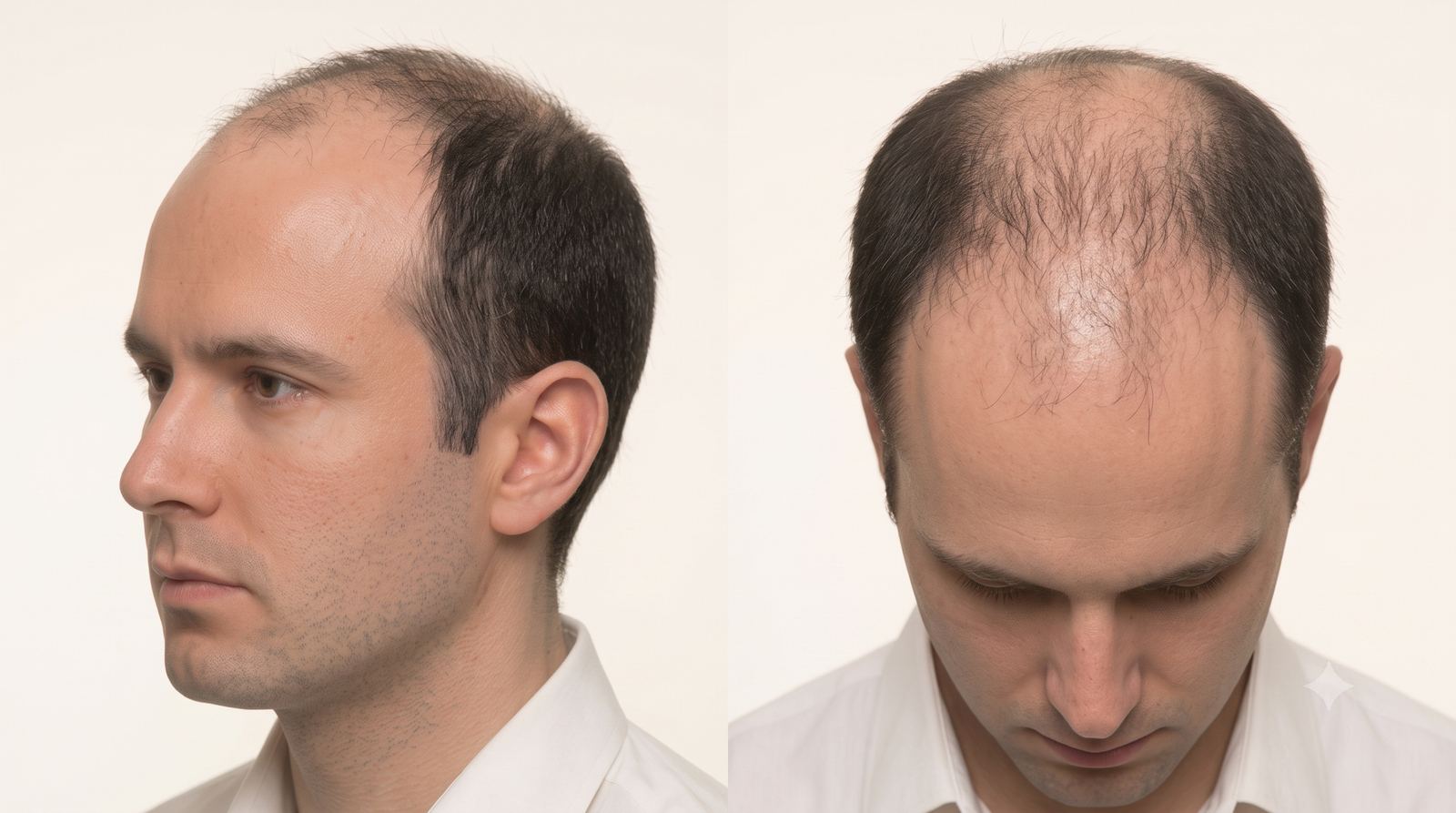
Stage 6
Extensive top thinning where full unshaven coverage may require multiple staged sessions.
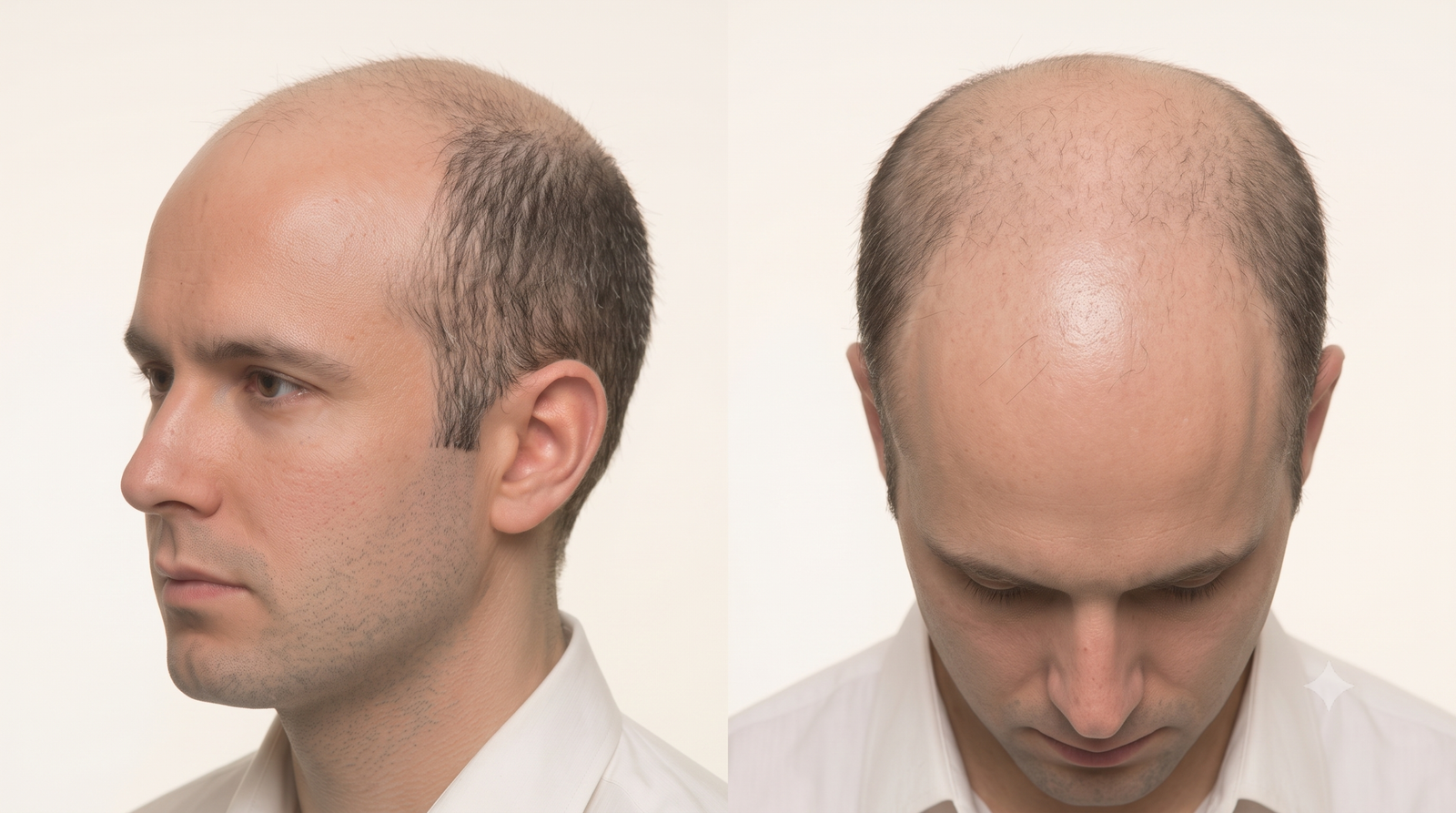
Stage 7
Advanced horseshoe pattern; non shaven approach depends heavily on safe donor capacity.
Benefits Of Non Shaven Hair Transplant In Delhi
A non shaven hair transplant can be valuable for appropriately selected patients who want to undergo FUE restoration while retaining much of their existing hairstyle. The primary advantage is reduced disruption to visible hair length, but the clinical objective remains the same: appropriate graft harvesting, precise implantation, protection of native follicles, and natural long-term growth.
Preserves Existing Hair Length
The technique can allow suitable patients to retain much of their existing hairstyle instead of undergoing complete head shaving.

Meet Your Non Shaven Hair Transplant Surgeon In Delhi
MD Dermatology, AIIMS · Hair Restoration Specialist · FUE Hair Restoration
Every Non Shaven Hair Transplant in Delhi at Skinfollix begins with an assessment of whether an unshaven approach is genuinely suitable for the patient's hair-loss pattern and surgical requirements. Dr. Vijay Soyal, MD (Ex-Senior Dermatologist, AIIMS Delhi), evaluates donor density, hair caliber, native hair characteristics, recipient areas, and the amount of grafting required before planning the procedure.
Non shaven FUE requires careful coordination between graft extraction and implantation because existing hair can limit surgical access. The procedure therefore demands attention to follicular orientation, graft handling, recipient-site placement, and protection of native follicles. The objective is to preserve the patient's existing appearance as much as reasonably possible without compromising surgical precision or realistic expectations.
Non Shaven Hair Transplant Before And After Results
Non shaven hair restoration outcomes reflect the precision of extracting and placing grafts without completely shaving the head. Drag the slider on each result below to compare the before and after outcome across different unshaven protocols at Skinfollix. Individual results vary based on hair loss type, stage, treatment selected and adherence to the plan.
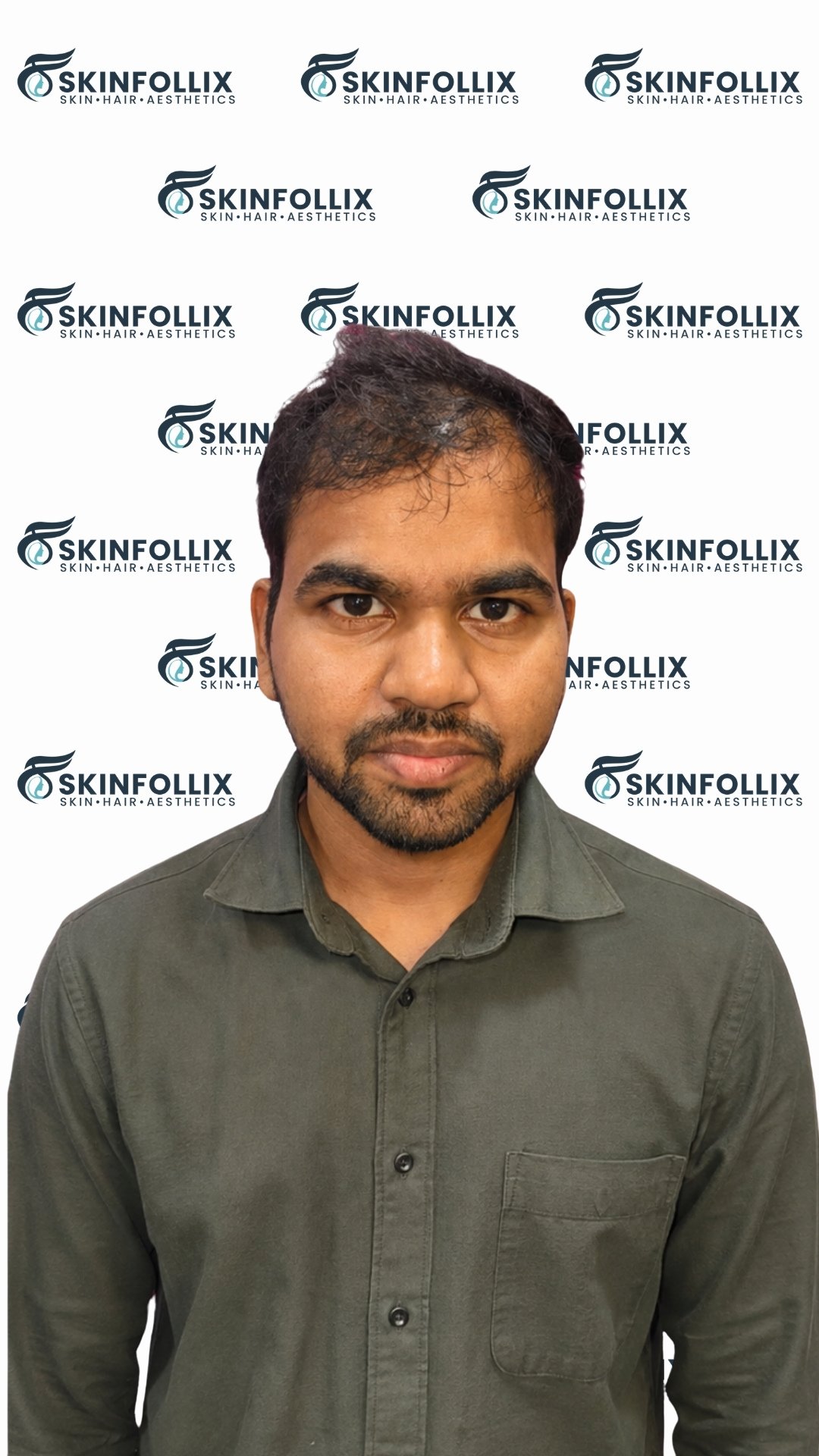
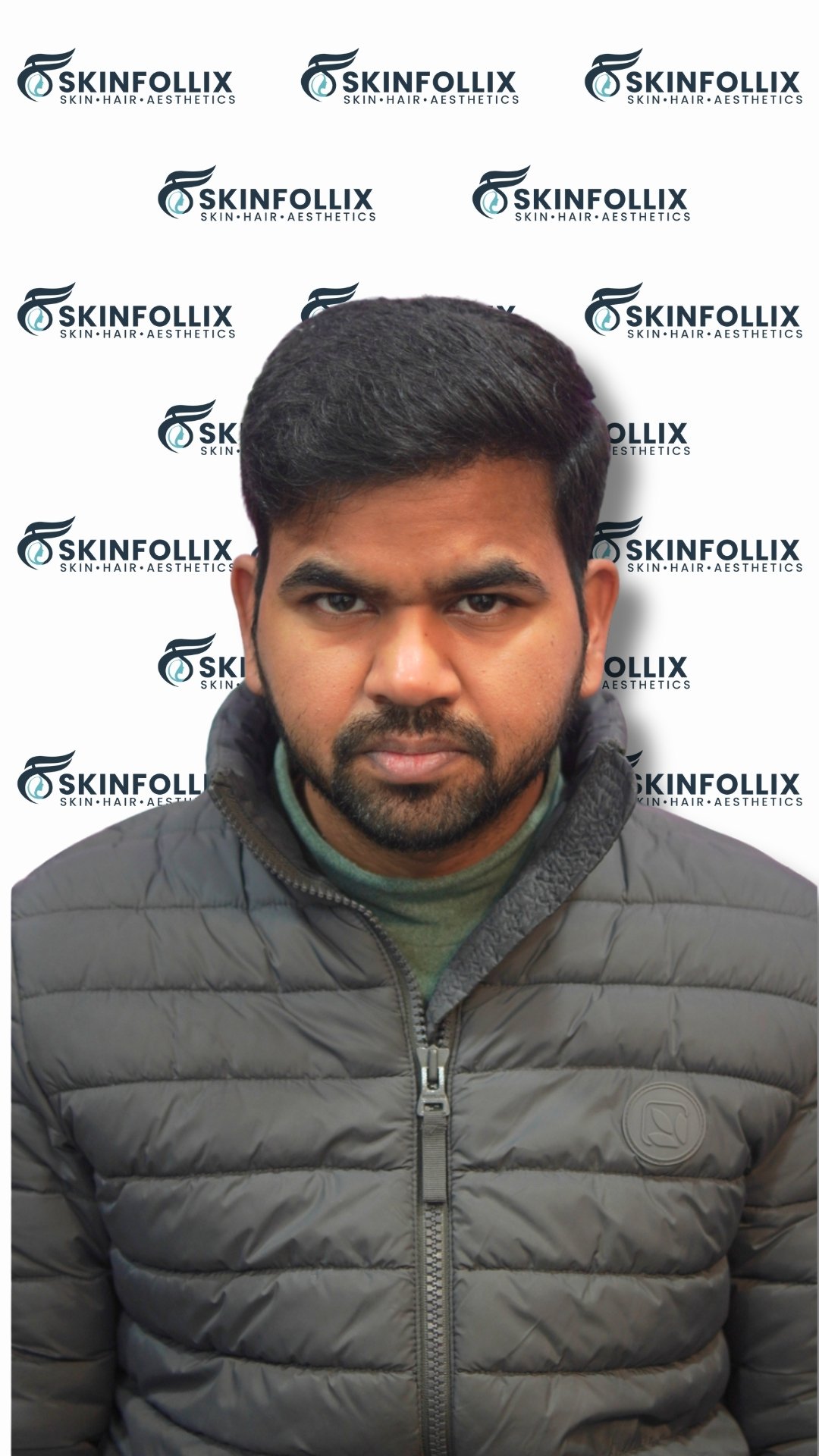
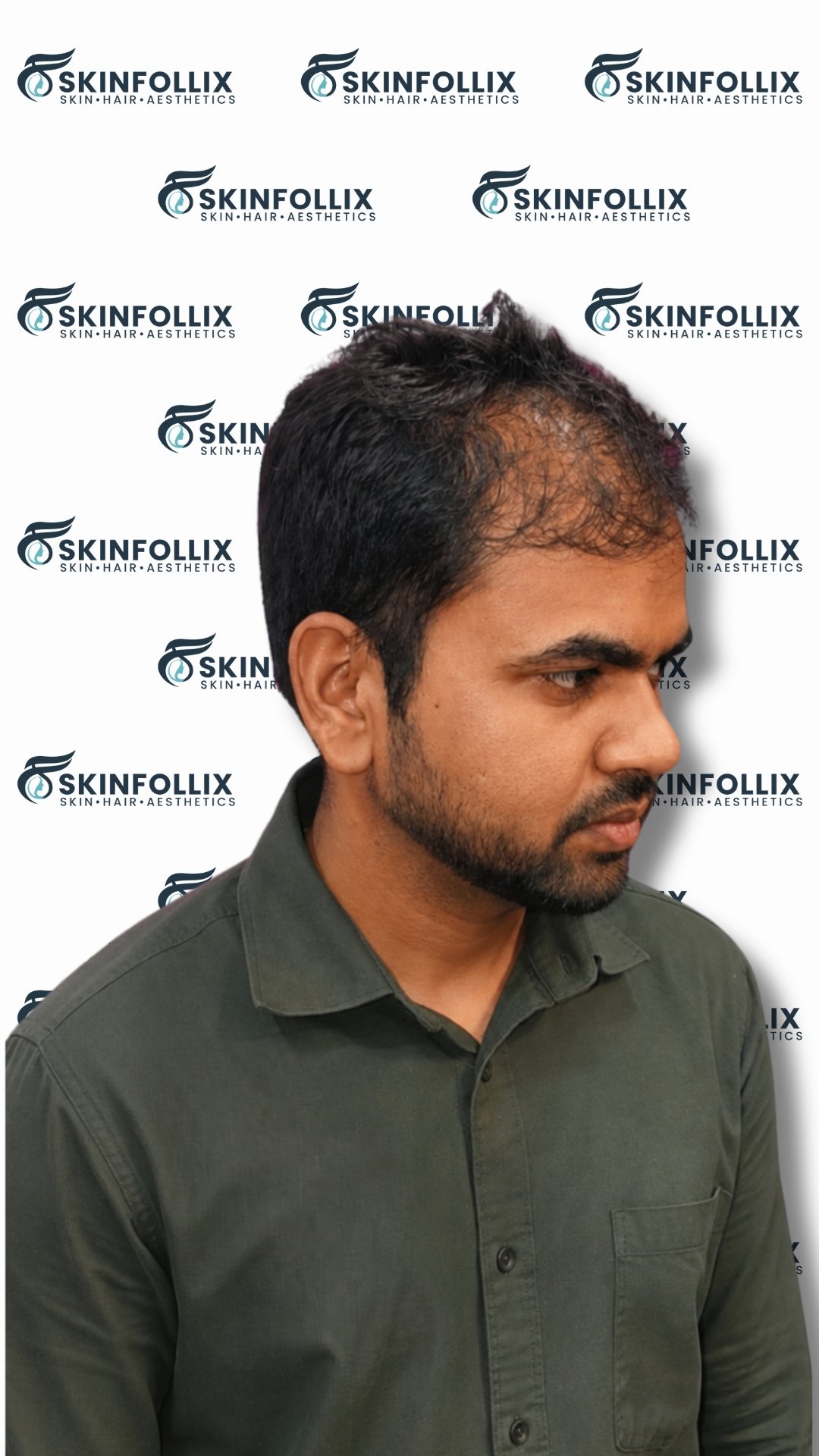
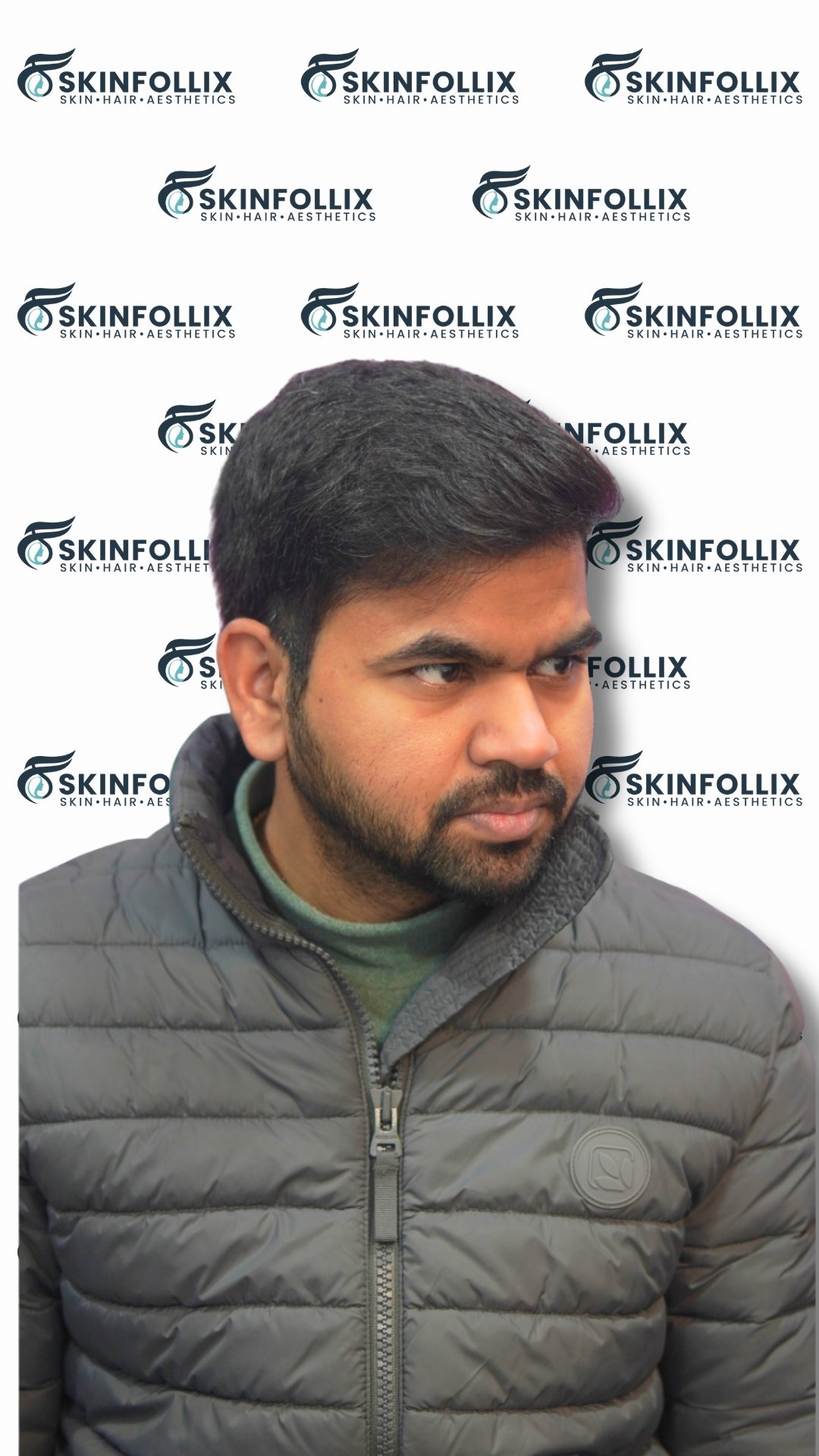
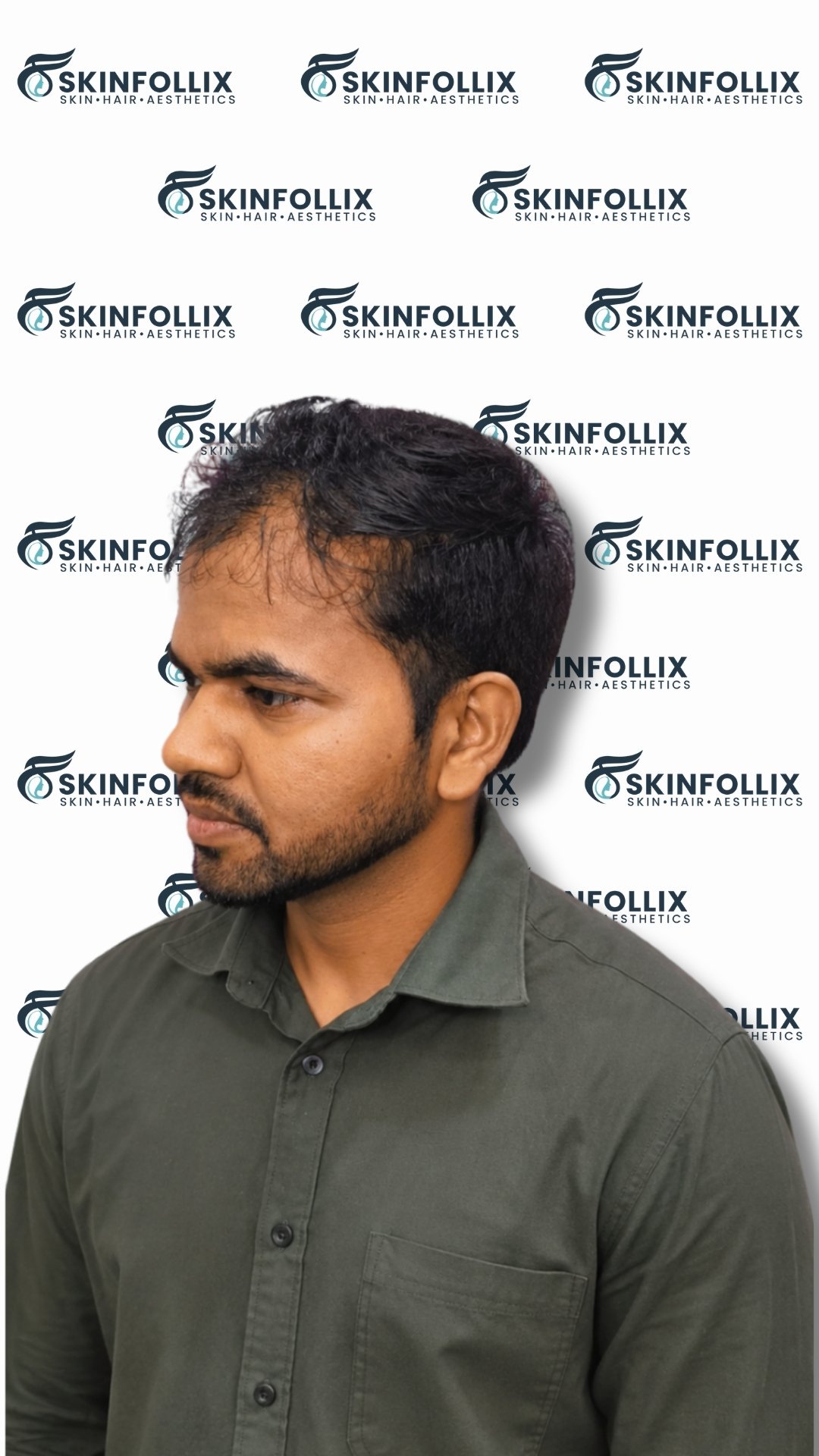
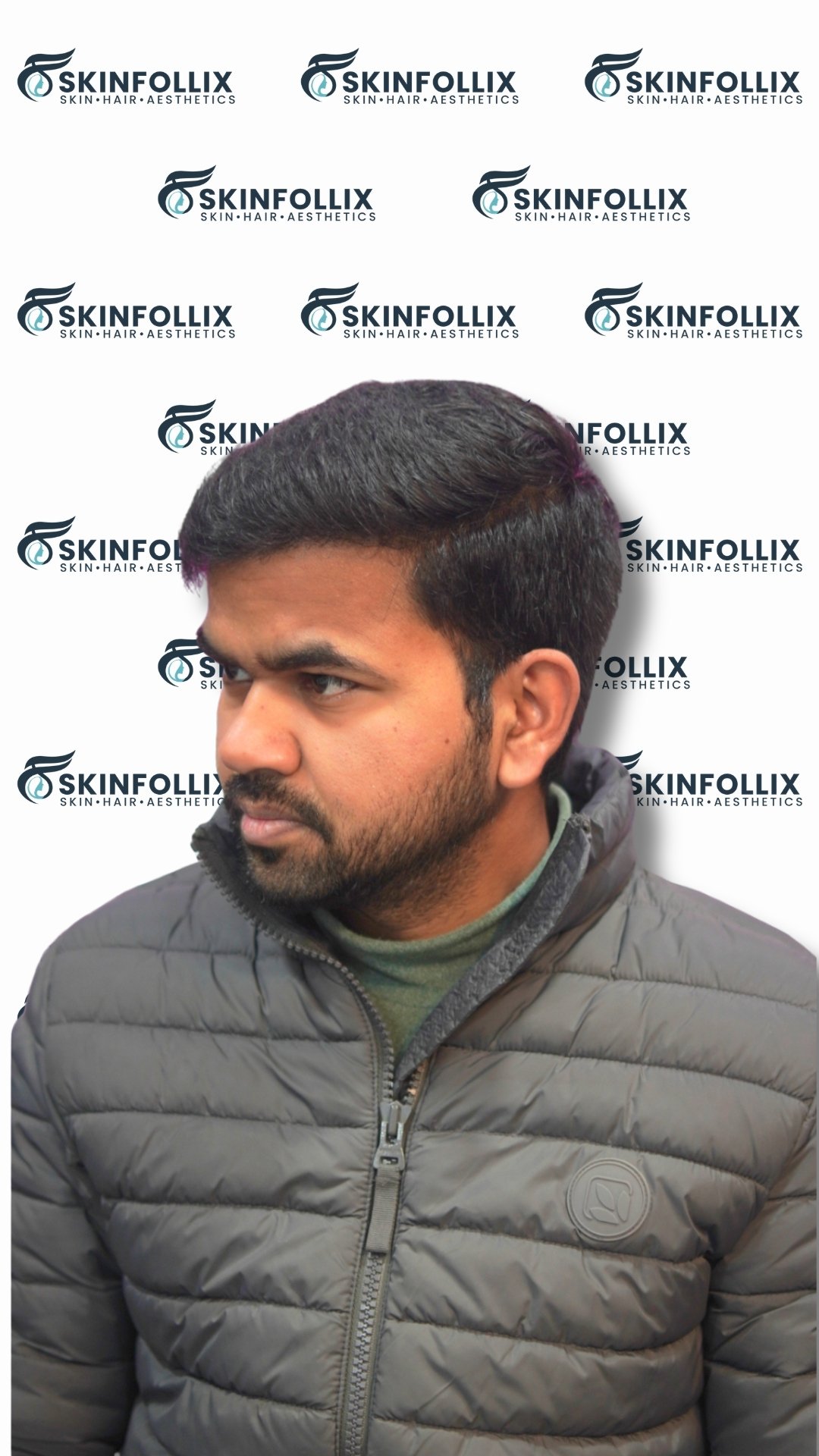
Results shown are actual patient outcomes. Individual results may vary based on hair loss type, stage, treatment combination and adherence to the recommended plan.
Our Non Shaven Hair Transplant Process
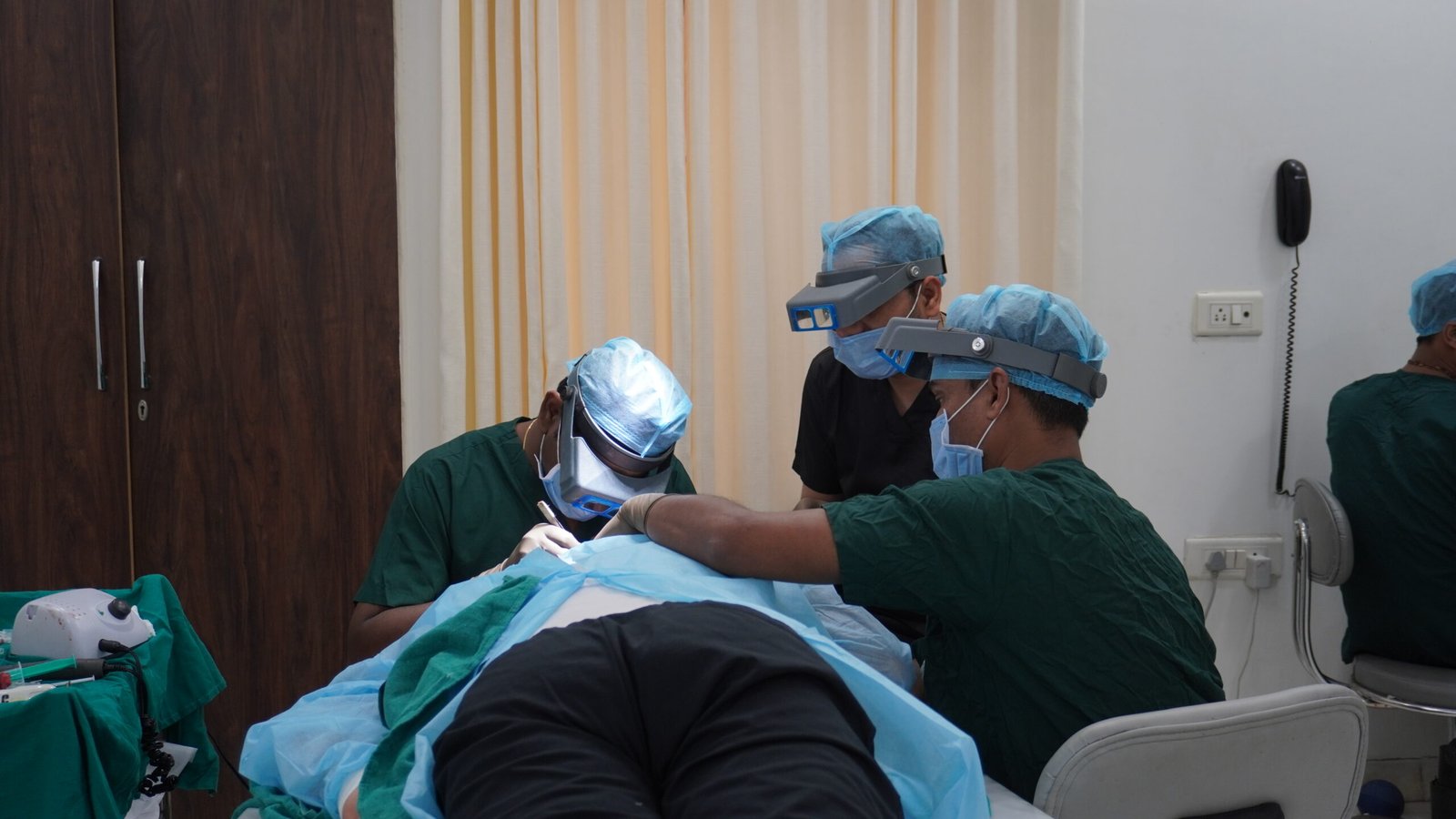
Every non shaven hair transplant at Skinfollix follows a structured dermatologist-led workflow. The first priority is determining whether avoiding complete shaving is compatible with safe graft extraction and precise implantation. Once suitability is established, the procedure is planned around donor preservation, recipient-site access, natural hair direction, and the patient's existing hairstyle.
Consultation & Hair-Loss Assessment
Dr. Vijay Soyal evaluates the cause and stability of hair loss, donor density, hair caliber, scalp condition, existing hair length, recipient areas, and restoration goals. This assessment determines whether a non shaven approach is clinically appropriate.
Graft Planning & Restoration Design
The required graft distribution is planned according to the hairline, frontal zone, crown, or other thinning areas. The design considers existing native hairs so transplanted follicles can integrate naturally with the surrounding growth.
FUE Graft Extraction & Implantation
Selected follicular units are carefully extracted from the donor area while preserving appropriate surrounding follicles. Recipient sites are then created according to natural hair direction, angle, spacing, and the existing density pattern.
Post-Operative Care & Growth Monitoring
Patients receive detailed instructions for cleansing, graft protection, and early recovery. Follow-up focuses on healing, temporary shedding, new growth, and progressive maturation rather than judging the result during the first few weeks.
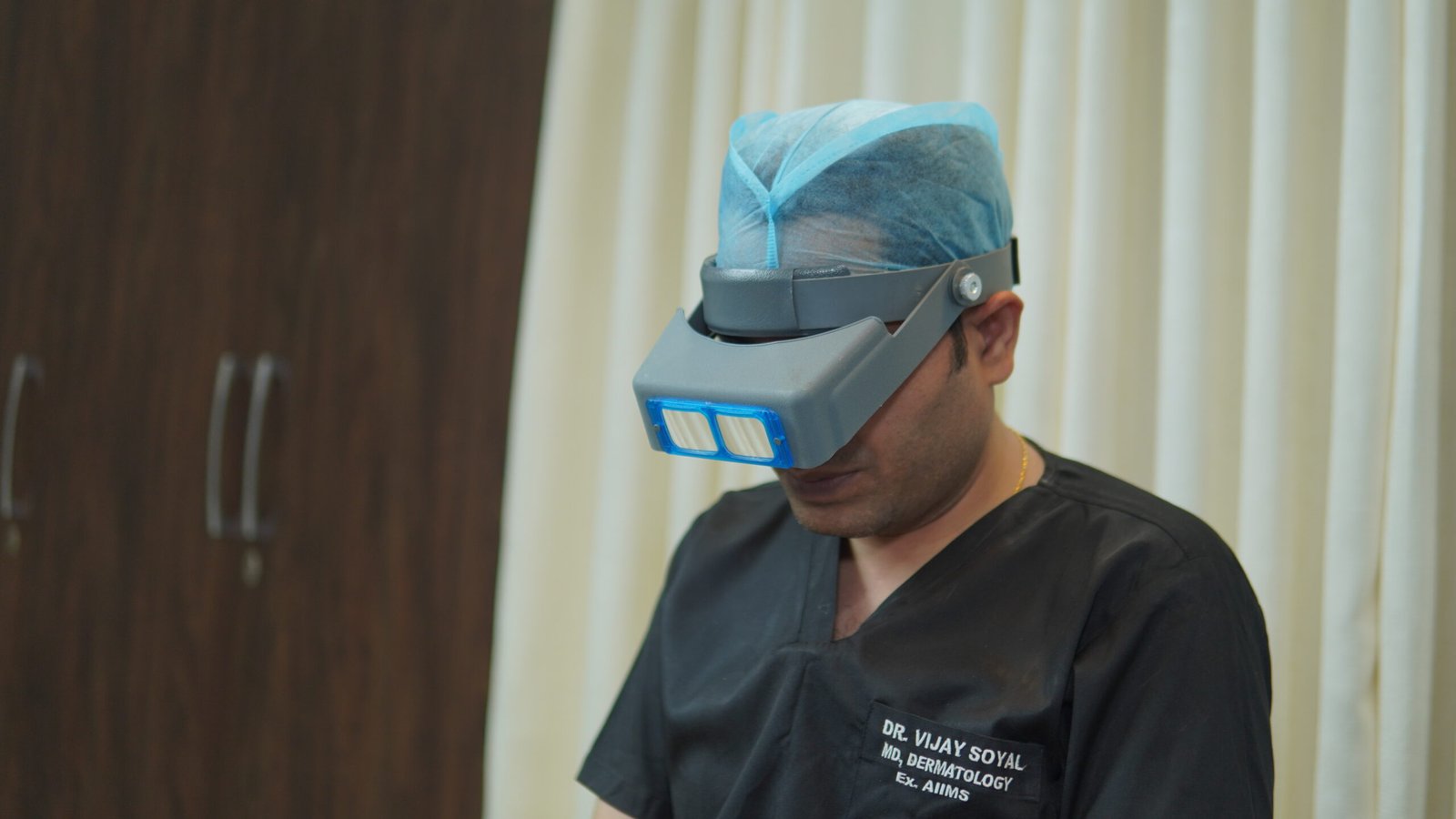
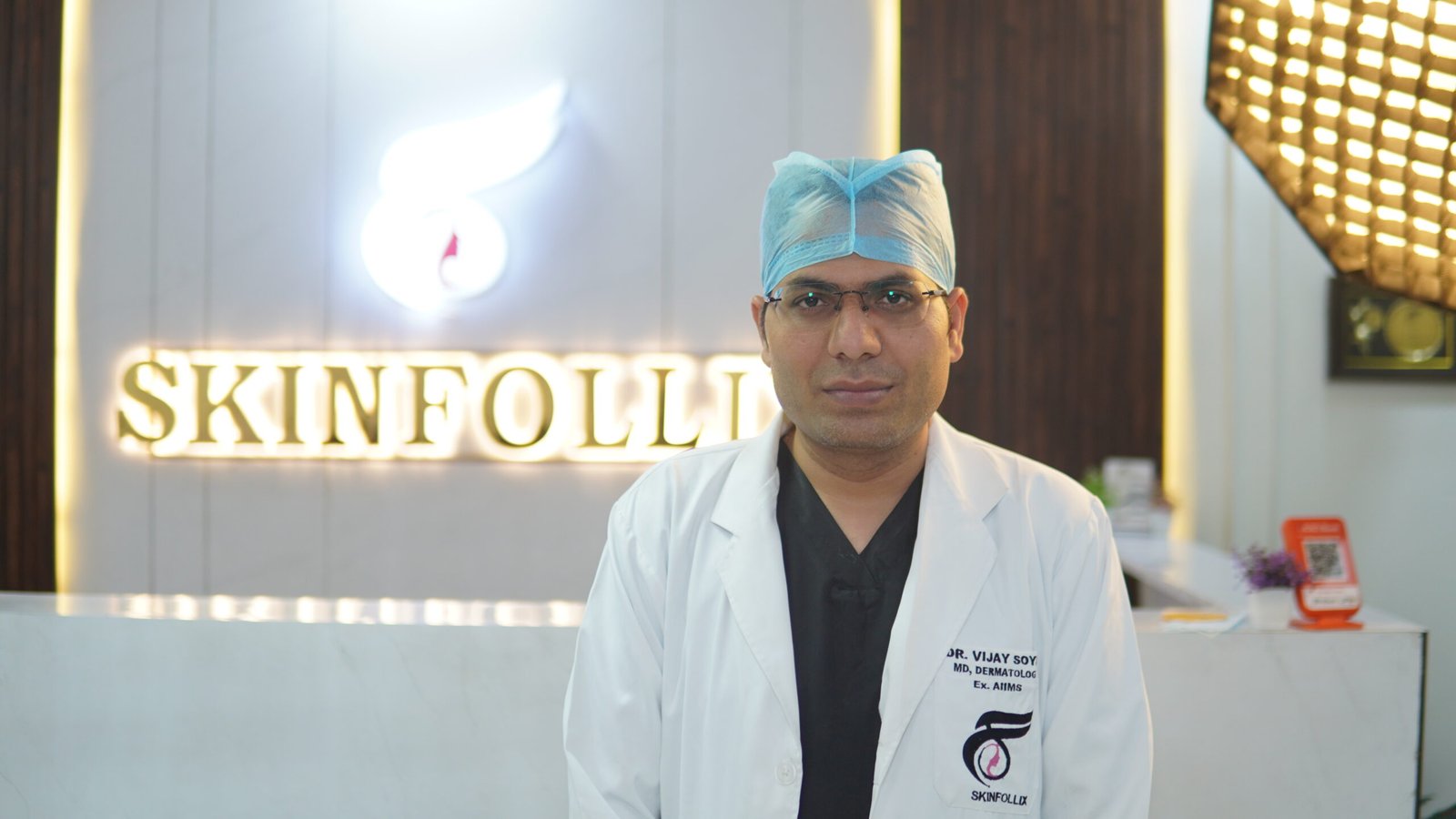
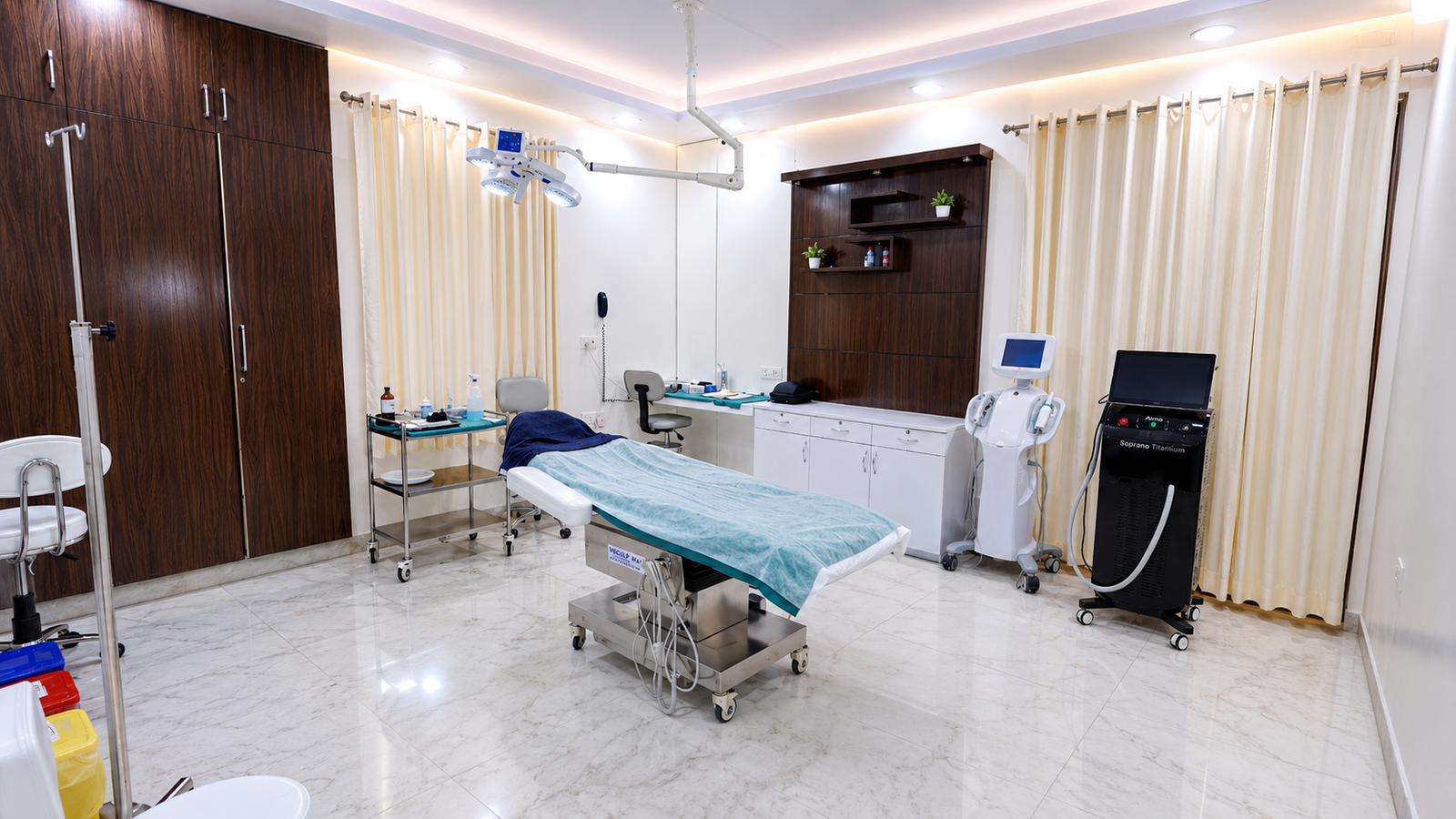
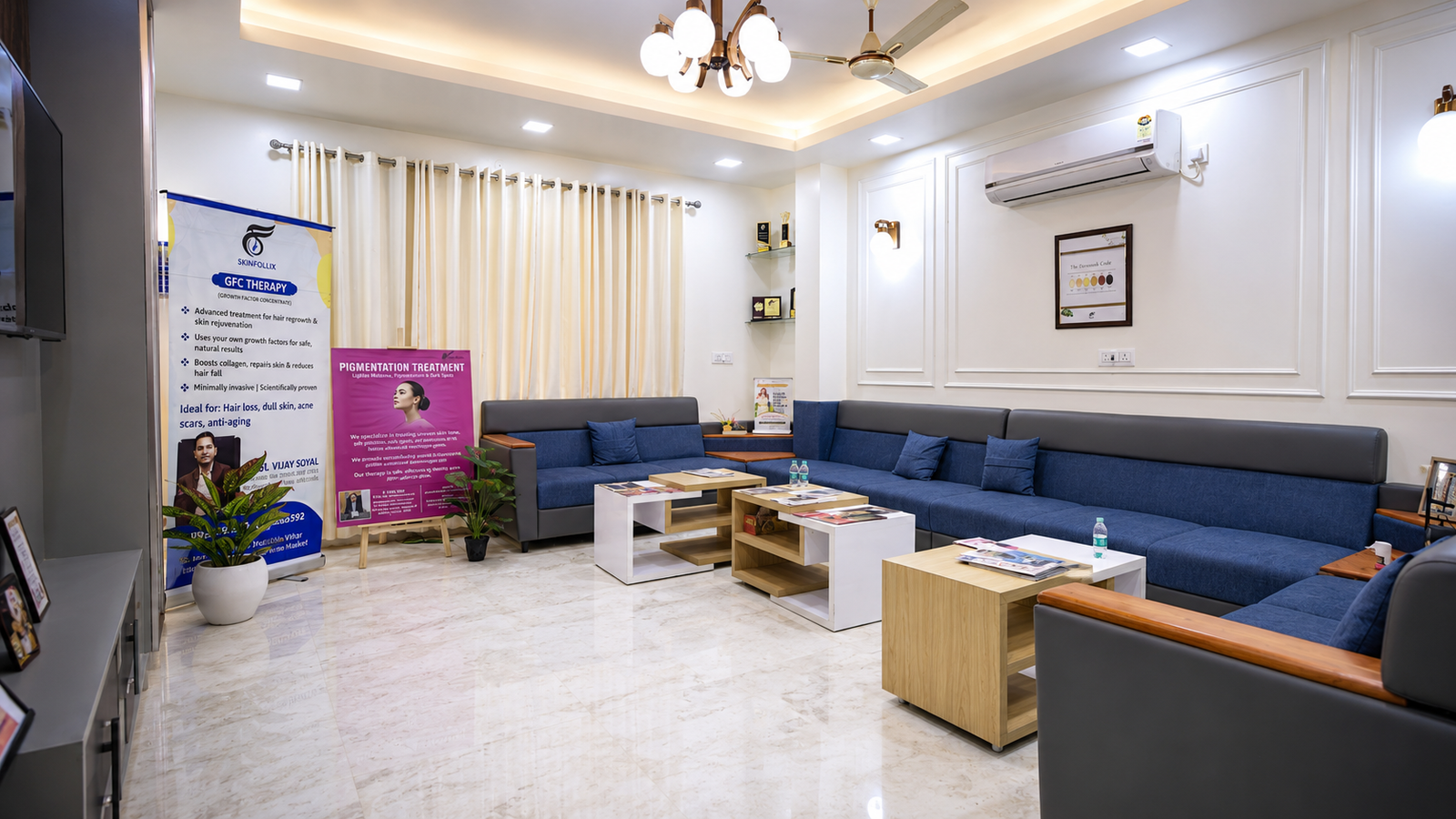
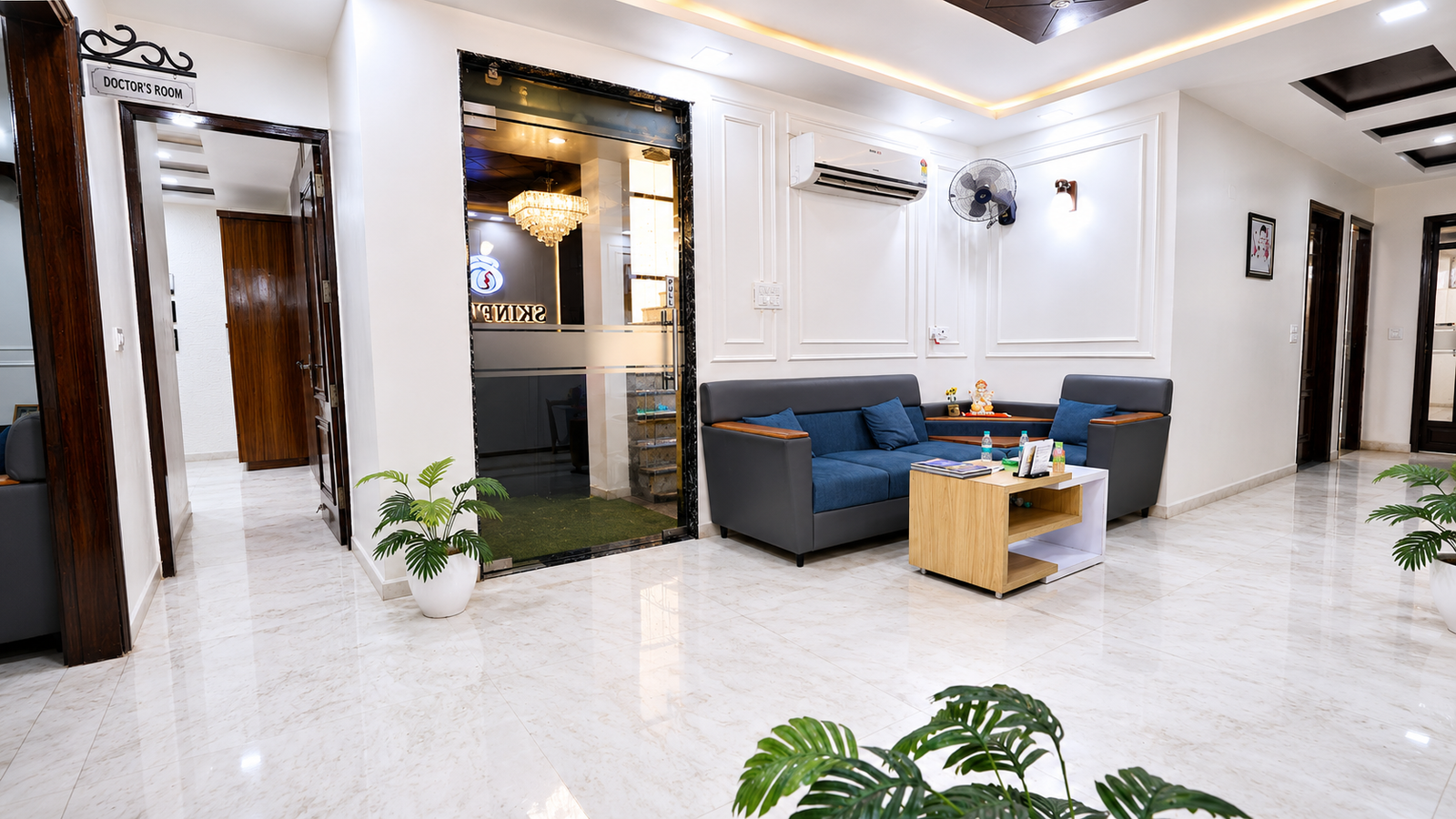
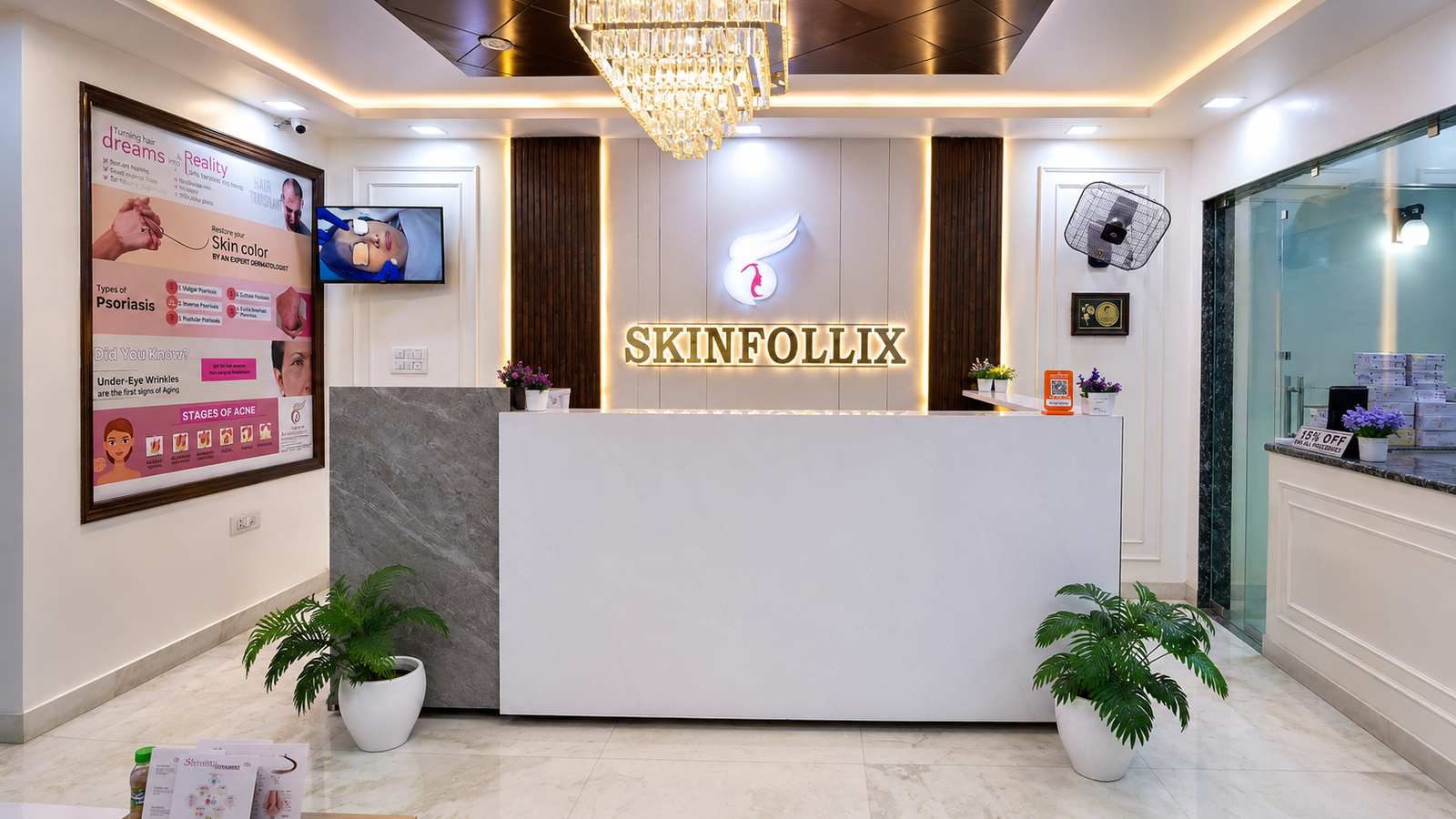
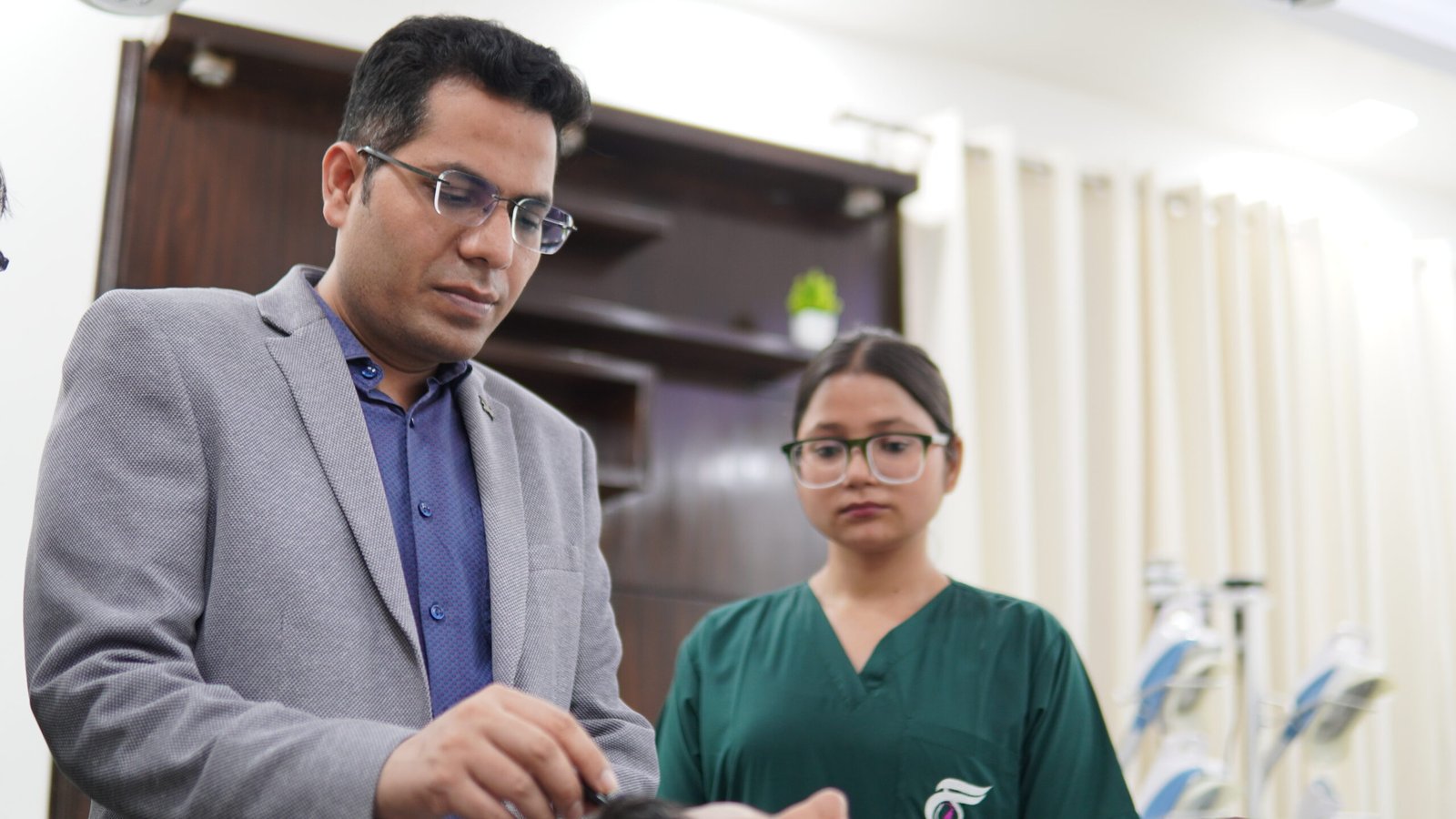
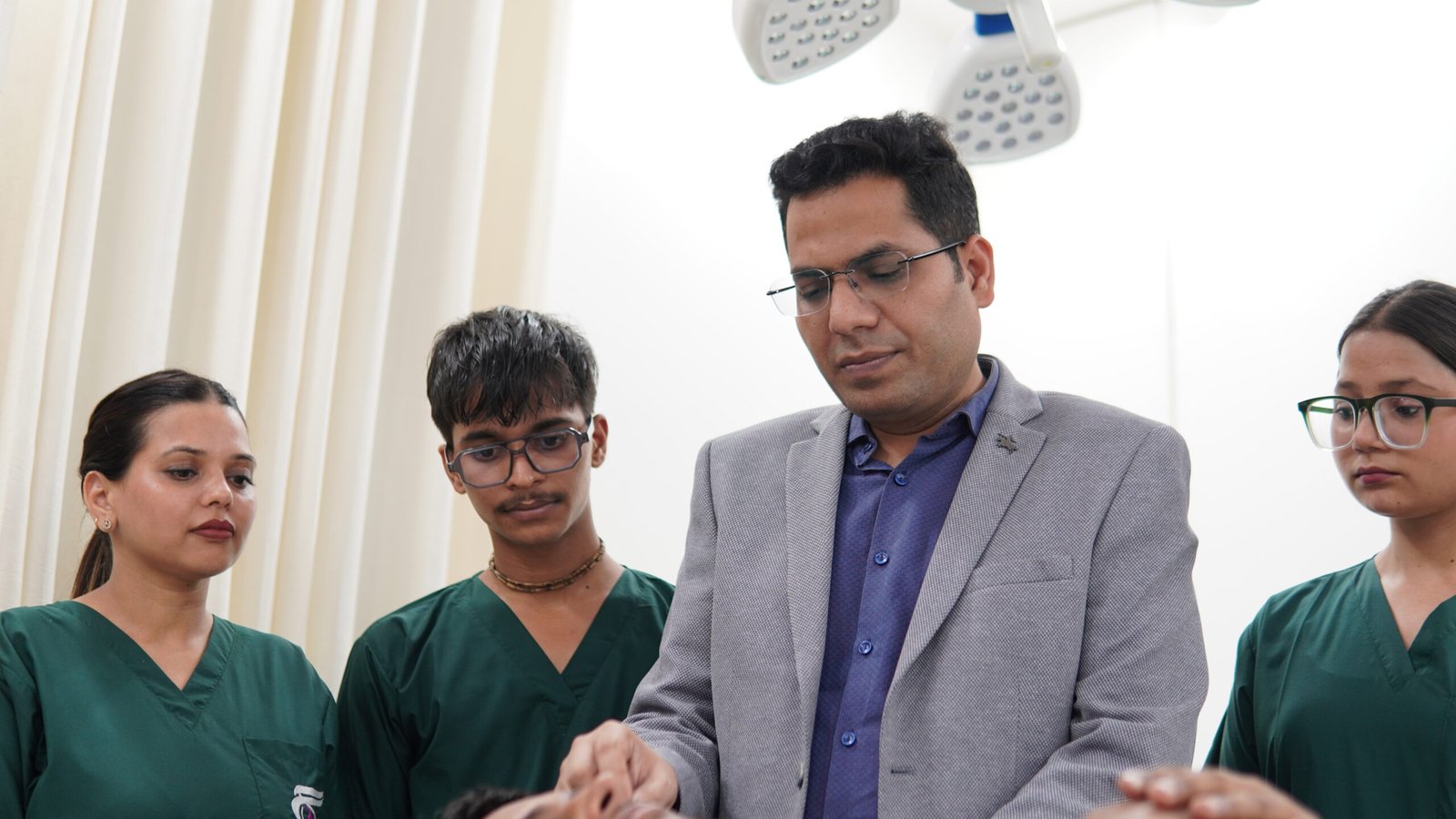
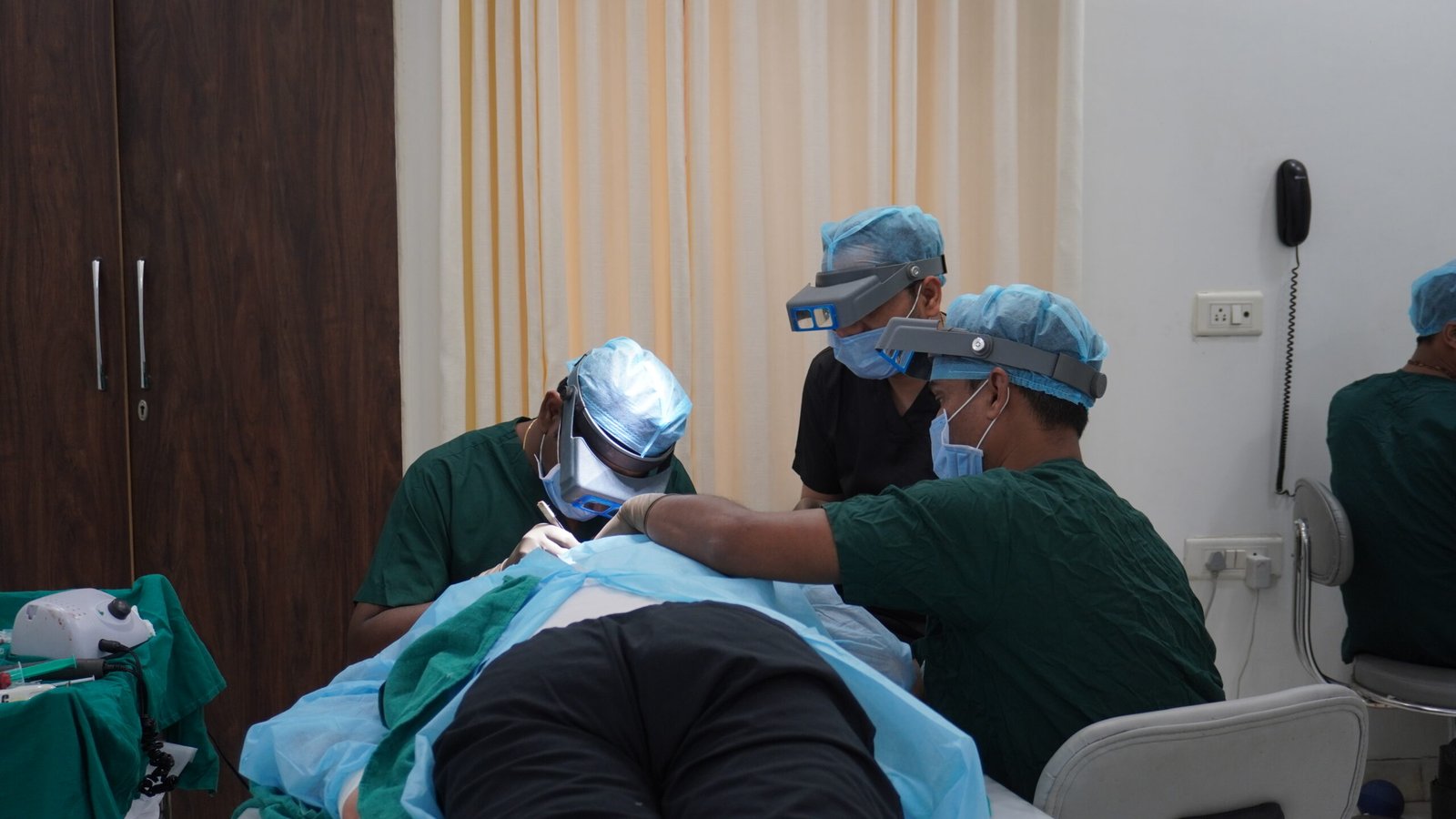
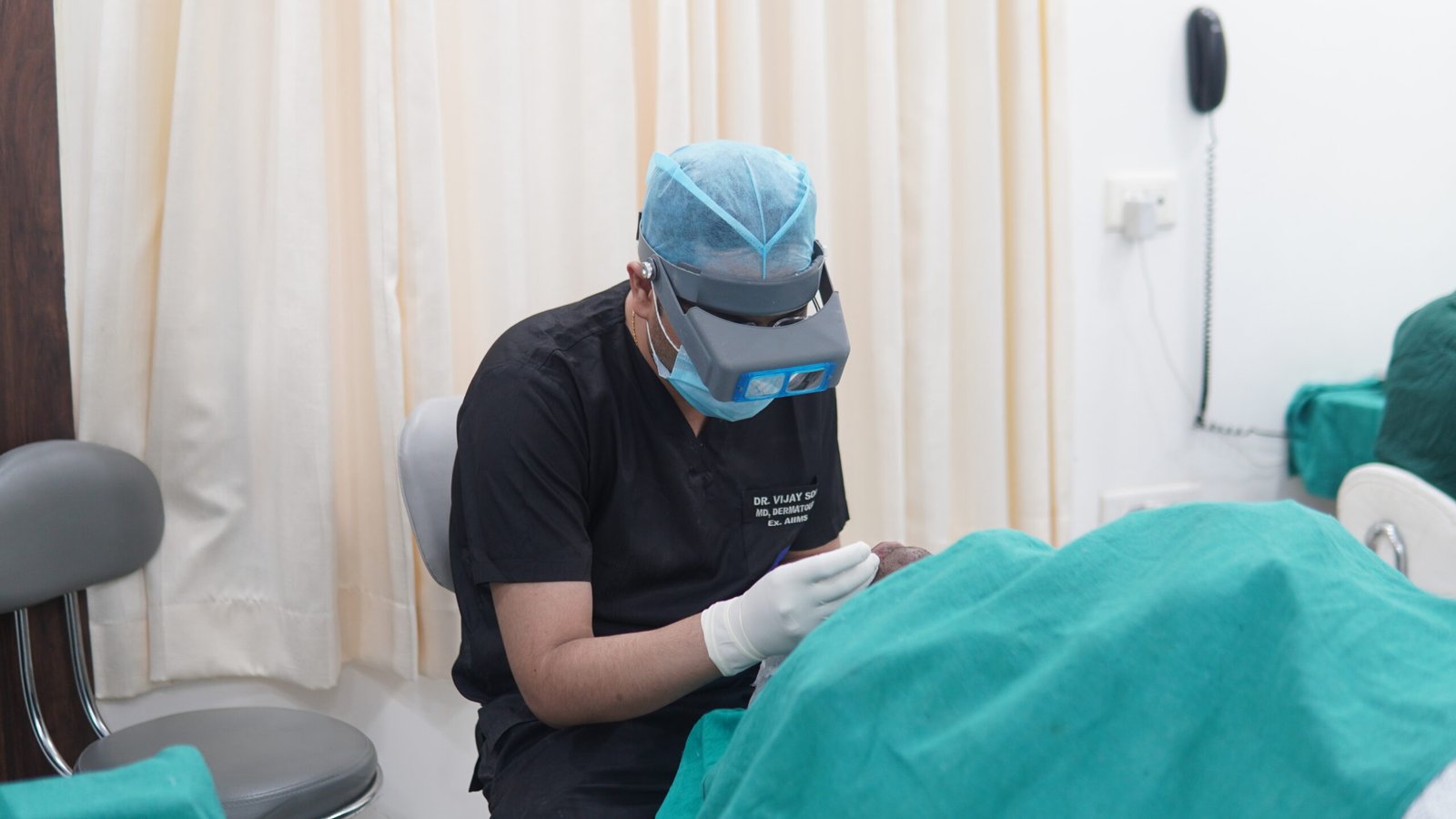
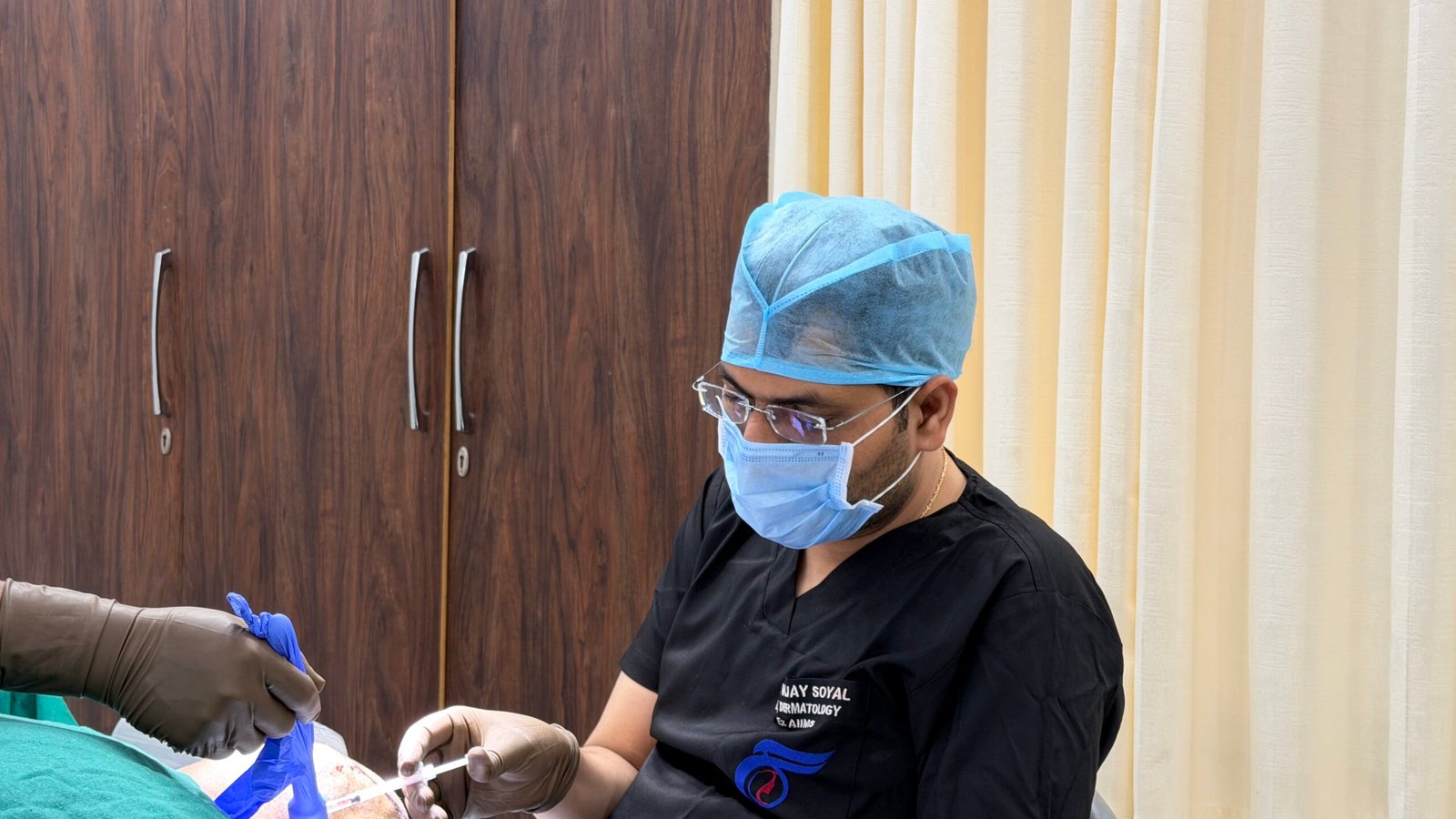
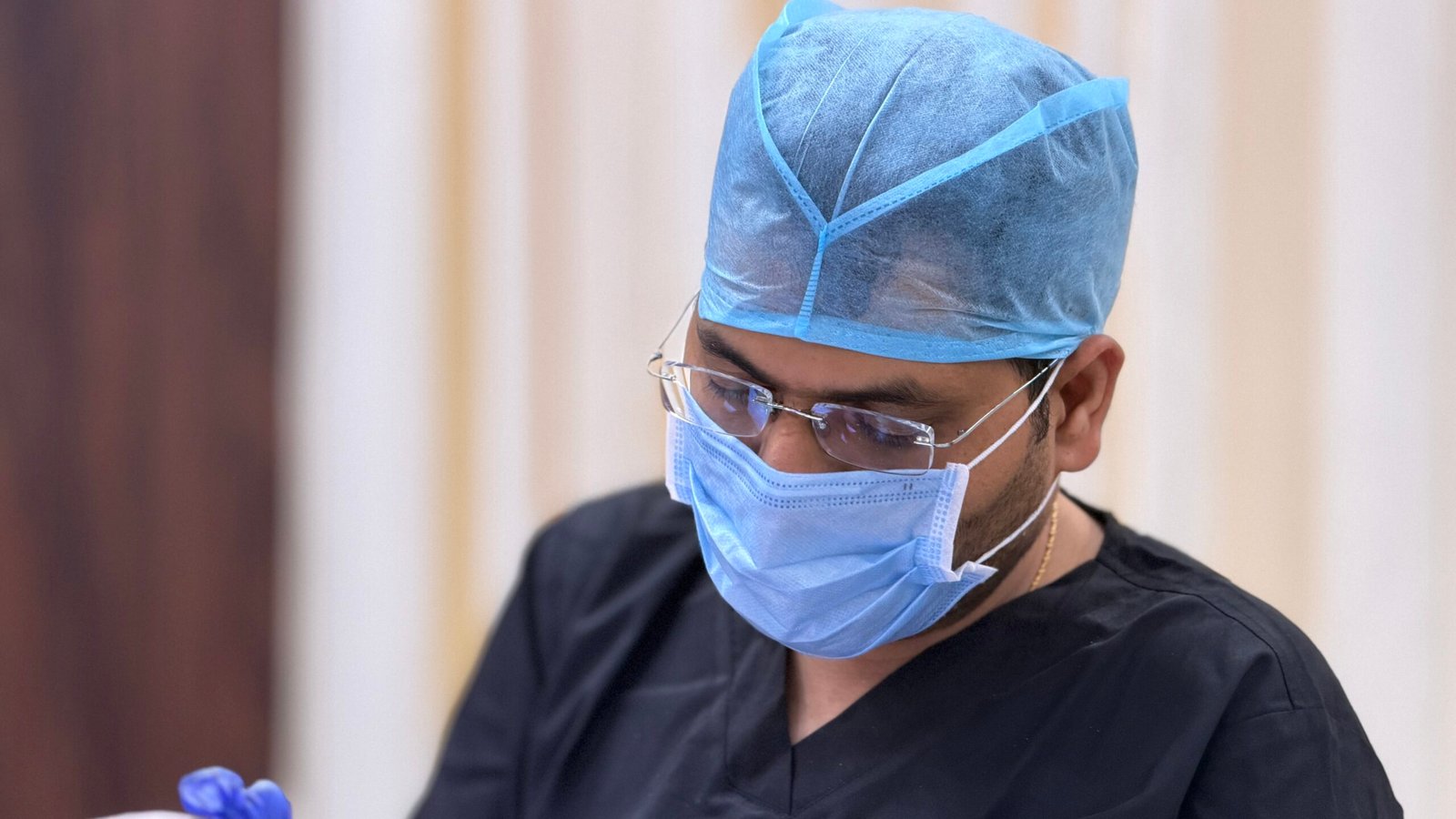
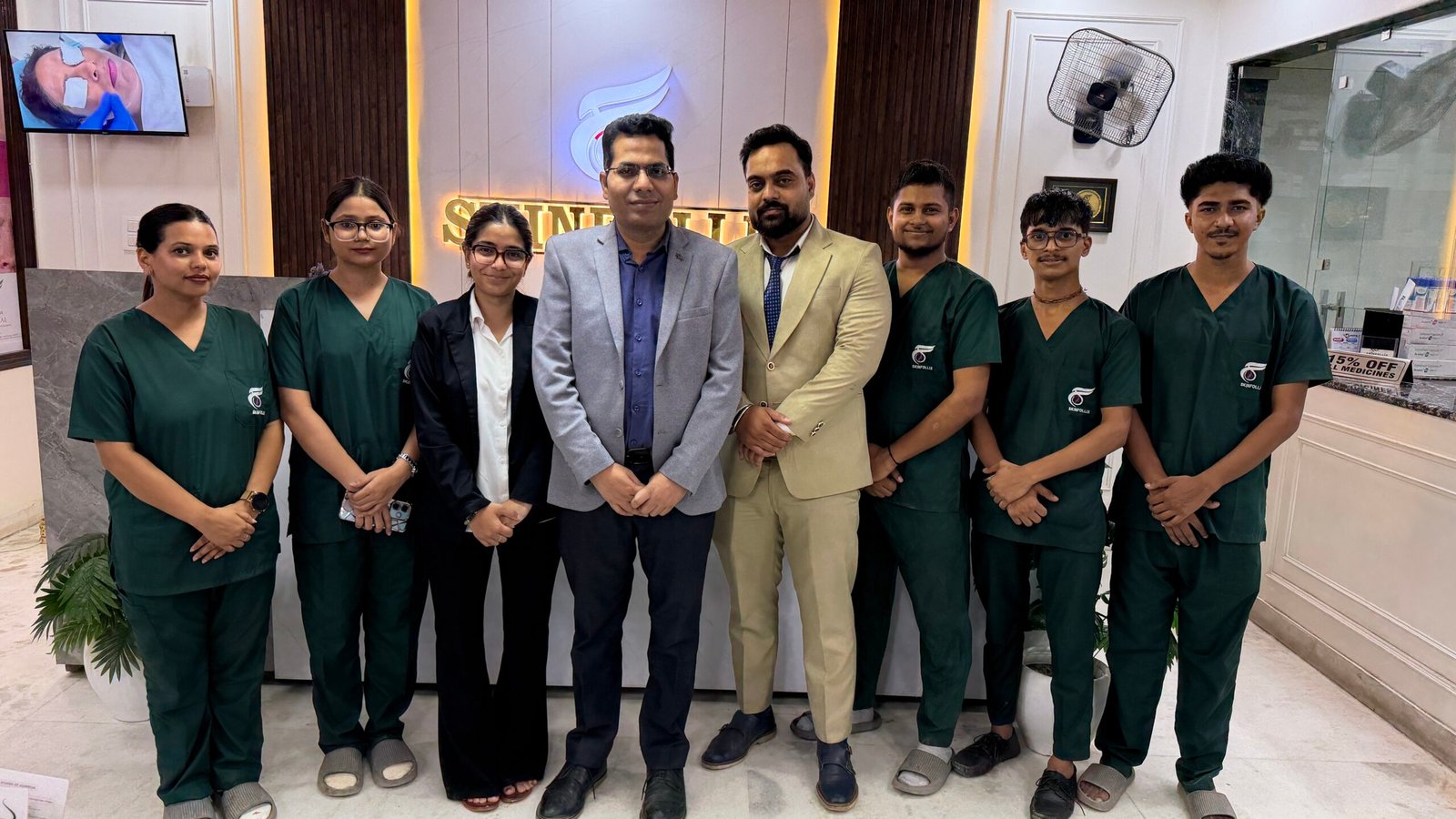
Inside Our Non Shaven Hair Transplant Clinic In Delhi
A closer look at the facility where Dr. Vijay Soyal and the Skinfollix team perform precision non shaven FUE and hair restoration procedures every day.
Awards & Clinical Recognition
Skinfollix is recognized as a premier destination for non shaven hair restoration in Delhi. Our surgical outcomes, led by AIIMS-trained specialist Dr. Vijay Soyal, are trusted and accredited by the world’s leading dermatological and hair restoration societies.
- Skinfollix non shaven hair transplant clinical award badge 1
- Skinfollix non shaven hair transplant clinical award badge 2
- Skinfollix non shaven hair transplant clinical award badge 3
- Skinfollix non shaven hair transplant clinical award badge 4
- Skinfollix non shaven hair transplant clinical award badge 5
- Skinfollix non shaven hair transplant clinical award badge 6
- Skinfollix non shaven hair transplant clinical award badge 7
- Skinfollix non shaven hair transplant clinical award badge 8
- Skinfollix non shaven hair transplant clinical award badge 9
- International Society of Dermatology accreditation for Skinfollix Delhi
- Indian Association of Dermatologists certification for Dr. Vijay Soyal
- Fellow of the American Academy of Dermatology recognition
- Member of the International Society of Hair Restoration Surgeons (ISHRS) badge