
Dandruff vs Dry Scalp: How to Tell the Difference and What Actually Works
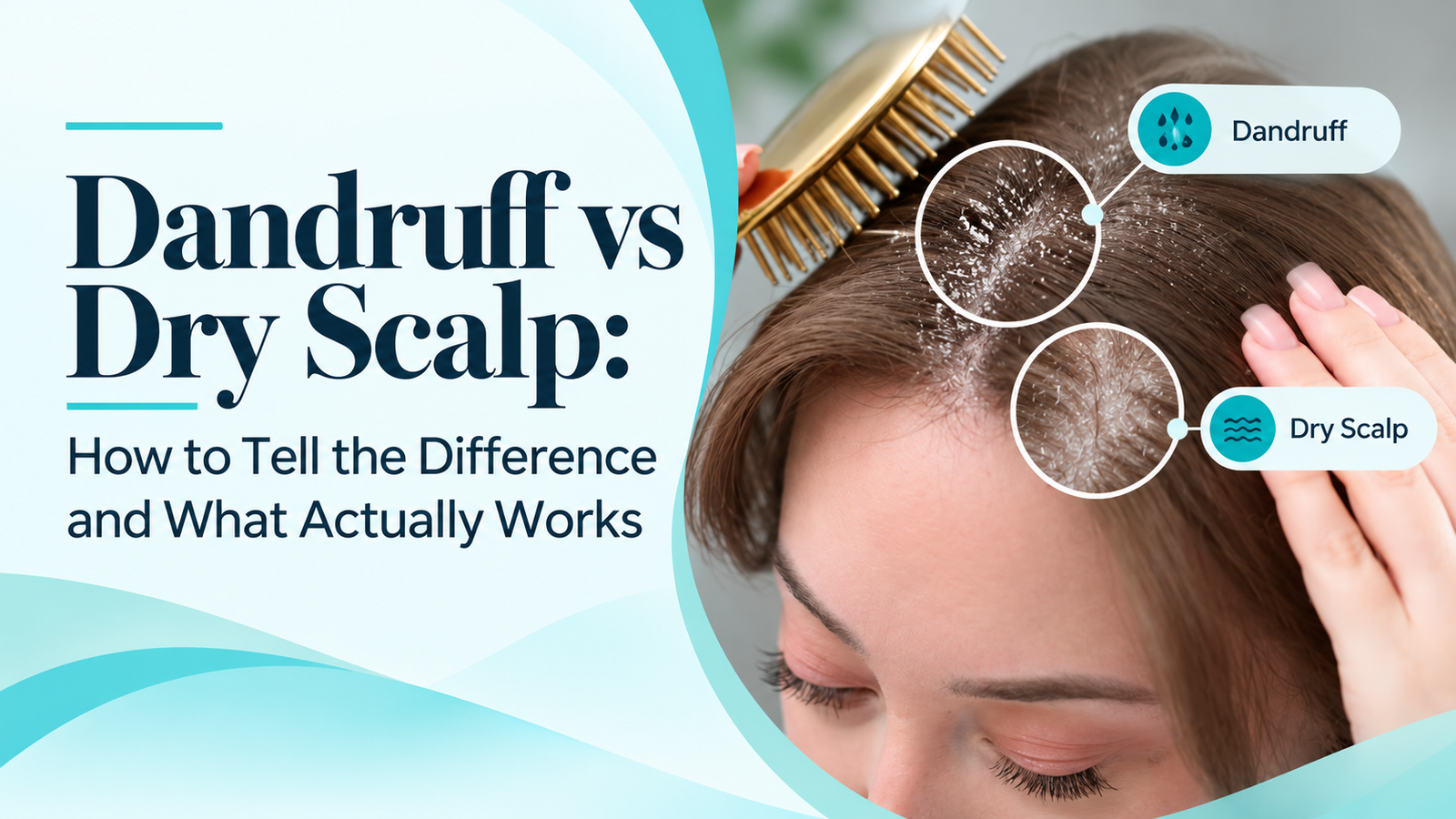
You pull on a dark kurta or office blazer, and there they are: white flakes on the shoulders. Your scalp itches after a wash, and it seems to get worse every winter. You may already have a bottle of anti-dandruff shampoo in the bathroom, and it still has not solved the problem.
Here is the catch. Dandruff and dry scalp look alike, but they are different conditions with different causes. In the dandruff vs dry scalp question, the short answer is this: dandruff is usually linked to scalp oil, mild inflammation and the scalp's sensitivity to a yeast called Malassezia, while dry scalp is mainly a moisture problem.
What You'll Learn
- The core differences between dandruff and dry scalp mechanics.
- How to identify your condition using flake size, scalp feel, and seasonal patterns.
- Common triggers including winter air, hot water, and yeast reactions.
- Active ingredients in anti-dandruff shampoos and how they work.
- When to see a dermatologist at Skinfollix Clinic in Delhi.
What Is the Difference Between Dandruff and Dry Scalp?
Let us look at each condition on its own first, and then compare them.
What Is Dandruff?
Dandruff is a common scalp condition that causes visible flaking, often with itching. It is not a sign of poor hygiene, and it is not contagious. Dermatologists generally consider it a mild form of seborrheic dermatitis, a long-term inflammatory condition that affects oil-rich areas of skin.
Three things usually come together. The scalp produces oil (sebum). A yeast called Malassezia, which lives on most people's scalps without any problem, feeds on that oil. In some people, the by-products of this process irritate the scalp and trigger mild inflammation and faster skin shedding. That is why the flakes often look larger and slightly oily or yellowish-white.
Dandruff tends to come and go. Many people see improvement with suitable care and then notice it return, because the underlying tendency does not disappear. This is common and does not mean the treatment failed.
What Is a Dry Scalp?
Dry scalp means the skin on your head is short of moisture. The skin barrier, the outer layer that holds water in and keeps irritants out, becomes less effective, so the scalp feels tight and may itch.
Common triggers include cold weather, low humidity, dry indoor air from heaters, very hot showers, and harsh shampoos or styling products. The flakes are typically small, white and dry, and the scalp is not usually oily or visibly red. Dry scalp often occurs with dry skin elsewhere on the body.
Dandruff vs Dry Scalp: Key Differences at a Glance
| Feature | Dandruff | Dry Scalp |
|---|---|---|
| Main underlying issue | Scalp oil, Malassezia yeast sensitivity and mild inflammation | Low moisture and a weakened skin barrier |
| Appearance of flakes | Larger, may look oily, white to yellowish | Smaller, dry, powdery and white |
| Scalp condition | Often oily; may be slightly red or greasy | Often tight and dry; usually not oily |
| Itching | Common, can be persistent | Common, often mild to moderate |
| Common triggers | Stress, hormonal changes, tendency to oily skin, infrequent cleansing, some medical conditions | Cold dry air, hot water, harsh products, over-washing |
| Seasonal pattern | Can worsen in winter, but also occurs in other seasons | Typically worse in winter or in dry, air-conditioned spaces |
| Typical treatment approach | Medicated anti-dandruff shampoo; dermatologist care if persistent | Gentle cleansing, less irritation, moisturising support |
A table like this is only a guide. Symptoms overlap, and many people have both conditions at once. Only an examination by a dermatologist can confirm what is happening on your scalp.
How to Know If You Have Dandruff or Dry Scalp
You cannot diagnose yourself from a mirror, but a few observations give useful clues. Look at the flakes, how your scalp feels, and where else the flaking appears.
- Flake size and colour: Small, dry, white flakes point towards dry scalp. Larger, slightly greasy, yellowish-white flakes point towards dandruff.
- Scalp feel: A tight, dry feeling suggests dryness. An oily or greasy scalp suggests dandruff.
- Itching pattern: Occasional itch that eases after moisturising is common in dry scalp. Itch that keeps returning, even right after washing, is more typical of dandruff.
- Other areas: Flaking or redness around the eyebrows, the sides of the nose, behind the ears or in the beard area suggests seborrheic dermatitis rather than simple dryness.
- Seasonal pattern: Dry scalp is often worse in winter. Dandruff can flare in winter too, but it can also show up in humid months.
- Reaction to shampoo: If a medicated shampoo makes the scalp feel tighter and more irritated, dryness may be part of the picture. If a very gentle shampoo leaves the scalp greasy and itchy again within a day or two, dandruff is more likely.
A quick checklist:
- My flakes are large and slightly oily
- My scalp feels greasy a day after washing
- I also have flaking near my eyebrows, nose or ears
- My scalp feels tight and dry, and flakes are fine and powdery
- My skin elsewhere is dry, especially in winter
- Symptoms eased when I stopped a particular product
The more boxes you tick in the first three, the more dandruff is likely. The more you tick in the last three, the more a dry scalp is likely. Many people tick both groups. This checklist is for understanding only and is not a self-diagnosis. If you are unsure, a dermatologist can examine your scalp and tell you what is going on.
Why Is My Scalp Flaky? Common Causes and Triggers
A flaky scalp rarely has a single cause. Several factors often add up, and they differ from person to person.
Malassezia Yeast and Scalp Oil
Malassezia is a yeast that lives on the skin of most adults, so having it does not mean you have an infection. In people prone to dandruff and seborrheic dermatitis, the scalp reacts to this yeast and the oils it breaks down. That reaction causes irritation and flaking.
So is dandruff a fungal infection? Not in the usual sense. It involves a yeast that is normally present, and it cannot be "caught" from another person. Antifungal ingredients help because they reduce the yeast on the scalp, not because you were infected.
Cold Weather and Low Humidity
In North Indian winters, the air gets drier both outdoors and indoors, especially with heaters and closed rooms. Dry air pulls moisture from the skin, and the scalp is no exception. This is why many people ask why their scalp gets flaky in winter.
Cold weather can also aggravate existing conditions such as seborrheic dermatitis, eczema and psoriasis. So a winter flare does not always mean simple dryness.
Harsh Shampoos and Frequent Hot Showers
Very hot water and strongly stripping cleansers can remove the scalp's natural oils and irritate the skin barrier. A long, steaming head-bath on a cold morning feels good, but it may leave the scalp tighter and itchier. Lukewarm water is usually kinder to the scalp.
Product Build-up and Scalp Irritation
Styling gels, serums, dry shampoos and hair oils can sit on the scalp if they are not washed out well. In some people this build-up irritates the skin or encourages flaking. Others develop contact dermatitis, an allergic or irritant reaction, to a fragrance, preservative or dye. If flaking started after a new product, that product is worth reviewing.
Skin Conditions That Can Look Like Dandruff
Not every flaky scalp is dandruff or dryness. These conditions can look similar:
- Seborrheic dermatitis: More inflamed than simple dandruff, with redness and greasy-looking scales that may also affect the face and ears.
- Scalp psoriasis: Thicker, well-defined, often silvery scaly patches.
- Contact dermatitis: Irritation or allergy to a hair product, dye or ingredient.
- Eczema (atopic dermatitis): Dry, itchy, inflamed skin, often with a personal or family history of eczema or allergies.
Persistent, thick, inflamed or unusual scaling deserves a proper evaluation instead of guesswork.
Dandruff vs Scalp Psoriasis: How Are They Different?
Scalp psoriasis is an immune-related skin condition in which skin cells are produced much faster than normal and pile up on the surface. Dandruff is milder and tied to oil and yeast sensitivity. Because both cause flaking, mild psoriasis can be mistaken for severe dandruff.
Some general differences help explain why they are not the same:
- Scales: Dandruff flakes are loose, fine to medium in size and often slightly greasy. Psoriasis scales are usually thicker, drier and silvery-white, sitting on well-defined, raised, red patches called plaques.
- Spread: Psoriasis plaques can extend beyond the hairline onto the forehead, neck or behind the ears.
- Other body areas: Psoriasis may also affect the elbows, knees, lower back or nails. Some people have a family history of it.
- Itch and discomfort: Both can itch, but psoriasis can also feel sore or tight.
Overlap does occur, and some conditions sit in between. A dermatologist can tell them apart by examining your scalp and skin and by asking about your history. Please do not try to diagnose yourself from photographs online, because treatment for the two conditions is different.
"A proper diagnosis ensures you use the right ingredients. Treating psoriasis like simple dandruff will only delay proper relief."
— Dr. Vijay SoyalWhat Actually Works? Effective Dandruff Treatment Options
The right approach depends on the cause and how severe the problem is. For mild dandruff, medicated shampoos are the usual starting point. Results vary from person to person, and no single product works for everyone.
Anti-Dandruff Shampoos
Most anti-dandruff shampoos contain one of a few active ingredients. They work in different ways:
- Ketoconazole: An antifungal that reduces Malassezia yeast on the scalp. Strength and availability vary; follow the label or your doctor's advice.
- Zinc pyrithione: Has antifungal and antibacterial action, reducing yeast and flaking. Often found in daily-use formulas; can still irritate sensitive scalps.
- Selenium sulfide: Reduces yeast and slows the rate at which scalp skin cells shed. May irritate the scalp or affect hair colour; rinse well.
- Salicylic acid: Loosens and lifts scales so they wash away. Helps with scaling but is not an antifungal and may dry the scalp.
These are general descriptions, not a recommendation to use any particular product. Formulations, strengths and regulatory status differ across brands in India, so read the label carefully, do a patch test if you have sensitive skin, and ask a doctor or pharmacist if you are unsure. If one product does not help after the period stated on its label, switching randomly between many shampoos is not the answer. Please see a dermatologist.
How Often Should You Wash Your Hair With Dandruff?
There is no single schedule that suits everyone. The right frequency depends on your scalp type, hair type, how severe the dandruff is, and the shampoo you use.
Medicated shampoos often work best when they stay on the scalp for a few minutes before rinsing, and they usually come with their own instructions on how often to use them. Follow the label or your dermatologist's advice. Washing too rarely can let oil and flakes build up, while washing excessively with harsh products can irritate the scalp. If your scalp is also dry, a gentle shampoo on the days you skip the medicated one is something to discuss with your doctor.
When Does Dandruff Need Prescription Treatment?
If flaking continues despite correct use of over-the-counter products, or if there is redness, severe itching or inflammation, a dermatologist can assess whether it is seborrheic dermatitis or another condition. Stronger or different treatments may be needed, and they must be chosen by a doctor after examining you. Please do not start prescription medicines or steroid creams on your own.
What Actually Works for Dry Scalp?
Dry scalp care is mostly about protecting the skin barrier and removing what dries it out.
- Use a gentle, suitable shampoo: Mild, fragrance-free cleansers are less likely to strip the scalp.
- Avoid very hot water: Lukewarm water is kinder, even in cold weather.
- Cut back on harsh or irritating products: Strongly fragranced sprays, gels and frequent colouring or styling can add to dryness.
- Keep a simple routine: Wash as often as your scalp and hair need, rinse well, and avoid scrubbing hard.
- Moisturise when appropriate: Some people benefit from scalp-friendly moisturising products, and your dermatologist can guide you on what suits you.
- Look for triggers: Note whether symptoms follow dry weather, heaters, a new product or a change in your wash routine.
Heavy oiling is not a universal fix. Oil can feel soothing for some people with dry scalp, but it may worsen flaking in those with dandruff or seborrheic dermatitis, because the yeast feeds on scalp oils. If you are not sure which you have, ask a dermatologist before leaving oil on your scalp for long periods.
Please avoid home remedies such as lemon juice, baking soda or vinegar on the scalp. They are not proven treatments and can irritate or burn the skin.
Can Dry Scalp Cause Hair Fall?
Dry scalp on its own is not a usual cause of significant hair loss. But the answer is not a flat no, so it helps to separate two things.
- Temporary shedding or breakage: Constant itching, scratching and inflammation can irritate the scalp and make hair break or shed more than usual. Once the irritation settles, this often improves.
- Hair loss from another cause: Conditions such as telogen effluvium, pattern hair loss, alopecia areata or scarring disorders have their own causes. Flaking should not automatically be blamed for them.
So can dry scalp cause hair loss? It can contribute to breakage and shedding when it is severe or inflamed, but if you notice thinning, a widening parting or bald patches, do not assume it is just dandruff or dryness. Hair fall that is persistent, sudden, patchy or accompanied by scalp redness, pain or scaling should be assessed by a dermatologist.
When Should You See a Dermatologist for Dandruff or Dry Scalp?
Many cases of mild flaking settle with simple care. It is a good idea to get professional advice if you notice any of the following:
- Flaking that continues despite appropriate over-the-counter care
- Severe or continuous itching that disturbs sleep or daily life
- Significant redness, swelling or inflammation
- Thick scales or well-defined plaques
- Pain, sores, crusting or discharge
- Patchy hair loss or noticeable thinning
- Symptoms spreading to the face, ears or other parts of the body
A dermatologist will usually ask about your symptoms, products, family history and general health, and then examine your scalp and, if needed, other areas of skin. This helps tell dandruff, dry scalp, seborrheic dermatitis, psoriasis and allergic reactions apart, so that the plan fits the actual cause.
If your scalp concerns are persistent or unclear, you can seek a professional evaluation at Skinfollix Clinic, a dermatology clinic in Paschim Vihar, Delhi. No article can promise a particular outcome, but a proper diagnosis is the best starting point for choosing safe care.
Frequently Asked Questions
How can you tell if you have dandruff or dry scalp?
Look at the flakes and the scalp. Larger, oily-looking, yellowish-white flakes on an oily scalp suggest dandruff. Small, dry, powdery flakes with a tight scalp suggest dryness. Flaking near the eyebrows or nose points to seborrheic dermatitis. Symptoms overlap, so a dermatologist can confirm the cause.
Is dandruff worse in winter?
It can be. Cold, dry air and heaters may aggravate dandruff and seborrheic dermatitis, and also cause dry scalp. Many people therefore notice more flakes in winter, but dandruff can occur in any season, including humid months.
Can dry scalp cause hair loss?
Dry scalp alone rarely causes major hair loss. Heavy scratching or inflammation can cause breakage and extra shedding. Patchy, sudden or persistent hair fall has other possible causes and should be assessed by a dermatologist.
Should I wash my hair more if I have dandruff?
Not necessarily. The right frequency depends on your scalp, hair and the shampoo used. Medicated shampoos have their own instructions on contact time and frequency. Over-washing with harsh products can irritate the scalp, so follow the label or your doctor's advice.
Is dandruff a fungal infection?
Not in the usual sense. Dandruff involves Malassezia, a yeast that lives on most people's scalps. In some people the scalp reacts to it and its by-products. It is not contagious and is not caused by poor hygiene, which is why antifungal ingredients can help.
Can dandruff and dry scalp happen at the same time?
Yes. A person can have a tendency towards dandruff and also develop dryness from winter air, hot water or harsh products. Then the care needs balancing, because treating one may worsen the other. A dermatologist can help plan this.
What is the difference between seborrheic dermatitis and dandruff?
Dandruff is generally regarded as a mild form of seborrheic dermatitis that affects only the scalp, with little visible redness. Seborrheic dermatitis can be more inflamed, with redness and greasy scales, and may also involve the eyebrows, sides of the nose, ears or chest.
How is scalp psoriasis different from dandruff?
Scalp psoriasis usually shows thicker, silvery scales on raised, red, well-defined patches, which may extend beyond the hairline. Dandruff flakes are looser and often oily. Psoriasis can also affect other body areas. Since the two are treated differently, get the diagnosis confirmed.
Which shampoo is best for dandruff?
No single shampoo is best for everyone. Active ingredients such as ketoconazole, zinc pyrithione, selenium sulfide and salicylic acid work in different ways, and individual response varies. Follow the label, avoid switching constantly, and see a dermatologist if there is no improvement.
When should I see a dermatologist for dandruff?
Consult one if flaking persists despite proper over-the-counter care, or if you have severe itching, redness, thick scales, sores, crusting, patchy hair loss or spread to the face or ears. Also go if you are not sure what is causing your symptoms.